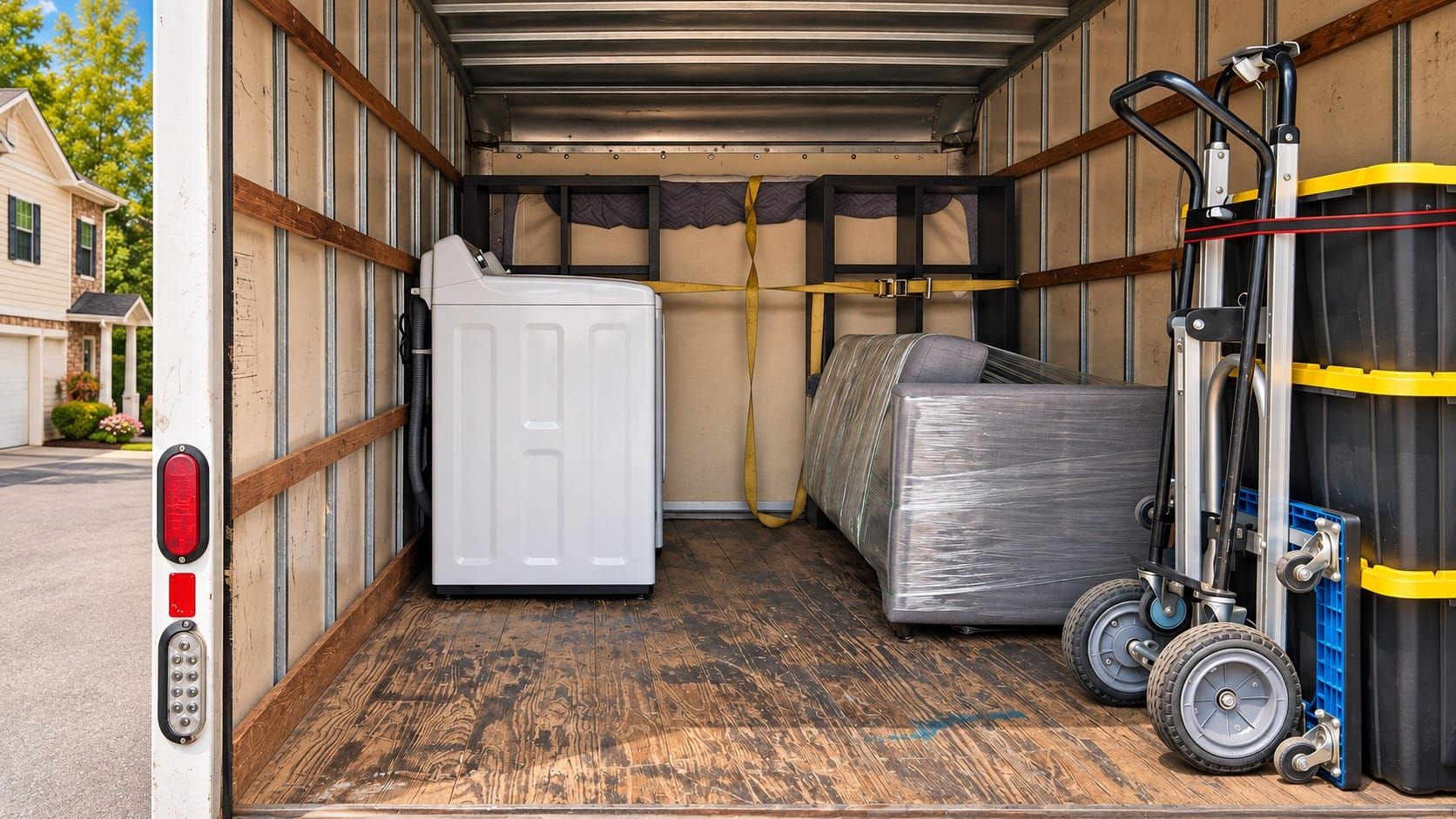
What people moved in 2026: Sofas still rule, but appliances gained ground
Lugg data from local moving and delivery jobs shows which household staples dominated 2026.

Furniture still dominated the items named in local moving and delivery jobs in 2026. Sofas and couches remained the most commonly mentioned item, followed by tables, chairs and recliners, beds and mattresses, and boxes and containers. But appliances gained the most ground.
An analysis by Lugg, an on-demand moving and delivery platform with over a million moves completed, offers a rare look at the bulky things people actually pay to move. It found that the share of job descriptions mentioning an appliance increased about 15% through early November 2026 compared with the same period in 2025. Mentions of washers rose about 18%, with dryers and freezers up about 24% each.
What household items did people move most in 2026?
The leading categories were familiar household staples. Ranked by how often they appeared in descriptions of completed 2026 jobs, the top groups were:
- Sofas and couches
- Tables
- Chairs and recliners
- Beds and mattresses
- Boxes and containers
- Dressers and wardrobes
- Shelving and cabinets
- Desks
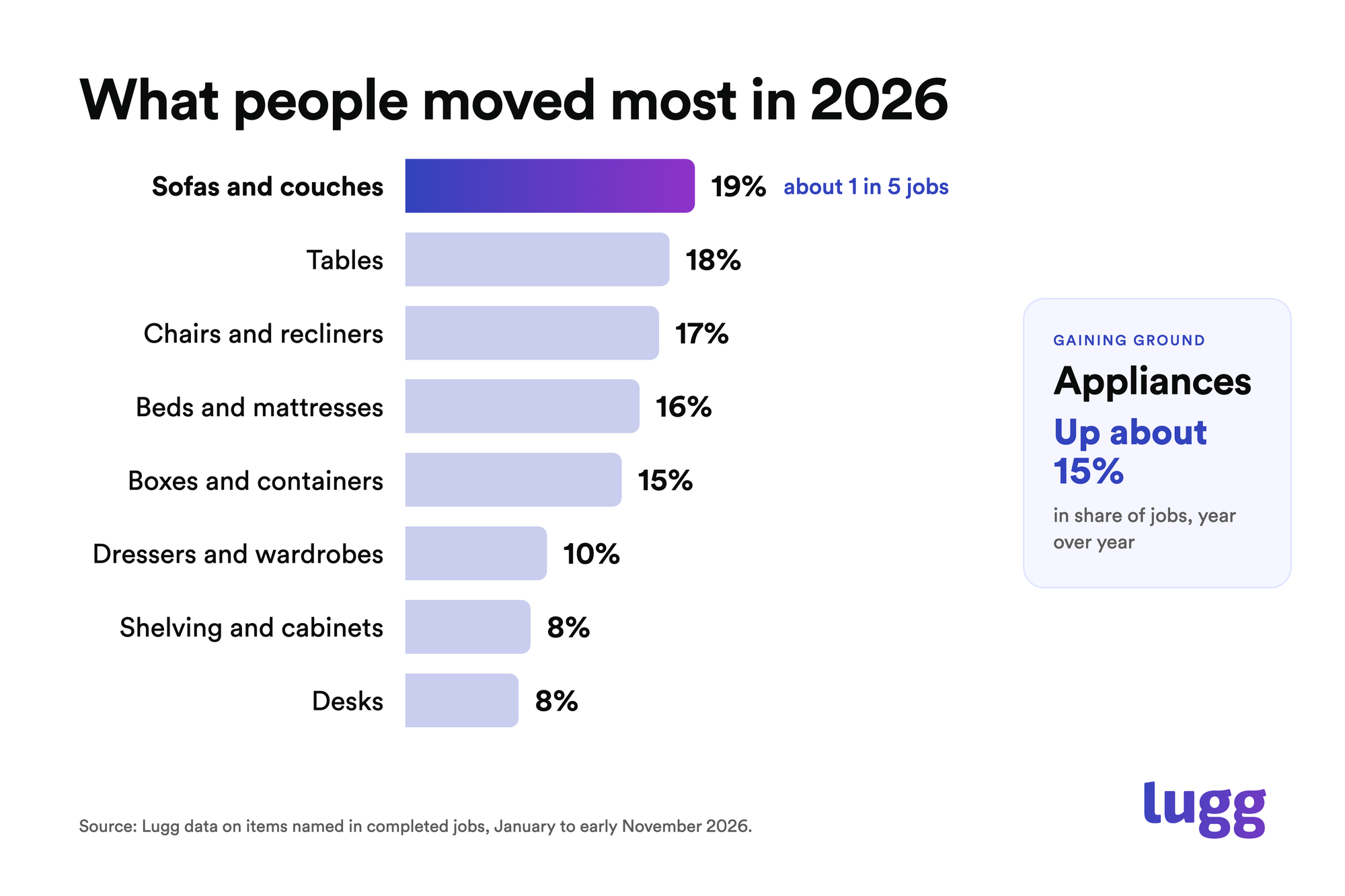
Sofas appeared in descriptions of roughly one in five completed jobs, keeping them at the top of the list.
Which items stood out in different cities?
Compared with their share of completed-job descriptions across all Lugg markets, appliances were mentioned about three times as often in Atlanta and nearly twice as often in Portland and Dallas.
Other cities had different standouts. Exercise equipment appeared about twice as often in Denver and roughly 1.5 times as often in Seattle. TVs were mentioned about 1.5 times as often in Washington, D.C., and Chicago, while bikes appeared about 1.5 times as often in San Francisco.
Which household item category gained the most ground in 2026?
Appliances rose about 15% in share of jobs year over year, though they’re still a much smaller slice than sofas, chairs, or beds. Refrigerators remained the most frequently named appliance. These items are heavy, require specific hookups or clearances, and may belong to the property rather than the occupant.
Retail sales point the same way. According to the Census Bureau’s Monthly Retail Trade survey, sales at electronics and appliance stores rose 6.8% from January through September 2026 compared with the same months in 2025, while sales at furniture and home-furnishings stores fell 1.6%.
Age makes the move-or-replace question harder. According to the Energy Information Administration’s 2024 Residential Energy Consumption Survey, roughly 27% of the most-used refrigerators in U.S. homes and 23% of clothes washers were at least 10 years old.
A sofa only has to clear the doorway and fit the room. A washer, refrigerator, or range also has to match the new home’s dimensions, electrical service, water lines, drainage, ventilation, or gas connection, so moving one depends on fit as well as weight.
Should you move an appliance or replace it?
Energy use belongs in the calculation too. The Federal Trade Commission’s yellow EnergyGuide label shows an appliance’s estimated annual energy use and operating cost, along with how it compares with similar models. It’s a quick way to compare what an older appliance costs to run against a new one.
Start with ownership and fit. Renters should confirm that the appliance belongs to them and that the next home does not already provide one. Anyone moving a refrigerator, washer, dryer, or range should check the destination’s electrical, water, vent, or gas connections and measure every doorway, hallway, stairway, elevator, landing, and tight turn at both addresses.
How should you prepare an appliance for moving day?
- Refrigerators and freezers: Empty, unplug, defrost, and drain them at least 24 hours ahead. Remove or secure loose shelves and bins, keep the unit upright when possible, and follow the manufacturer’s instructions before restoring power.
- Washers and dryers: Shut off water, disconnect and drain hoses, secure washer drums as directed by the owner’s manual, and detach dryer vents. Front-loading washers may require transit bolts.
- Gas appliances: Have a qualified professional handle disconnections and hookups.
- Access: Clear a wide path, protect floors, secure pets, and reserve elevators or loading docks when required.
How should you dispose of an old appliance?
Replacing an appliance means getting rid of the old one. The Environmental Protection Agency recommends checking local utilities, municipalities, retailers, and recycling programs before arranging pickup. Refrigerators and freezers require particular care because their refrigerants and other components may need professional recovery before disposal.
Furniture still dominated the items people paid to move in 2026, but appliances were the category gaining ground. For anyone preparing to move one, a guide to moving heavy appliances safely covers the measurements, disconnections, and equipment to plan before moving day.
Loren Couse
Loren manages Growth and Online Strategy at Lugg. With a deep passion for consumer technology, he stays on the cutting edge of the latest digital trends. When he isn’t strategizing, he spends his free time building personal coding projects.
Subscribe to the Lugg blog
Get the latest moving tips, guides, and Lugg news delivered to your inbox.
Read more about Lugg moves
Lugg Courier: an on-demand courier for small items

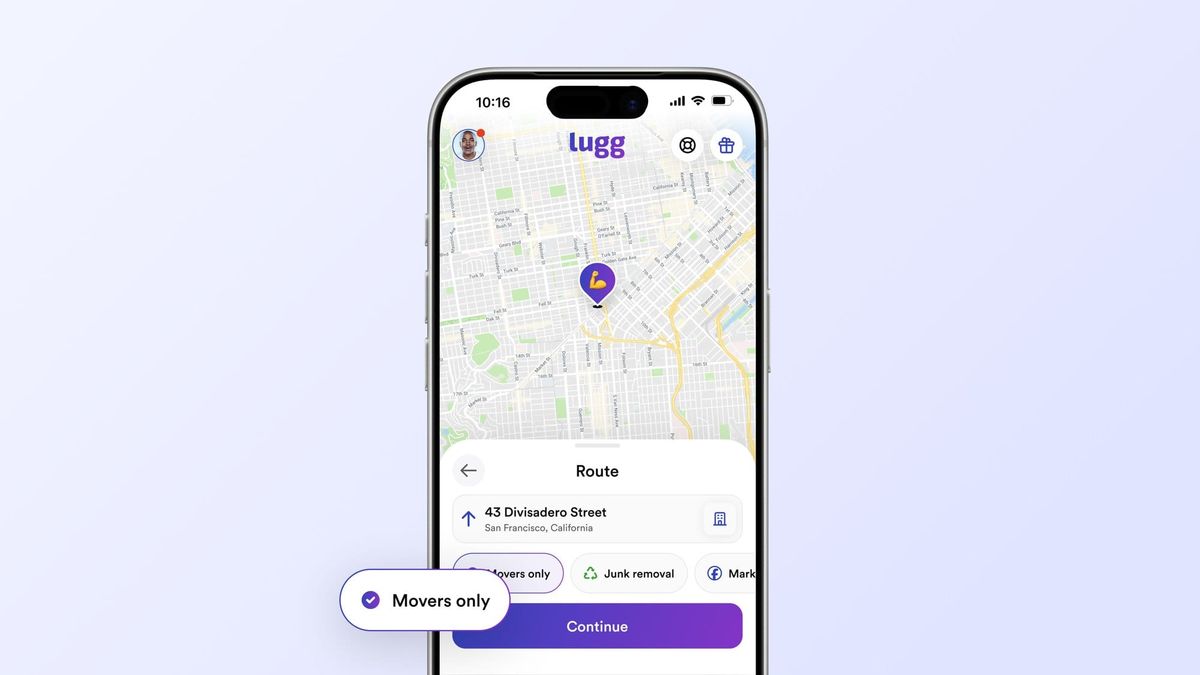
Movers only: book Lugg movers without a truck
What a decade of gig work actually pays

How much a local move costs in 22 U.S. cities