What a decade of gig work actually pays
On the holiday built to honor American workers, the moving business runs at peak. Data from more than 1.5 million jobs shows what the work pays — and what separates the people who last from the people who don’t.

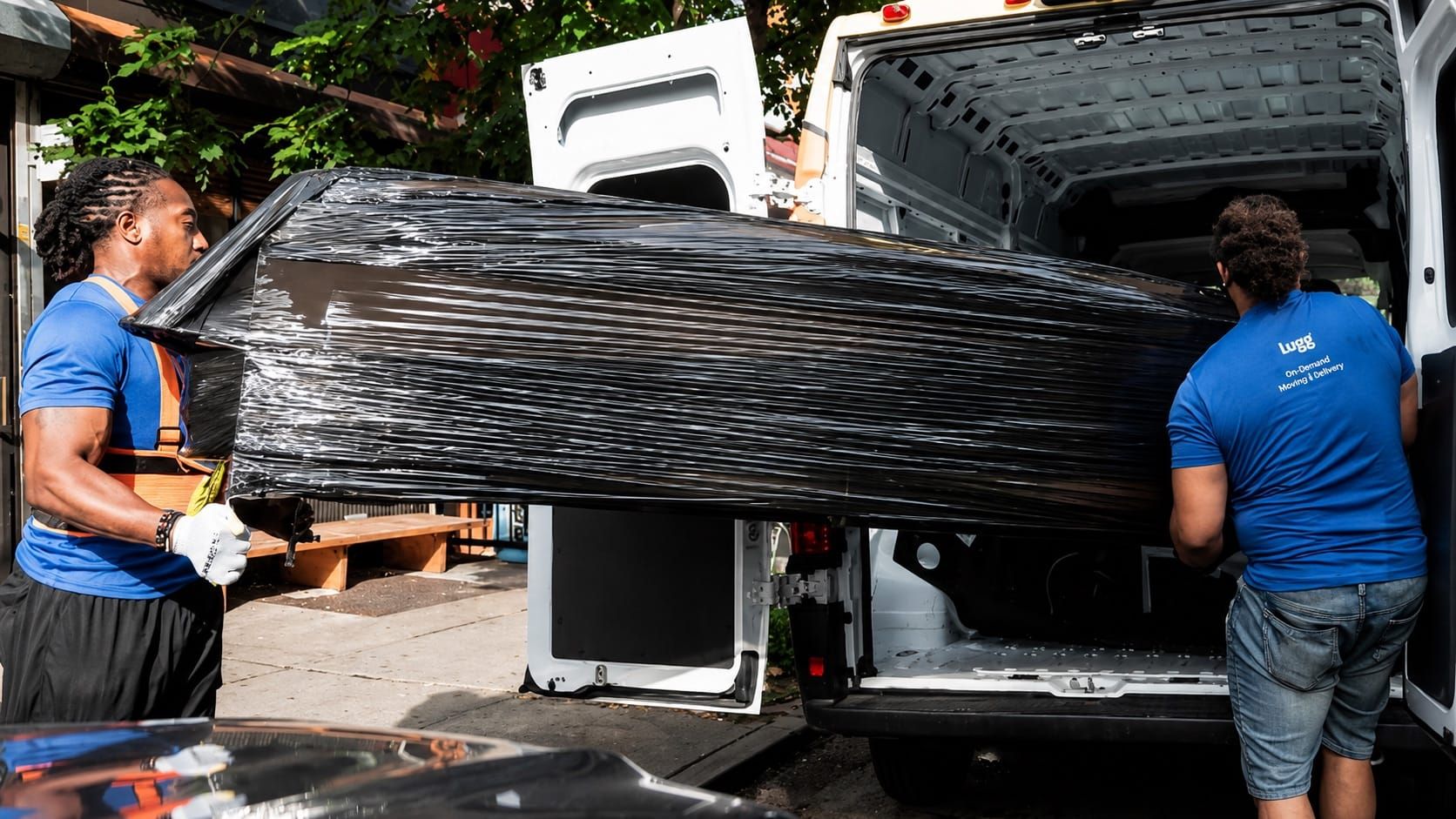
Congress made Labor Day a federal holiday in 1894 to honor the American worker. For the people who move Americans and their furniture, it is one of the busiest working weekends of the year.
Data from more than 1.5 million completed jobs at Lugg, an on-demand moving and delivery service operating in more than 4,000 U.S. cities, shows Labor Day weekend running 13% to 26% above a typical late-summer weekend in each of the past three years. The holiday Monday itself runs busier than an ordinary Monday in August.
The surge is not spread evenly. Boston runs at roughly twice its usual weekend volume, and has in each of the last three years — Los Angeles, the next highest, runs in double digits. The reason is a quirk of the calendar: Labor Day always falls between September 1 and 7, and Boston's residential leases turn over on September 1. The nation's day of rest collides with the city's largest moving day, every single year.
Somebody carries all of it. What the work pays, and whether anyone lasts a decade at it, is a harder question than the volume.
How long most people actually last
Most people who try this work are gone before they learn what it pays at the top. It is hard physical work. Furniture is heavy and awkward, and most of it has to be carried by hand — down stairwells, around tight corners, and out to the truck.
Of more than 5,000 movers who took their first job at least five years ago, the median lasted 132 days. Fewer than one in ten were still working five years later. Two of the people who stayed are worth listening to, and they got there by different routes.
What actually raises the pay
Edgar Teran has been moving furniture professionally in San Francisco for nearly a decade. He spent years in construction before that, decided he wanted something more fulfilling, found the listing online and signed up as a helper — the lowest barrier to entry in the business. No vehicle, no equipment beyond his own supplies, nothing required but a willingness to lift.
His very first job was a brand-new white sofa from a CB2 store. He was standing on the loading dock in what he describes as a chaotic scene, looking at a piece of furniture that had to reach the customer in pristine condition. “I was a bit nervous because I didn’t know how I was going to handle it,” he said. “But I had a good partner and we managed it well.” Together they got it into the van, and the delivery went smoothly. That job got him hooked, and he has kept coming back ever since.
He was paid as a helper that day, because the van belonged to someone else. Earnings on gig platforms get discussed as though there’s a single rate. In moving there isn’t one. What someone earns depends almost entirely on their role — on what they drive, or whether they drive at all:
Those are averages across 22 U.S. markets rather than starting rates, and the spread inside each class comes down to vehicle size — a standard cargo van at the bottom of its band, a sprinter at the top. Tips are uncapped and go entirely to the mover, and a handful clear $1,000 a month from them alone. Lugg publishes a current rate estimator.
Edgar crossed to the driver’s side the way many people do before they can do it permanently: he rented. That got him earning at driver rates without the capital a purchase demands, and it let him find out what driving actually netted — what came in, and what went back out — before committing. He bought his own later.
Having worked both roles, he knows what the difference actually feels like. “When performing a task, the work is the same for both,” he said, “except that the driver earns a little more due to the vehicle and the responsibility that entails.”
The published figures put a helper at $18 an hour and a pickup driver at $28 — a gap of roughly 55%, and considerably wider further up the list. Ten years in, Edgar describes it as a little more.
That is because the hourly rate leaves things out. Drivers bring the truck, and mileage and most tolls are reimbursed. The truck is not. Depreciation, insurance, maintenance — or, for anyone still renting, the rental — all come out of the difference.
Another path to success
The vehicle is the obvious route, and the numbers bear it out: movers still working after five years are considerably more likely to own one than those who stopped in their first year — more than two-thirds of them do.
Robert Wilson is one of the exceptions. He spent five years as a helper in Seattle, completed more than 4,500 moves, and never brought a truck to a single one. What he built instead was a reputation and a working knowledge of which jobs are worth taking. “The best jobs are XL deliveries, especially delivering sofas to long-distance destinations,” he said. “A pickup in Seattle and drop-off in Anacortes for an XL delivery. That’s more money.” That is the kind of thing nobody is told and everybody could use.
He also has a rule about what not to take: “Don’t accept slots you’re unsure about working.” He starts early and finishes early, because that is the shape of day he wants.
The pay table describes one route, and Edgar took it — he acquired a vehicle. Robert stayed on the bottom rung of that list and made the work pay through volume, job selection, and a record that keeps the work coming to him.
What a decade teaches
Ask either of them what they can do now that they couldn’t at the start, and the answers are unglamorous and specific.
“When I started out, I didn’t have much experience with moving and delivery,” Edgar said. “Now I’m an expert — whether it’s navigating staircases, figuring out if items will fit in the truck, or knowing how to work with customers.” What newcomers lack, he says, is exactly that. “The most common issue is the uncertainty about whether the job can be done.”
Knowing whether it can be done is the skill. Edgar’s version of it starts with a tape measure.
“The first step is to measure the piece,” he said, “then measure the door or staircase and the location where it will be installed. If necessary, we remove the door.” It’s the sort of thing that sounds obvious once someone says it and occurs to almost no one standing in a hallway at the wrong moment.
Robert describes something closer to a trained eye. “When moving items, whether it’s sofas, dressers, or anything long, I can see angles within stairwells and tight, shifty hallways that others can’t,” he said. “I know which way to carry the item through the areas.”
The expertise turns out to live in the assessment rather than the lifting. Whether the sofa clears the landing. Whether the frame comes off. Which way the dresser turns at the top of the stairs. All of it worked out before anyone has taken hold of anything.
Where the money went
Robert, who has never owned a truck, puts the outcome in plain terms. “I’ve been able to buy several vehicles, save a substantial amount in my savings account, and now I’m looking to buy property.”
Edgar describes something similar in a different register. A decade of the work has paid for his family's standard of living and for goals of his own. He says the work itself has become easier to come by, too — after ten years, he has the experience and the record to get it. He describes the schedule as his own — work, family and friends, all of it synchronized. He spends his time off at home with books and music. When people ask whether they should try it, he tells them it pays, and that it asks for hard work and responsibility in return; he has brought several people into the work himself, and says they have done well. On the decision he made back in 2016, he is unequivocal. “I truly believe it was one of the best things that has happened to me in recent years.”
Robert’s version of that advice is shorter. “I’d tell them to join if they’re serious about working. Some jobs will be challenging and some will be easy.”
Edgar is an outlier by any measure — the longest-tenured and highest-earning mover on the platform. Moving other people’s furniture has paid him more than $1 million. Some of that is timing. On-demand moving barely existed a decade ago — Lugg was founded in 2014 — so the number of people who could have put ten years into it is small by arithmetic alone. Edgar is close to the ceiling of what is even possible.
That is one man’s decade of hard work, not a promise or a forecast. He started out, rented, bought a truck, and was still taking jobs the week this was written.
The first Monday in September
Nearly ten years after the white sofa, Edgar can look at a piece of furniture and a doorway and know how the job will go before he touches anything. Robert can see the angle a dresser takes at the top of a staircase. Both of them will be working on the first Monday in September — one with a truck he bought, one who never needed one.
Galina Hyland
Galina leads operations at Lugg, writing about logistics, supply, and what it takes to power same-day moving at scale.
Subscribe to the Lugg blog
Get the latest moving tips, guides, and Lugg news delivered to your inbox.
Read more about Lugg moves
How much a local move costs in 22 U.S. cities


Dark mode is now live in the Lugg app


Furniture assembly is now part of your store delivery

Now you can book your move up to 60 days ahead