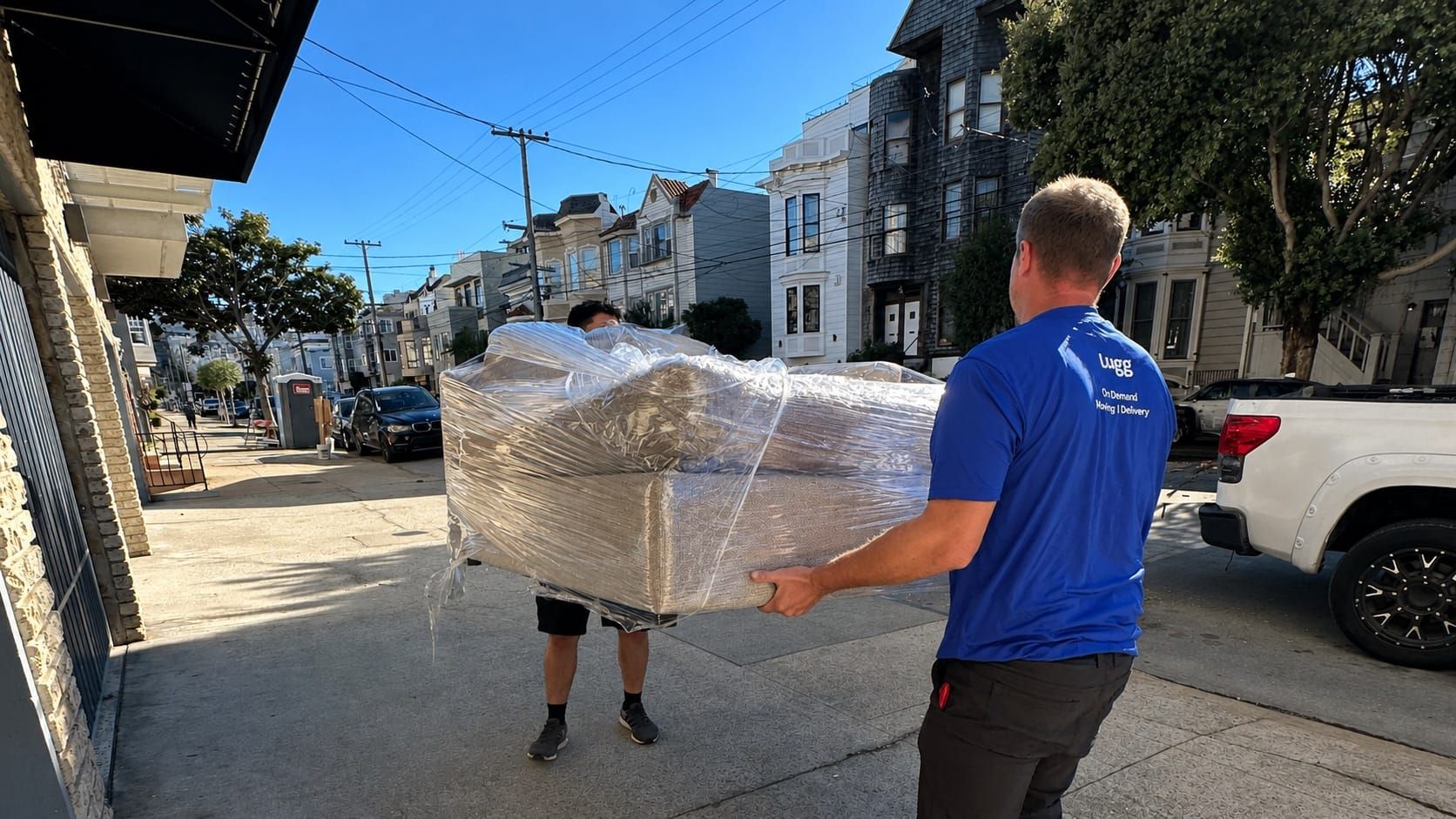
How much a local move costs in 22 U.S. cities
The typical American move is small, local, and cheaper than you'd guess — a median of about $145. Here's what a move actually costs in 22 U.S. cities.

Picture a move and you probably picture the big one: a truck packed to the ceiling, a long drive, a new city. It makes for good movies, but it isn't the move most people make. About three in four Americans who move each year stay within the same state, and only about one in five crosses state lines, according to the U.S. Census Bureau. The real American move is small and close to home — a couch, a few rooms of furniture, carried a few miles across town, often on short notice.
Summer is the busiest stretch of the year for moving — and August is its single busiest month. To see what that everyday move actually looks like, Lugg analyzed hundreds of thousands of completed local moves across 22 U.S. metro areas over the last 12 months — what they cost, how far they went, when people booked them, and what was in the truck.
Key findings
- August is the single busiest moving month of the year — more local moves happen then than in any other month, as summer leases turn over and students head back to school.
- The couch is America's most-moved item, named in about one in five moves — ahead of tables, beds, mattresses, and dressers. The trusty pickup truck is the most-booked vehicle in every metro studied.
- The typical local move costs a median of about $145 — a fraction of the four-figure sum a whole-home or long-distance relocation runs.
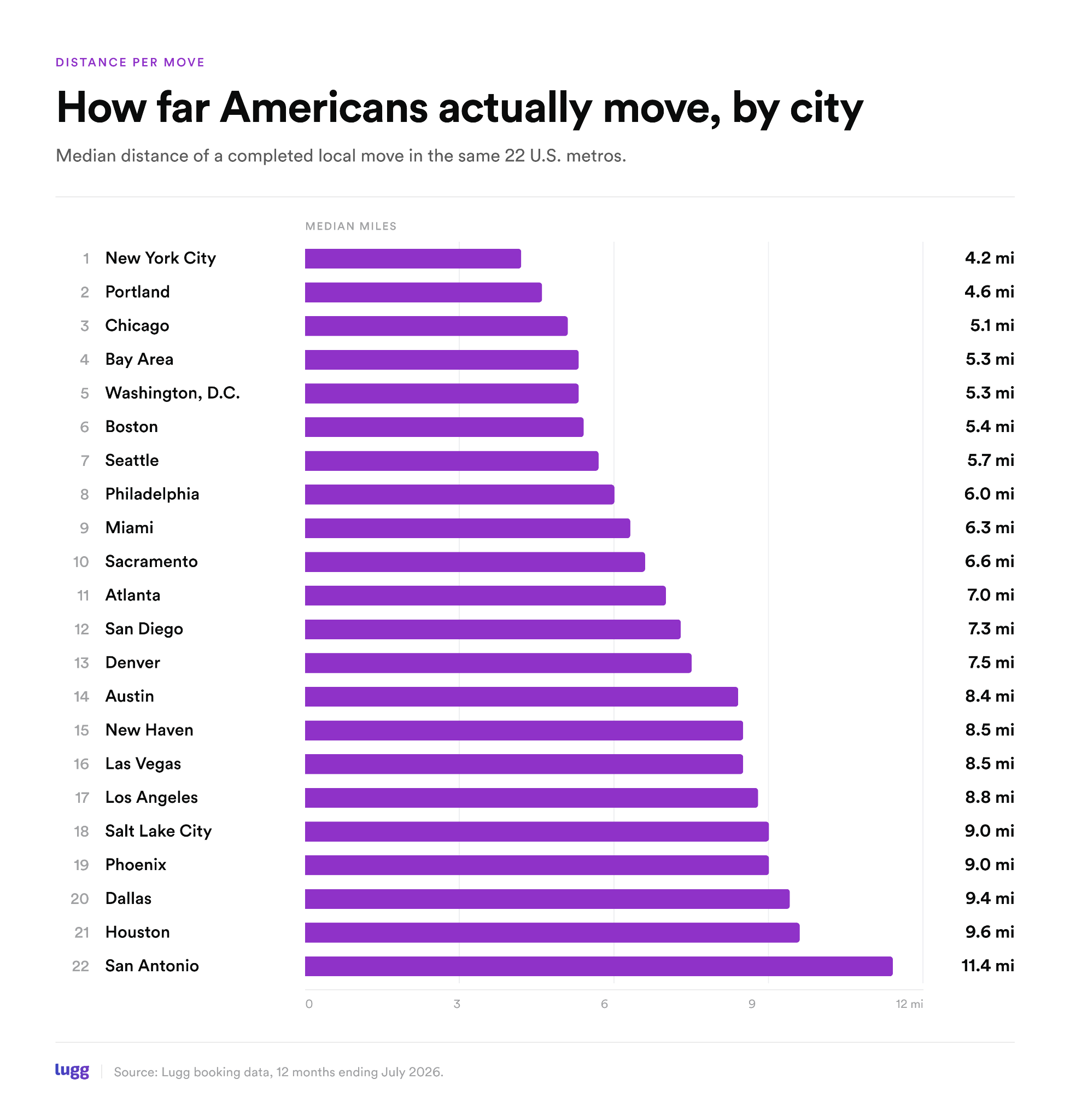
- New York City is the costliest metro for a local move at about $155; Salt Lake City is the most affordable at about $95 — nearly half as much.
- Most moves are small and short — 96% fit in a van or smaller, and the median trip is about six miles. They're also getting shorter: the median move fell from about 8.5 miles in 2022 to 6.4 in 2026.
- Moving is an afternoon, spur-of-the-moment habit — bookings cluster around 2 p.m., and a large share happen the same day they're requested.
- Whether a move is a shopping trip or a household shuffle depends on the city — moves in San Antonio, Houston, and Phoenix are the most likely to be hauling home a new purchase, while New York, D.C., and the Bay Area skew toward moving furniture people already own.
The move most people make is smaller than they expect
Most sticker shock comes from picturing the wrong move. National cost guides describe a four-bedroom house with professional packing and weeks of lead time; the move you're far more likely to make is a studio's worth of furniture, a single big-item pickup, or a cross-town apartment hop. The gap is enormous: the same booking data shows a single-item move averages about $93, a studio around $404, and a full home about $1,346 — so where your move falls on that spectrum matters far more than the city you live in.
Most local moves land at the small end, which is why the citywide median sits near $145. It helps to know the alternative: traditional moving companies generally bill $105 to $165 an hour for two movers, with minimums that keep even a quick job from being cheap. Priced by the minute actually worked rather than a padded hourly block, the short local move has become one of the most affordable — and most bookable — services in the moving world.
Why moves are getting shorter
The clearest change over the past four years is distance: the median local move has shrunk from about 8.5 miles in 2022 to 6.4 in 2026, a trend that holds even when the same kind of job is compared year to year. The housing market explains much of it.
The share of moves that cross state lines has slipped to about one in five, while a nearly 30% jump in rents over five years and tight supply keep people circling within their own metro rather than leaving it. When a move is a few miles instead of a few states, it stops being a months-long project and becomes a same-day errand.
A closer look, city by city
1. New York City — $155
The country's shortest typical move, yet its most costly — in a dense city you pay for the stairs and the street, not the distance. New Yorkers also move into storage more than anyone, no surprise in a city famous for tiny apartments and closets to match, and they're among the country's most reliable tippers.
- Typical move (all sizes): $154
- Median distance: 4.2 miles
- Busiest day: Friday
- Peak month: May
- Most-moved item: Couch
- Tip rate: 95% of moves
2. Los Angeles — $135
One of only two cities where the table, not the couch, tops the most-moved list — and the quickest in the country to pull the trigger, booking more moves same-day than any other metro. Most Angelenos are moving furniture they already own rather than hauling home new buys.
- Typical move (all sizes): $148
- Median distance: 8.8 miles
- Busiest day: Friday
- Peak month: May
- Most-moved item: Table
- Tip rate: 95% of moves
3. Washington, D.C. — $130
One of the metros least likely to be a shopping trip — Washingtonians overwhelmingly move furniture they already own. They also plan ahead, among the least likely in the country to book a move same-day.
- Typical move (all sizes): $153
- Median distance: 5.3 miles
- Busiest day: Friday
- Peak month: May
- Most-moved item: Couch
- Tip rate: 94% of moves
4. Atlanta — $130
A Friday-mover's town where the typical job is a mid-length seven-mile hop, and, like most big coastal metros, one where people move existing furniture more often than fresh purchases.
- Typical move (all sizes): $143
- Median distance: 7.0 miles
- Busiest day: Friday
- Peak month: June
- Most-moved item: Couch
- Tip rate: 94% of moves
5. Seattle — $125
Among the most generous cities in the country, tipping movers on nearly every job, with one of the higher rates of donation drop-offs and junk-and-recycling runs — a lot of people here are clearing out as much as they're moving in.
- Typical move (all sizes): $150
- Median distance: 5.7 miles
- Busiest day: Saturday
- Peak month: May
- Most-moved item: Couch
- Tip rate: 96% of moves
6. Miami — $125
The only city in the study where Wednesday is the busiest moving day, and the second (with Los Angeles) where the table outranks the couch as the most-moved item.
- Typical move (all sizes): $137
- Median distance: 6.3 miles
- Busiest day: Wednesday
- Peak month: June
- Most-moved item: Table
- Tip rate: 91% of moves
7. Bay Area — $125
One of the quickest metros in the country to book, and the one most likely to be a cleanup — it logs the highest rate of junk-and-recycling runs, with a recycling center as its single most common drop-off. Most moves here are existing belongings, not new purchases.
- Typical move (all sizes): $145
- Median distance: 5.3 miles
- Busiest day: Friday
- Peak month: May
- Most-moved item: Couch
- Tip rate: 96% of moves
8. Chicago — $125
The only city where Monday is the busiest moving day, and one of the shortest-hop metros in the study at just over five miles a move.
- Typical move (all sizes): $149
- Median distance: 5.1 miles
- Busiest day: Monday
- Peak month: June
- Most-moved item: Couch
- Tip rate: 94% of moves
9. Sacramento — $120
A late-summer mover's city that peaks in August, when leases turn over and Sacramento State students arrive for the school year.
- Typical move (all sizes): $141
- Median distance: 6.6 miles
- Busiest day: Saturday
- Peak month: August
- Most-moved item: Couch
- Tip rate: 95% of moves
10. San Diego — $120
A mix of shopping hauls and household moves, at a steady 7.3-mile median — no single moving story dominates here.
- Typical move (all sizes): $139
- Median distance: 7.3 miles
- Busiest day: Saturday
- Peak month: June
- Most-moved item: Couch
- Tip rate: 94% of moves
11. Denver — $120
One of the priciest cities once every move size is counted, with a $152 all-in median — a sign Denverites book bigger trucks more often than most.
- Typical move (all sizes): $152
- Median distance: 7.5 miles
- Busiest day: Saturday
- Peak month: June
- Most-moved item: Couch
- Tip rate: 93% of moves
12. New Haven — $120
A Yale town through and through: moves peak in August with the university's move-in and the wider student influx, and it's one of the more shopping-heavy metros — students furnishing apartments as they arrive.
- Typical move (all sizes): $134
- Median distance: 8.5 miles
- Busiest day: Saturday
- Peak month: August
- Most-moved item: Couch
- Tip rate: 91% of moves
13. Austin — $115
Fast and shopping-heavy — one of the quickest metros to book, and among those most likely to be hauling home a new purchase, a profile that fits a fast-growing city constantly furnishing new places.
- Typical move (all sizes): $132
- Median distance: 8.4 miles
- Busiest day: Saturday
- Peak month: June
- Most-moved item: Couch
- Tip rate: 93% of moves
14. Philadelphia — $115
The donation capital of the country — more moves end at Goodwill or Habitat for Humanity ReStore here than in any other metro. Philadelphians give away a lot on the way out.
- Typical move (all sizes): $133
- Median distance: 6.0 miles
- Busiest day: Saturday
- Peak month: May
- Most-moved item: Couch
- Tip rate: 93% of moves
15. Dallas — $115
Long hauls and heavy shopping: a 9.4-mile median trip, much of it hauling home new purchases, as sprawl stretches even a "local" move across town.
- Typical move (all sizes): $134
- Median distance: 9.4 miles
- Busiest day: Saturday
- Peak month: May
- Most-moved item: Couch
- Tip rate: 92% of moves
16. Las Vegas — $115
The only city where the mattress tops the most-moved list, and one of the most shopping-driven metros in the country. It's also the country's most reluctant tipper — still common, just less automatic than elsewhere.
- Typical move (all sizes): $147
- Median distance: 8.5 miles
- Busiest day: Friday
- Peak month: May
- Most-moved item: Mattress
- Tip rate: 72% of moves
17. Houston — $115
One of the most shopping-driven metros in the country, over a long 9.6-mile median trip in this sprawling metro.
- Typical move (all sizes): $134
- Median distance: 9.6 miles
- Busiest day: Saturday
- Peak month: May
- Most-moved item: Couch
- Tip rate: 88% of moves
18. Boston — $115
Boston moves on the academic calendar. Its August peak is the run-up to September 1 — Allston Christmas, the near-universal lease-turnover day when the city's 150,000-plus students move at once and the curbs fill with cast-off furniture for the next tenant to claim. Bostonians lean toward moving furniture they already own, and are among the most likely in the country to book ahead rather than same-day.
- Typical move (all sizes): $131
- Median distance: 5.4 miles
- Busiest day: Saturday
- Peak month: August
- Most-moved item: Couch
- Tip rate: 93% of moves
19. Phoenix — $110
One of the most affordable metros for a move, and a shopping town through and through — packed with furniture outlets and sprawling weekend markets like Mesa Market Place and the Park 'n Swap, where the finds rarely fit in a car.
- Typical move (all sizes): $139
- Median distance: 9.0 miles
- Busiest day: Saturday
- Peak month: May
- Most-moved item: Couch
- Tip rate: 90% of moves
20. Portland — $110
The second-shortest median move in the country at 4.6 miles, and among the most generous tippers. Most Portlanders move their own belongings rather than fresh buys, and the city peaks a little later than most, in July.
- Typical move (all sizes): $130
- Median distance: 4.6 miles
- Busiest day: Saturday
- Peak month: July
- Most-moved item: Couch
- Tip rate: 96% of moves
21. San Antonio — $110
The haul-it-home capital of the country — more moves here haul home a new purchase than in any other metro — and they travel the longest median distance in the study at 11.4 miles.
- Typical move (all sizes): $140
- Median distance: 11.4 miles
- Busiest day: Saturday
- Peak month: May
- Most-moved item: Couch
- Tip rate: 82% of moves
22. Salt Lake City — $95
The most affordable city in the country for a local move at about $95 — nearly half New York's — and one of the more shopping-heavy metros.
- Typical move (all sizes): $121
- Median distance: 9.0 miles
- Busiest day: Saturday
- Peak month: May
- Most-moved item: Couch
- Tip rate: 91% of moves
Why the price changes from city to city
The differences come down to a few familiar factors. Local labor rates are the biggest, and they follow regional wages, so higher-wage metros sit higher on the list. Building access matters too — walk-ups, elevators, permit-only loading zones, and traffic all add working minutes, and minutes are what a local move is priced on. Distance matters least: because most local moves are short, mileage rarely decides the bill. New York makes the point — the country's shortest typical move, yet its most costly, because the money goes toward the time it takes to carry a couch down five flights and load a truck on a crowded street.
Where moving is quickest and shortest
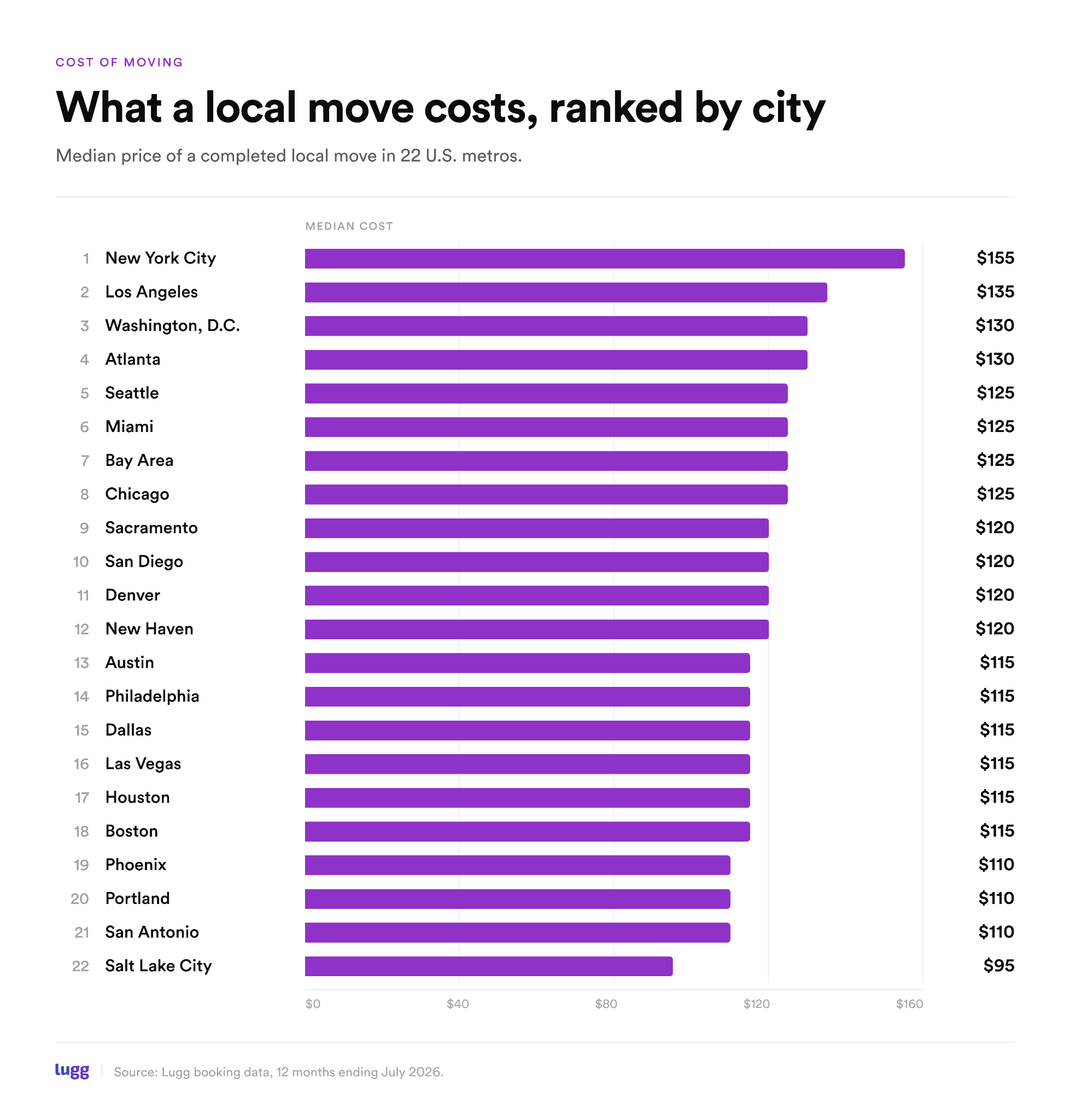
Distance swings almost as much as price, and it tracks the shape of each city. The shortest moves happen where everything is stacked close together: a median of just 4.2 miles in New York, 4.6 in Portland, and just over five miles in Chicago, D.C., and Boston. The longest turn up in the spread-out Sun Belt, where "across town" covers real ground — 11.4 miles in San Antonio, 9.6 in Houston, 9.4 in Dallas.
Same-day moves are common everywhere but most common out West — Los Angeles and the Bay Area lead the country, while planners in Boston and D.C. are the most likely to book ahead. Short, quick, and spur-of-the-moment is simply how a lot of the country moves now.
What it means for your next move
For most people, moving is a smaller, more predictable expense than the internet would have you believe — a mid-three-figure afternoon, not a four-figure ordeal, and increasingly one that happens just a few miles away and on short notice. The practical takeaway is simply knowing your city's going rate: it turns a vague dread into a number you can plan around, and it makes an out-of-line quote easy to spot. If a cross-town move is in your near future, a quick estimate will tell you where yours is likely to land.
Loren Couse
Loren manages Growth and Online Strategy at Lugg. With a deep passion for consumer technology, he stays on the cutting edge of the latest digital trends. When he isn’t strategizing, he spends his free time building personal coding projects.
Subscribe to the Lugg blog
Get the latest moving tips, guides, and Lugg news delivered to your inbox.
Read more about Lugg moves
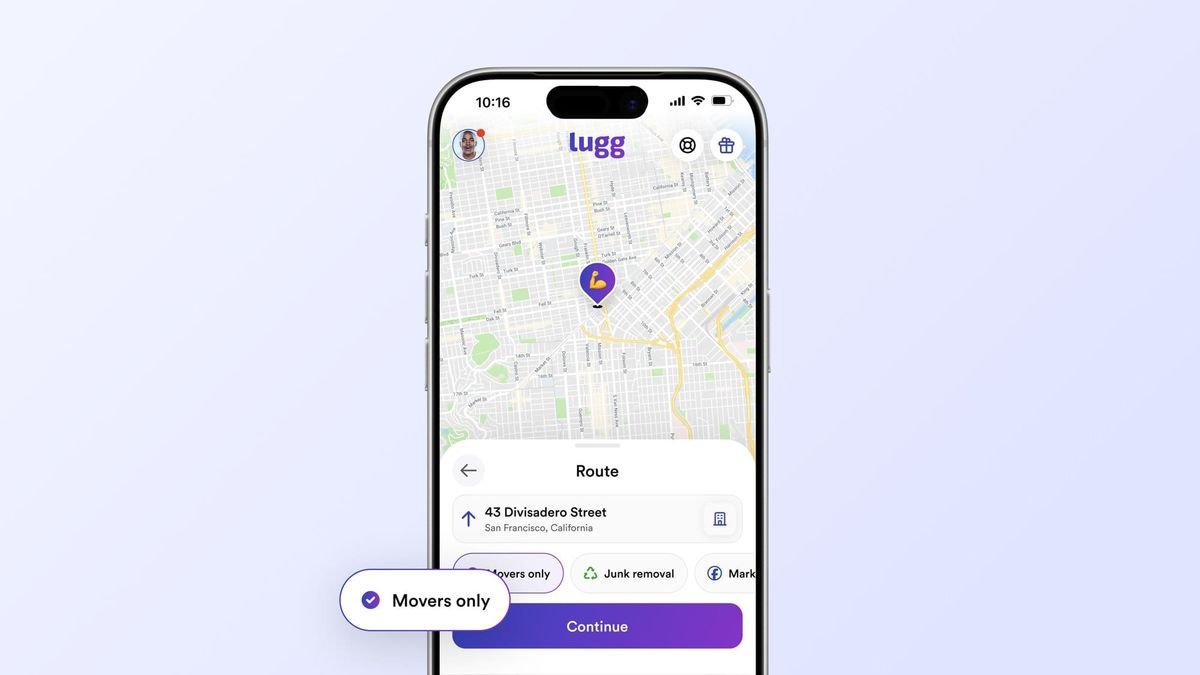
Movers only: book Lugg movers without a truck

What a decade of gig work actually pays


Dark mode is now live in the Lugg app

Furniture assembly is now part of your store delivery