What a Seattle Lugg Helper Learns in 2,600 Five-Star Moves
A five-year Seattle Lugg helper on 2,600 five-star moves, reading tight staircases, and what the work built — no truck required, in his own words.

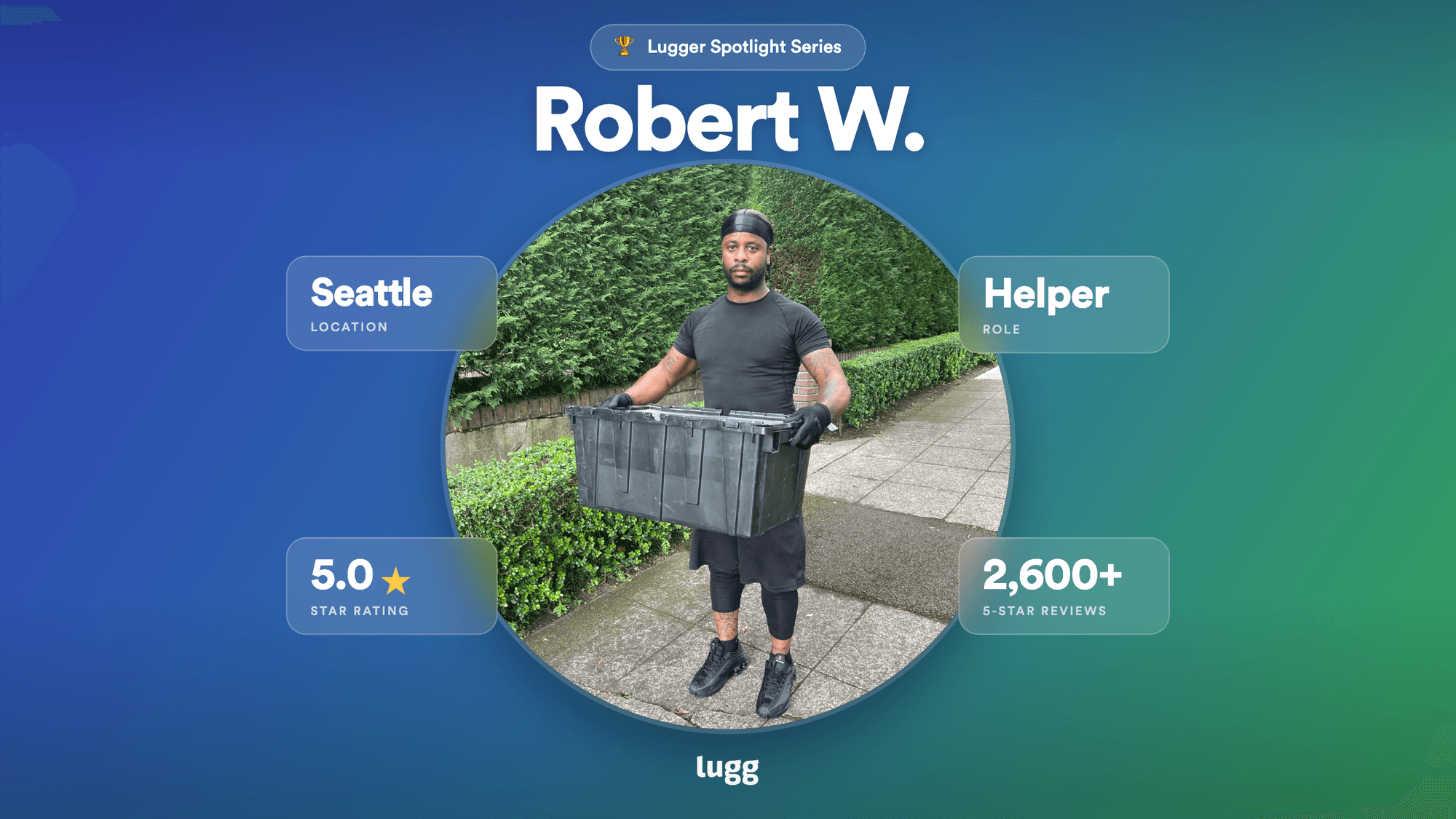
Robert W. can look at a tight staircase and know which way a sofa has to turn before he lifts it. Five years as a Lugg helper in Seattle will do that! And across more than 2,600 five-star reviews, his rating has never dropped below a perfect 5.0. He's never brought a truck to a single job; as a helper, all he needed was a phone, muscle, and a can-do attitude. His story is an unvarnished look at what the work actually asks — and what it can build.
Welcome to our first installment of the Lugger Spotlight Series, where we're handing the mic to a real Lugger: Meet Robert, who just hit his five-year mark on the Lugg platform this June.
| Robert W. at a glance | |
|---|---|
| Market | Seattle, WA |
| Role | Helper |
| Years with Lugg | 5 |
| Luggs completed | 4,500+ |
| Slots worked | 1,200+ |
| Rating | 5.0 (2,600+ five-star reviews) |
| Before Lugg | Concert promoting |
| Typical slot | 7:45 a.m.–3 p.m. |
| Most memorable Lugg | A six-foot chicken coop |
| Next goal | Get a passport and start traveling |
How a concert promoter became a Lugger
Robert didn't come from logistics. Before Lugg, he was working in concert promoting, and he wanted a reset.
"I needed to take a break and wanted to do something different," he says, "so I looked around and found Lugg."
Robert's hardly alone in making that leap: nearly 64 million Americans freelanced or worked independently in 2023, up from 60 million the year before. He just made it stick. No long onboarding saga, no career-pivot manifesto — he was looking for a change of pace and a way to start earning without buying his way in. As a helper, he didn't need a truck or equipment of his own; he needed a phone and a willingness to do the work.
His first Lugg was a HomeGoods delivery, and what stuck with him was how little friction there was.
"The [Lugger] app was very simple and comprehensible. The customer had the receipt loaded, which made the pickup easier, so all I did was use common sense and great customer service."
When the crew arrived at the drop-off, he greeted the customer, asked where they wanted the item placed, handled the request, and moved on to the next job. That's the whole loop, and after 4,500+ of them, it's still the one he keeps coming back to.
What a good day as a Lugg helper looks like in Seattle
A good day, in Robert's telling, is a consistent one — jobs coming back-to-back with little dead time between them. He's an early starter, so the 7:45 a.m.–3 p.m. window suits him exactly.
"I like to start early and finish early, so that slot is perfect for me."
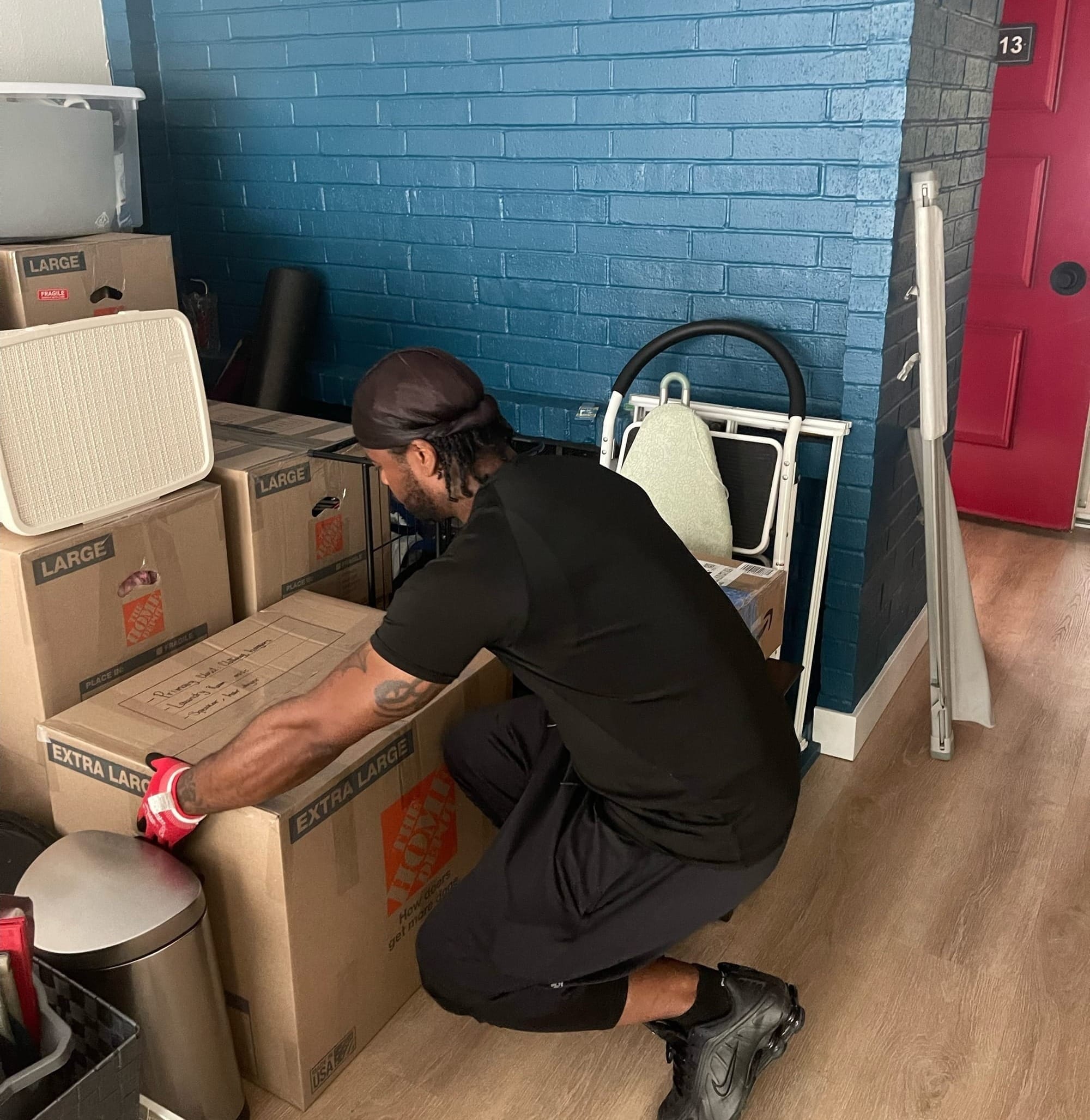
Lugg isn't built on fixed shifts, but instead on slots you claim ahead of time for the weeks you want to work. You pick which mornings, evenings, and weekends fit your life. Helpers like Robert work in two-person crews paired with a driver who brings the truck. After more than 1,200 slots, Robert has settled into a rhythm: an early window, moves strung together, done by mid-afternoon. The jobs he likes best are the big ones that travel.
"The best jobs are XL deliveries, especially delivering sofas to long-distance destinations. [For example] a pickup in Seattle and drop-off in Anacortes for an XL delivery. That's more money."
Drop-offs are supported within a 150-mile radius of pickup, which is plenty of room for the kind of deliveries Robert likes — and because Lugg pays out the same day you work, he's not waiting on a weekly check to see what a good morning was worth.
The Luggs you don't forget
Do this long enough and the jobs start to blur — but a few never do. For Robert, that's a six-foot chicken coop.
"We picked [the chicken coop] up in Burien and dropped it off in Kingston. Part of it was on wheels, so we wheeled it to the box truck, flipped it sideways to load it inside — that was the only way it would fit. I was impressed how clean it was."
The ones that stick aren't always the strange ones, though. Ask him when he feels proudest and he goes straight to a particular kind of customer:
"I feel proud whenever I complete a job for the elderly. They're so nice and kind, plus I love talking to them about history and their experiences in life."
Those are the jobs he brings up first — the older customers especially, the ones who turn a delivery into a conversation about their lives. It's a big part of why he's still doing this.
What five years on the platform actually teaches you
One of the most important things he's picked up, Robert says, is how to read a space. Move enough awkward, heavy things through enough tight doorways and staircases, and you start seeing the route before you're standing in it. It's the kind of muscle you only build by doing it a few thousand times, and it's the difference between a clean delivery and a scuffed wall.
"When moving items, whether it's sofas, dressers, or anything long, I can see angles within stairwells and tight, shifty hallways that others can't. I know which way to carry the item through the areas."
The people skills he brought with him, but with Lugg he's added reps. He's been there at hundreds of doorsteps, often on someone's most stressful day of the year (moving day), until reading a situation and a customer became second nature.
"My customer service skills have always been there. My mindset is very ambitious and only getting better."
What the money has made possible
How much can you make as a Lugger? It depends on the slot, the market, the season, and whether you're driving or helping. For Robert, those consistent slots compound — same-day pay he could plan around, plus tips paid out per move directly to him. He treats it like the small business it is, which is exactly what being a Lugger is: you're a 1099 independent contractor, so you choose your slots and manage your own end of it.
"I've been able to buy several vehicles, save a substantial amount in my savings account, and now I'm looking to buy property."
As a helper, Robert earns a smaller share of each fare than the driver he crews with, who brings the vehicle and equipment and takes the bigger cut for it. The flip side: he had almost nothing to spend to get started — no truck, no gas, no maintenance eating into the take, just a smartphone and the ability to lift safely. It's the easiest on-ramp on the platform if you don't own a vehicle. The sign-up only takes about two minutes, and the team typically activates you within the week once your background check clears.
Should you become a Lugger? Robert's honest take
If a friend asked him whether to sign up, Robert wouldn't sugarcoat it.
"I'd tell them to join if they're serious about working. Some jobs will be challenging and some will be easy."
His advice is practical and earned: find the right partner to work with and lock in seriously, and make sure they've got the muscle for the heavier jobs. Keep your Lugg account in good standing and work when you choose to, but be deliberate about it: "Don't accept slots you're unsure about working."
The flexibility is in choosing which slots to claim; the reliability is in showing up for the ones you do. Robert isn't describing easy money — he's describing a job you can shape around your life if you take it seriously, which is the only kind of pitch we're interested in making.
Next stop: a passport
After five years of early mornings and long-distance sofas, Robert's looking outward.
"My goal within the next year or two is to get my passport and start traveling the world."
This work isn't a hustle — it's a skill Robert has built upon, with nothing more to start than a phone and a willingness to learn. If that's you, the two-minute sign-up at lugg.com/become-a-lugger is the whole on-ramp, and the team will get you activated, usually within the week. Robert started by looking for something different. Five years and 4,500+ Luggs later, he's deciding which continent to see first.
Galina Hyland
Galina leads operations at Lugg, writing about logistics, supply, and what it takes to power same-day moving at scale.
Subscribe to the Lugg blog
Get the latest moving tips, guides, and Lugg news delivered to your inbox.
Read more about Lugg moves
Holiday jobs near me: flexible work through January
Flexible jobs: work the hours you actually have
Weekend jobs near me: how to earn on Saturday and Sunday only
Jobs for college students that work around class