
How to become a Lugg Driver: Earn money with your truck
What your truck or van needs to qualify, what Lugg drivers average per hour, and how the two-minute sign-up works.

If you own a pickup truck, cargo van, high-roof sprinter van, or box truck, you’re sitting on one of the most in-demand assets in the gig economy. Moving and delivery apps pay significantly more per hour than food delivery or rideshare — and Lugg is one of the top platforms for vehicle owners looking to earn real money on a flexible schedule.
Lugg is an on-demand moving and delivery service available in 4,000+ U.S. cities. Customers book Lugg when they need help moving furniture, picking up store purchases, or handling a local move — and Lugg movers show up with a truck, usually same-day. This isn’t a “just drive and drop off” gig — Lugg movers do the heavy lifting, carry items up and down stairs, navigate tight doorways, and deliver everything to the customer’s room of choice. With 1.5M+ Lugg moves completed, the platform has steady demand and a reputation that keeps jobs flowing.
This guide covers what vehicles qualify, how much you can earn, how to sign up, and what a typical day on the platform actually looks like. Whether you’re looking for a full-time gig or a way to make your truck payment with weekend work, here’s the full picture.
Lugg driver requirements at a glance
| Requirement | Detail |
|---|---|
| Age | 21 or older to drive; 18 or older to work as a moving helper |
| Vehicle | 2001 or newer pickup truck, cargo van, sprinter van, box truck, or Box+ truck, in good cosmetic condition |
| Physical | Able to lift up to 125 lbs on your own, and 250 lbs with your crew |
| Background check | Required, completed during onboarding. You cover the cost yourself, but there's nothing to pay upfront — it comes out of your first days of earnings |
| Documents | Valid driver's license, eligibility to work in the US, plus insurance and registration for the vehicle you'll be Lugging with |
| Equipment | Moving blankets, stretch wrap, tie-down straps, a dolly, basic tools, and a tarp for a pickup truck (drivers supply their own) |
| Smartphone | A recent iPhone or Android with a reliable data plan |
Watch: a day in the life of a Lugg Driver
Vehicle requirements for Lugg drivers
Every vehicle on the Lugg platform must be model year 2001 or newer and in good cosmetic condition — no significant dents, scratches, or body damage. Customers see your vehicle when you arrive, so appearance matters. Beyond that, your vehicle needs to meet the minimum cargo space requirements for its type.
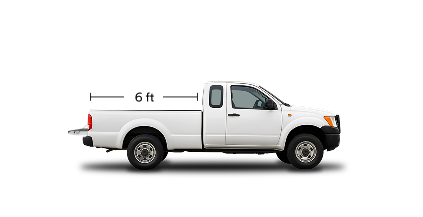
Pickup trucks (Lugg Lite & Pickup)
A pickup truck qualifies for Lugg with a bed at least 6 feet long and 4.5 feet wide. You may need to leave the tailgate open for longer items and secure everything with straps. Full-size trucks like the Ford F-150, Chevy Silverado, Toyota Tundra, and RAM 1500 all qualify. Mid-size trucks like the Toyota Tacoma and Ford Ranger qualify too, as long as they meet the bed size minimums. Lugg Lite is the solo tier: once you’re established, you can qualify to take smaller jobs on your own, no helper needed.
If you have a pickup truck and a large enclosed or open trailer, Lugg may accept your setup on a case-by-case basis. A truck-and-trailer combo can handle jobs that a pickup bed alone can’t — like full apartment moves or large multi-item deliveries. Contact Lugg’s onboarding team to discuss your specific setup and get approved.
Cargo vans (Lugg Van)
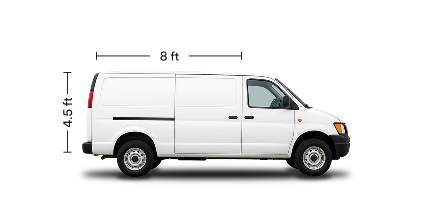
A cargo van qualifies for Lugg Van with a cargo area at least 8 feet long, 4 feet wide and 4.5 feet tall. Common qualifying vans include the Ford Transit, Chevy Express, Mercedes-Benz Metris, and RAM ProMaster City. Cargo vans are great for Lugg because the enclosed space protects furniture from weather and road debris.
High-roof sprinter vans (Lugg XL)
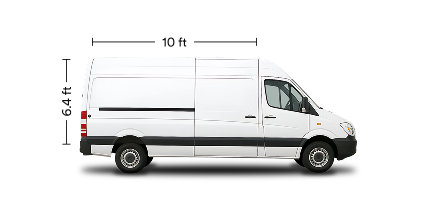
A high-roof sprinter van qualifies for Lugg XL with a cargo area at least 10 feet long, 5.5 feet wide and 6.4 feet tall — the tier above standard cargo vans. The Mercedes-Benz Sprinter, Ford Transit High Roof, and RAM ProMaster all qualify. High-roof vans are the sweet spot for Lugg work — they fit dressers, bookshelves, and mattresses standing upright, which means more items per trip and more jobs per day.
Box (Lugg Box & Box+)
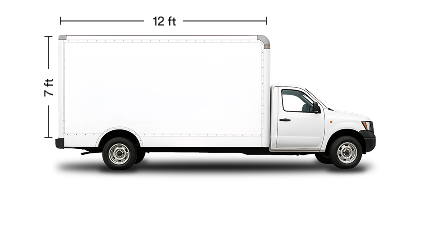
A box truck qualifies for Lugg Box with a cargo area at least 12 feet long, 6 feet wide and 7 feet tall. Box trucks handle the largest standard jobs on the platform — full apartment moves, large furniture deliveries, and multi-item pickups. Common qualifying models include the Isuzu NPR, Ford E-450, and Hino 155.
Box+ is the largest tier on the platform — minimum cargo area 18 feet long, 6 feet wide, 7 feet tall, up to 24 feet long. Box+ is built for full-home moves, the heaviest furniture jobs, and high-volume multi-stop retail deliveries that even a standard Box truck can't fit. Box+ drivers average $47 an hour plus tips, against $42 for a standard box truck. Common qualifying models include the Isuzu NPR-HD, NQR, and NRR; Hino 268; Freightliner M2-106; and Ford F-650. No CDL required — all of these models come in under the 26,000 lb GVWR threshold. If you've been thinking about how to make money with your truck at the upper end of what the platform pays, Box+ is the tier to aim for.
Can you use a rental vehicle?
Sometimes, Lugg allows a rental — pickup trucks, cargo vans, sprinter vans and box trucks are all eligible in some markets, through specific approved rental partners. If you don’t own a qualifying vehicle but want to test the waters, it’s worth asking. Connect with Lugg’s onboarding team to confirm whether a rental works in your market before you book one.
What vehicles don’t qualify
Sedans, minivans, SUVs, hatchbacks, and station wagons are not eligible for the Lugg platform. The cargo space simply isn’t large enough to handle the furniture and large items that customers book Lugg for. Most after-market accessories need to come off too. Hard caps, tonneau covers, pickup bed covers, and any modifications that reduce cargo space must be removed before you can qualify. The goal is maximum usable cargo area.
Watch: Lugg Movers, a day in the life
How to sign up as a Lugg driver
The signup process is straightforward:
1: Go to the Lugg mover signup page
Head to the Lugg mover sign-up page and fill out the form. You’ll enter your name, phone number, email, birthday, location, and more — it takes about two minutes.
2: Submit your driver form
After submitting, you’ll receive an email with a follow-up form that asks about your vehicle, experience, and availability.
3: Provide vehicle documentation
You’ll need to share photos of your vehicle (interior and exterior), your vehicle registration, and proof of auto insurance. Lugg reviews these to make sure your vehicle meets platform standards.
4: Complete onboarding
Onboarding includes a few things: a required background check, a lift test to confirm you can lift up to 125 lbs on your own, proof that you have the required moving supplies (moving blankets, stretch wrap, tie-down straps, dollies, and basic tools), and setting up your banking information so you can get paid out same-day. You cover the cost of the background check yourself, but there’s nothing to pay upfront — it comes out of your first days of earnings. You’ll also do a one-on-one session with the Lugg operations team, where they walk you through how to use the Lugg mover app, how to pick up and manage slots, what to expect on your first day, and answer any questions you have. It’s a thorough process that sets you up to hit the ground running.
5: Get approved and start picking up slots
Once approved, you’ll get access to the Lugg Mover app where you can browse and pick up available slots in your area. Slots are time windows tied to a specific region — for example, a 7:45 AM to 2 PM slot in one county, or a 10:45 AM to 8 PM slot in another. You pick the slots that fit your schedule, and a Helper pairs with you for the jobs that come in during your window (or sometimes the Helper picks up the slot first and you pair with them). New drivers often start with shorter slots to build their rating before working the longer, higher-volume windows.
Don’t have a truck? Become a Lugg Helper
If you don’t own a qualifying vehicle, you can still earn with Lugg as a moving helper. Helpers don’t need a vehicle or even a driver’s license — you’ll need a government-issued photo ID, a smartphone, and the ability to lift up to 125 lbs on your own (250 with your crew). You pair with a driver on a two-person crew and handle the loading, unloading and customer updates alongside them. Moving helpers are 18 or older, where drivers are 21 or older, and average $18 an hour plus tips. A background check is required for helpers too, and it’s completed during onboarding. It’s a way to start earning with Lugg while you decide whether to buy into a vehicle for the driver role.
How much do Lugg drivers make?
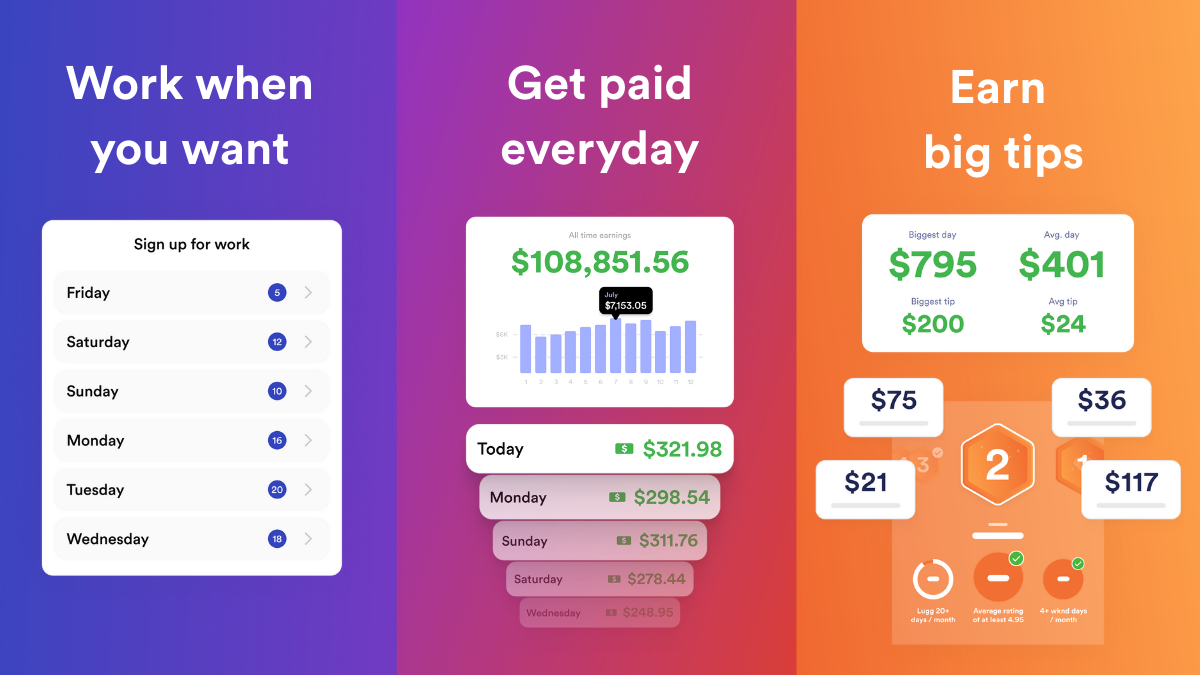
Lugg driver earnings vary by market, by vehicle, and by how many slots you pick up. Lugg is an on-demand moving and delivery service that pays you per job — you’re paid for every job you complete, and it lands the same day you work. Perfect for someone who already owns a pickup truck, cargo van, sprinter van or box truck and wants it earning on the days they choose. Drivers average $28 to $47 an hour depending on the vehicle, plus tips. Those are hourly averages, not starting rates:
| Lugg product | Vehicle | Hourly rate on average, plus tips | What it handles |
|---|---|---|---|
| Lugg Lite & Pickup | Pickup truck | $28/hr | The entry point for drivers: store pickups, small moves, marketplace hauls |
| Lugg Van | Cargo van | $32/hr | Enclosed space, more per trip, medium moves and store deliveries |
| Lugg XL | High-roof sprinter van | $37/hr | Fits king mattresses and taller loads a standard van can't |
| Lugg Box | Box truck, 12 to 16 ft | $42/hr | Full apartments, appliances, high-volume deliveries |
| Lugg Box+ | Box truck, 18 ft and up | $47/hr | Three-bedroom homes, commercial relocations, maximum cargo space |
Tips are kept in full, split evenly across your crew, and paid the same day. The key difference between Lugg and food delivery apps: Lugg jobs pay more because they combine physical labor, a large vehicle, and urgency. You’re not just driving — you’re carrying a 200-pound sofa down three flights of stairs, wrapping a dining table so it doesn’t get scratched, and placing everything exactly where the customer wants it. The trade-off is that the work is genuinely physical.
How much you earn also depends on your market. Dense urban areas like New York City, Los Angeles, San Francisco, and Chicago tend to have the most consistent demand. But even mid-size markets see strong volume, especially on weekends and at the end of the month when leases turn over.
Each role page carries a pay estimator — pick your role and your hours and it works out your weekly and monthly take-home, including tips and, for drivers, mileage and toll reimbursement. There’s one for pickup truck drivers, cargo van and XL van drivers, box truck drivers, non-CDL drivers and moving helpers.
How Lugg drivers grow on the platform
Lugg uses a priority-based tier system. Every new driver starts at Priority 3. As you build time on the platform, keep a high average star rating, and complete more slots, you move up — and as you move up, you unlock more earning potential. Your starting rate is a floor, not a ceiling.
Get started driving for Lugg
If your truck meets the requirements and you’re not afraid of lifting furniture, the sign-up takes about two minutes. You can sign up to drive with Lugg, upload your documents, and most new drivers are activated within the week — then you pick up the slots that fit your schedule and get paid the same day you work.
Galina Hyland
Galina leads operations at Lugg, writing about logistics, supply, and what it takes to power same-day moving at scale.
Subscribe to the Lugg blog
Get the latest moving tips, guides, and Lugg news delivered to your inbox.
Read more about Lugg moves

Holiday jobs near me: flexible work through January
Flexible jobs: work the hours you actually have
Weekend jobs near me: how to earn on Saturday and Sunday only
Jobs for college students that work around class
