How to Move a Refrigerator, and When to Call the Professionals
Whether you’re selling your old unit or bringing in a new model, this guide provides a comprehensive, professional blueprint for how to move a fridge.

Moving a refrigerator requires two people, an appliance dolly, and at least 24 hours of planning — but done right, you can get it from one kitchen to the next without damaging the appliance, your floors, or your back. Most full-size refrigerators weigh between 200 and 400 pounds, according to appliance manufacturer specifications, and their top-heavy design makes them prone to tipping without the right equipment and technique. This guide walks you through every step — from measuring your path to knowing when to wait before plugging it back in.
Essential Supplies for Moving a Refrigerator
Before you even touch the power cord, ensure you have the right tools. Attempting to move a fridge with sheer muscle alone is a recipe for disaster.
- Appliance Dolly: This is non-negotiable. An appliance dolly features heavy-duty straps and rubber wheels designed to handle 200–400 lbs.
- Moving Straps/Ratchet Straps: To secure the fridge to the dolly and keep the doors closed.
- Moving Blankets: To prevent scratches on the fridge’s finish and protect your door frames.
- Measuring Tape: To map out your path.
- Packing Tape: For securing the power cord and internal components.
- At Least One Helper: Never attempt to move a fridge solo.
Step-by-Step Guide: How to Move a Fridge
Follow these numbered steps to ensure the safety of your appliance and your home.
1: Measure your path before you touch the fridge
The biggest mistake people make is assuming the fridge will fit through the front door. Measure the height, width, and depth of your refrigerator, then measure every doorway, hallway, and corner between the kitchen and the moving truck. Standard interior doors are 80 inches tall and 24–36 inches wide — narrower than most people expect. If your fridge won't clear a doorway, you have two options: remove the refrigerator doors from their hinges (a straightforward process with a screwdriver on most models), or remove the house door entirely from its frame. Map this out before moving day so there are no surprises when you're mid-move with a 300-pound appliance and no room to turn around.
2: Defrost and empty the refrigerator 24 hours in advance
You cannot move a fridge that was running five minutes ago. Unplug the unit at least 24 hours before the move. Empty all contents, including anything hidden in the back of the freezer drawer. Place towels or an old blanket at the base of the unit to absorb melt water as the evaporator coils defrost. Once defrosted, dry the interior completely — any remaining moisture will trap inside during transport and create mold or mildew. This 24-hour window isn't optional: moving a running or recently unplugged refrigerator can damage the compressor and void your warranty.
Pro tip: Use this time to deep clean the interior. It's much easier when the shelves are out and the coils are dry.
3: Secure the interior and exterior for transit
Remove all glass shelves and crisper drawers and pack them separately. If any interior components are fixed and can't be removed, secure them with painter's tape so they don't rattle or shift in transit. Fold the power cord and tape it flat against the back of the unit — never let it drag. Use a moving strap or high-quality packing tape to keep the refrigerator doors shut throughout the move. Wrap the entire exterior in moving blankets to protect the finish and your door frames.
Important: Avoid duct tape directly on the refrigerator's finish — it can leave permanent adhesive residue on stainless steel and painted surfaces.
4: Load the refrigerator onto an appliance dolly
Slide the fridge out from the wall slowly — most models have adjustable front leveling feet you can raise slightly to reduce floor drag. Have your helper tilt the fridge back slightly while you slide the appliance dolly underneath the side (or back) of the unit.
- Center the load: Ensure the weight is evenly distributed on the dolly’s plate.
- Strap it in: Use the dolly’s built-in straps to cinch the fridge tightly to the frame.
5: Navigate doorways, corners, and stairs safely
When moving, the person on the dolly handles the weight and steering, while the helper acts as a "spotter" to guide the dolly through tight gaps.
- Avoid tilting past 45 degrees: Keep the fridge as upright as possible to prevent compressor oil from flowing into the cooling lines.
- Going down stairs: The person on the lower side should support the weight, moving one step at a time, while the person at the top controls the descent.
6: Load and secure the fridge in the truck
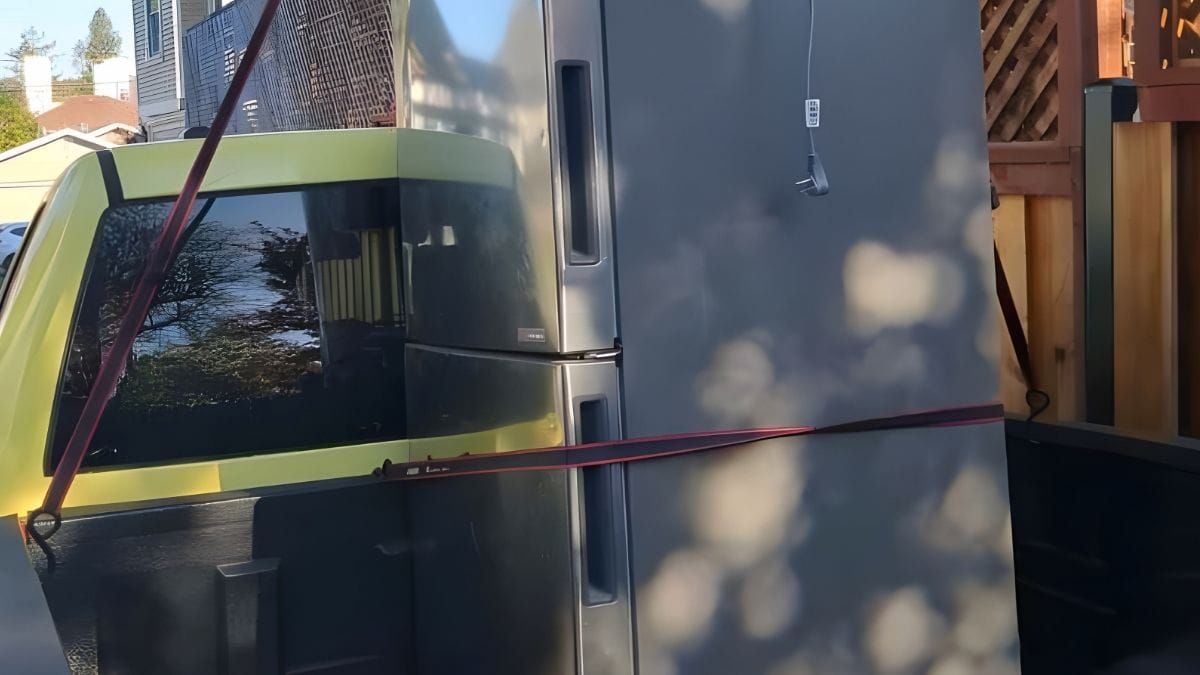
Once at the truck, use a ramp. Once inside, stand the fridge upright against the truck wall (never lay it on its back if you can avoid it) and use tie-down straps to secure it in place. Place moving blankets between the refrigerator and the truck wall to absorb road vibration. Drive slowly and avoid sharp turns.
Pro tip: On the receiving end, have your path cleared before the truck arrives so you're not holding a loaded dolly on a slope while someone moves boxes.
7: Let the compressor settle before plugging in
After the refrigerator reaches its final destination, do not plug it in immediately. If it remained upright the entire time, wait at least 4 hours. If it was tilted — even briefly beyond 45 degrees — wait a full 24 hours. This waiting period allows compressor oil that may have shifted during transport to drain back into its proper reservoir. Plugging in a refrigerator before the oil has settled can cause the compressor to run dry and seize, which is an expensive repair and often not covered under warranty. Set a timer so you don't forget.
When to Call the Professionals
While a DIY move is possible, there are several scenarios where hiring professional movers like Lugg is the smarter, safer, and more cost-effective choice.
| Scenario | Risk of DIY | Why Call Professionals? |
| Stairs & Tight Turns | High risk of wall damage or personal injury. | Pros have specialized equipment (stair-climbing dollies) and experience. |
| High-Value Models | Scratches or internal damage can cost $2,000+. | Professional services include insurance and "white-glove" handling. |
| Lack of Equipment | Buying/Renting dollies and straps is a hassle. | Pros arrive with all necessary tools, blankets, and straps. |
| Time Constraints | Moving a fridge alone can take hours of prep. | A professional team can have a fridge moved in under 30 minutes. |
"Jason and Lawrence did a great job moving the refrigerator I got from a friend. They also reminded me not to plug it in for 24 hours. The best part is I'm 73 years old and I didn't hurt myself." — Jim G., Dallas, TX Google Reviews)
Moving a refrigerator is manageable when you plan the path, give yourself 24 hours to defrost, and use the right equipment. If stairs, tight doorways, or a high-value appliance are involved, the calculus shifts quickly toward hiring help. Either way, the waiting period after the move is non-negotiable — give the compressor time to settle before you plug it in.
How to Move a Refrigerator FAQs
Can I move a refrigerator on its side?
Ideally, no. Moving a fridge on its side allows compressor oil to flow into the cooling lines, which can clog the system. If you absolutely must lay it down, always lay it on the side opposite the lines coming out of the compressor, and ensure you let it sit upright for a full 24 hours before plugging it back in.
How long should I wait to plug in my fridge after moving?
The general rule is to wait at least 4 hours if it remained upright during the move. If it was tilted or laid on its side, you should wait 24 hours to ensure the refrigerant and oil have settled completely.
Do I need to remove the doors to move a fridge?
Only if the unit is too wide to fit through your doorways. Most standard refrigerators will fit through a standard 36-inch exterior door, but interior doors are often narrower. Check your measurements first to avoid unnecessary disassembly.
How do I prevent the fridge from scratching my hardwood floors?
Never slide the fridge directly across the floor. Use an appliance dolly with rubber wheels, or place "furniture sliders" or a piece of thin plywood/masonite under the feet as you walk it out from the wall.
Should I move the fridge with the glass shelves inside?
It is highly recommended to remove all glass shelves and drawers. Even if they are taped down, the vibrations of the moving truck can cause them to crack or rattle loose, leading to expensive internal damage.
Loren Couse
Loren manages Growth and Online Strategy at Lugg. With a deep passion for consumer technology, he stays on the cutting edge of the latest digital trends. When he isn’t strategizing, he spends his free time building personal coding projects.
Subscribe to the Lugg blog
Get the latest moving tips, guides, and Lugg news delivered to your inbox.
Read more about Lugg loads

Bought furniture on Black Friday? How to get it home today

Round Top Antiques Fair: how to shop it and get it home


How to Find Free Moving Boxes (and How Many You Need)

Weekend jobs near me: how to earn on Saturday and Sunday only