
Where to store your dorm stuff over the summer (and how to actually get it there)
Move-out deadline is fixed. Your next address isn't. Here's how to find a storage unit for your dorm stuff, pick the right size, and get everything there — with or without a car.

Your move-out deadline is fixed. Your next address usually isn't. Whether you're heading home for the summer, studying abroad, or just haven't figured out where you're landing next semester, you still have to be out of the dorm by a specific date — with all your stuff.
Storage is the answer more often than people expect. According to Lugg moving data, as of 2025, nearly 1 in 5 college-related bookings involve a dorm-to-storage haul — students moving directly from the dorm into a storage unit while they figure out summer or their next place. It's one of the most common student moving patterns, and it works because it buys you time without forcing a decision.
Here's everything you need to know: how to find the right unit, what size you actually need, what it costs, and how to get your stuff there.
Dorm storage sizing guide
| Unit size | Typical dorm load | Avg. monthly cost | Best for |
|---|---|---|---|
| 5x5 | Boxes and soft bags only — no furniture | $40–$75/mo | Minimal load: clothes, bedding, small appliances |
| 5x10 | Boxes + mini fridge + small furniture (chair, shelves) | $60–$120/mo | Typical dorm room — the most common student unit |
| 10x10 | Full dorm room including desk, bed frame, dresser | $100–$175/mo | Larger hauls or sharing a unit with a roommate |
| 10x20 | Full dorm + apartment overflow | $150–$250/mo | Moving out of off-campus housing with more stuff |
Cost ranges are approximate and vary by city. College-dense markets (Boston, NYC, LA, Chicago) run higher, especially in May.
How to find and book student summer storage: a step-by-step guide
Storage sounds simple until you're trying to book a unit two weeks before move-out and everything near campus is full. Here's how to do it right the first time.
1: Figure out how much stuff you actually have
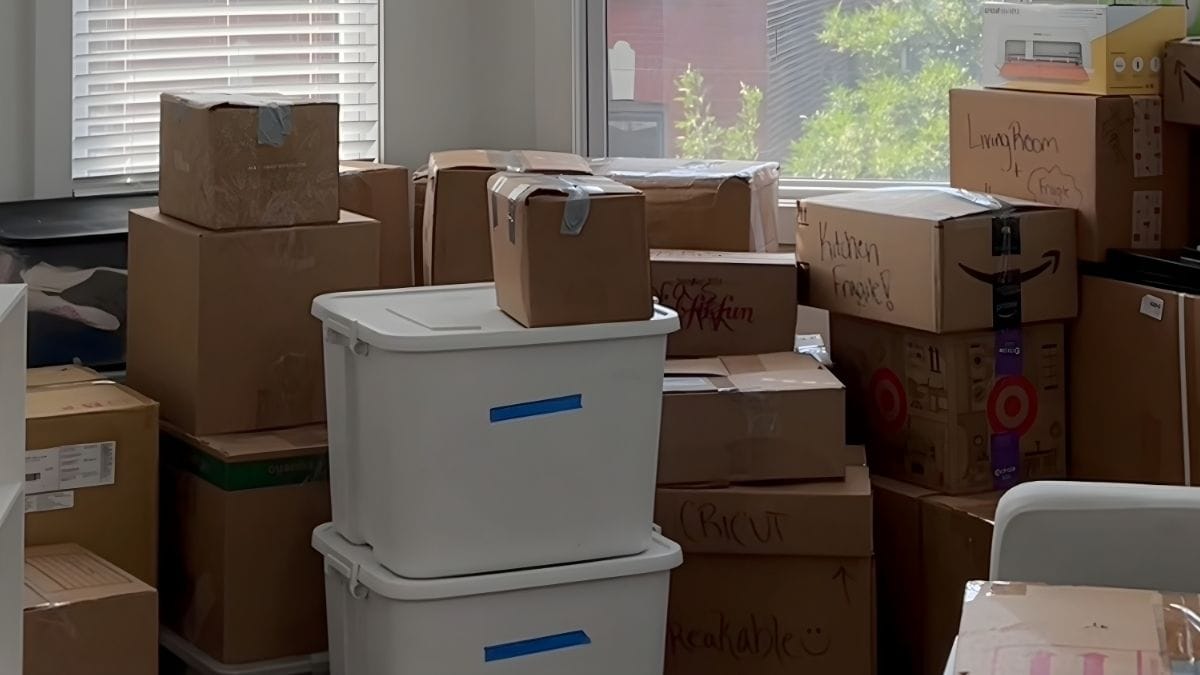
Before you look at a single unit, do a rough inventory. Walk through your dorm room and count: How many boxes will you realistically fill? Do you have furniture — a desk, a chair, a bed frame, a dresser? What about a mini fridge or microwave?
According to Lugg moving data, as of 2025, the average student moves with roughly 10 boxes plus a few key furniture pieces. Mini fridges appear in more than 15% of college-related booking descriptions, making them one of the most commonly moved (and most forgotten) dorm items. If you have one, factor it into your unit size from the start.
2: Choose the right unit size
Most students need a 5x10 — it fits the typical dorm haul of boxes, a mini fridge, and a few pieces of furniture with room to stack. Go up to a 10x10 if you have a full bed frame and dresser, or if you're splitting a unit with a roommate. A 5x5 works only if you're storing soft goods and boxes with no furniture at all.
When in doubt, go one size up. The cost difference between a 5x5 and a 5x10 is usually $20–$40/month — far less painful than cramming everything into a unit that's too small on move-out day.
3: Decide between short-term and long-term storage
Short-term (1–3 months) works for a standard summer gap — move out in May, back in August. Most facilities offer month-to-month contracts with no penalty for early exit, which gives you flexibility if your plans change.
Long-term (a semester or more) makes sense if you're studying abroad, taking time off, or genuinely unsure where you'll land. For longer storage, climate control matters more — electronics, instruments, and wood furniture can warp or degrade in non-climate-controlled units over several months.
4: Find storage near campus — and why proximity matters
Storage near campus isn't just convenient on move-out day — it matters on move-in day too. When August comes and you need your stuff back, you don't want to coordinate a long haul across town under time pressure. Search for student storage units near campus and prioritize facilities within a few miles. Major providers usually operate near most large university markets.
Also worth checking: whether your school offers on-campus storage. Many universities run a summer storage program through housing or student services — rates are often competitive and pickup/drop-off is on-site. Check your housing portal or ask your RA before booking third-party.
5: Know what to look for in a unit
Not all storage facilities are equal. Before booking, check:
- Climate control: essential for electronics, instruments, vinyl, wood furniture, and anything sensitive to heat or humidity. Non-climate-controlled units in humid markets can get extremely hot in summer.
- Security: look for individual unit alarms, gated access, and on-site staff or cameras. Your belongings will be there unattended for months.
- Access hours: some facilities restrict access to business hours. If you might need to get in on a weekend or evening, confirm 24/7 access before booking.
- Contract terms: month-to-month is almost always better than a fixed term for students. Avoid facilities that lock you into a 3- or 6-month minimum.
- Student discounts: Extra Space Storage, CubeSmart, and Public Storage typically offer student promotions — often first month free or 50% off. Always ask, even if it's not advertised.
- Hidden fees: admin fees ($15–$25), required insurance ($10–$15/mo), and mandatory lock purchases ($15–$20) are common. Get the all-in monthly cost before committing.
6: Book early — here's exactly when
In college cities, storage units near campus fill up fast in late April and early May. If you're moving out in May, book your unit by early April at the latest — 4–6 weeks out. Waiting until the week of move-out in a market like Boston, New York, or Los Angeles almost guarantees you'll be looking at units far from campus or paying premium rates for whatever's left.
If you're moving out in December for a spring semester abroad or gap, book 3–4 weeks out. The winter window is less competitive, but popular facilities near campus still fill quickly.
7: Get your stuff there without a car
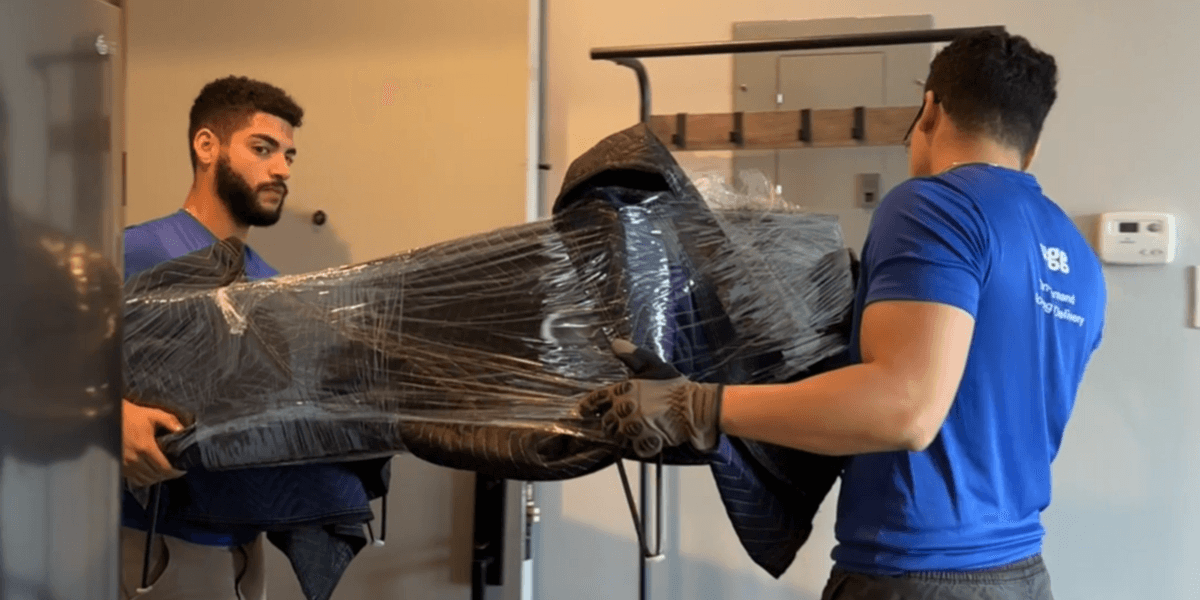
Not having a car doesn't mean you're stuck. On-demand movers let you book a truck and crew for a few hours — they pick up from your dorm and deliver directly to the storage facility. Services like Lugg operate in most major college cities and let you book same-day or in advance, which is useful when you're working around a tight move-out window.
"5🌟 rating for the fastest, most efficient, easy-to-use moving service!!! My daughter, a college freshman, needed help getting her stuff into storage..within two hours my daughter's things were picked up and delivered. What I thought would be a disaster turned into an unimaginable success story!" — LL., Google Reviews
What to put in storage vs. what to take home vs. what to toss
The mistake most students make is packing everything and sorting it out later. Later never comes, and you end up paying to store things for three months that you should have donated or tossed. Do the sort before you pack.
Worth storing
- Furniture you'll use again next year — desk, chair, shelves, bed frame
- Mini fridge and microwave (check with your facility — most allow appliances)
- Off-season clothes and bedding
- Books, course materials, and supplies you'll need next semester
- Décor, posters, and personal items you don't want to ship back and forth
Take home
- Important documents — passport, financial aid paperwork, insurance cards
- Valuables — jewelry, expensive electronics, anything irreplaceable
- Medications and anything with an expiration date
- Items you'll actually use over the summer
Toss, sell, or donate before you pay to store it
Anything broken or that you genuinely won't use again is costing you money if you store it. Textbooks sell well on campus Facebook groups and Facebook Marketplace. Clothes and household items can go to Goodwill or your school's end-of-semester donation drive. Anything truly unusable goes to junk removal — don't pay three months of storage fees for a broken or unused items.
What about dorm-to-dorm moves or mid-year gaps?
Not every student storage situation is a full summer gap. Some students are moving between dorms at the end of the year and need somewhere to put their stuff for a few weeks. Others are doing a semester abroad and need longer-term storage without a clear end date.
The same principles apply — size your unit for what you have, book early, prioritize proximity — but the timeline is compressed. For dorm-to-dorm moves, a 5x5 or 5x10 on a month-to-month contract is almost always the right call. You want flexibility, not a long commitment.
For semester-abroad situations, climate control matters more and you'll want 24/7 access confirmed — even if you're gone, a friend or family member may need to retrieve something. Make sure your contract allows authorized access by someone other than you.
Frequently asked questions
How much does it cost to store dorm stuff over the summer?
Most students pay between $60 and $120 per month for a 5x10 unit — the most common size for a standard dorm room haul. A smaller 5x5 (boxes only, no furniture) runs $40–$75/month. Factor in first-month fees, required insurance ($10–$15/month), and a lock ($15–$20 one-time) when budgeting. Many major providers offer first-month-free promotions for students — always ask before booking.
What size storage unit do I need for a dorm room?
A 5x10 unit fits the typical dorm load: 8–12 boxes, a mini fridge, and a few pieces of furniture like a chair, shelves, or a small desk. If you have a full bed frame and dresser, go up to a 10x10. If you're storing boxes and soft goods only with no furniture, a 5x5 is usually enough. When in doubt, size up — the cost difference is usually $20–$40/month and it's far less stressful than showing up with more than fits.
Can I store my stuff on campus over the summer?
Many universities offer on-campus summer storage programs through housing or student services. Rates are often competitive with third-party facilities and the logistics are simpler — pickup and dropoff happens on-site. Check your housing portal, ask your RA, or search your school's student services website. If your school doesn't offer it, your off-campus housing office may maintain a list of recommended nearby facilities.
How do I move stuff to storage without a car?
The most efficient option is an on-demand moving service — you get a truck and crew for a few hours, they pick up from your dorm and deliver directly to the storage facility. Most services in college cities let you book same-day or schedule in advance. For lighter loads (boxes only, no furniture), a cargo van rental or UPS shipment home are both viable alternatives.
Is it worth storing dorm furniture or should I sell it?
It depends on the furniture and what you're paying to store it. A sturdy desk or chair that you'll use again next year is worth storing. Flat-pack furniture from IKEA that you can replace cheaply probably isn't — sell it on Facebook Marketplace at the end of the year and rebuy next fall. The test: if the item costs less than 2–3 months of storage fees to replace, sell it and move on.
When should I book a storage unit for college summer?
Book 4–6 weeks before your move-out date if you're in a major college city. In markets like Boston, New York, Los Angeles, and Chicago, units near campus fill up fast in late April and early May. Waiting until the week of move-out almost always means fewer options, higher rates, or a unit farther from campus than you want.
What should I not put in a storage unit?
Most facilities prohibit perishables, flammables (including full gas cans), hazardous materials, and live plants or animals. Practically speaking: throw out any food before move-out, don't store propane or camping fuel, and make sure any appliances are fully defrosted and dry before storing. Check your facility's specific prohibited items list when you sign — rules vary slightly by provider.
Ready to move your stuff into storage?
You don't need a permanent address to move out of the dorm on time. A storage unit bridges the gap — and with the right size, the right location, and a booking made early enough, it's one of the lower-stress parts of the whole move. Start with how much you have, pick a unit near campus, and arrange transport before move-out week hits.
Get an estimate and book in minutes.
Holly Benjamin
Holly leads marketing at Lugg and is passionate about making the utilitarian task of moving into something people actually rave about.
Subscribe to the Lugg blog
Get the latest moving tips, guides, and Lugg news delivered to your inbox.
Read more about Lugg moves

Back-to-School Storage: A University Partnership Playbook for Storage Operators


How to plan a stress-free college dorm move-in (2026 Checklist)

Lugg vs Dolly vs Taskrabbit: which should you use?
Back-to-school moving tips for a smooth dorm move in