Flexible jobs: work the hours you actually have
With Lugg, you pick which slots to take. Here's how it works for drivers and helpers, and what to expect once you take a slot.

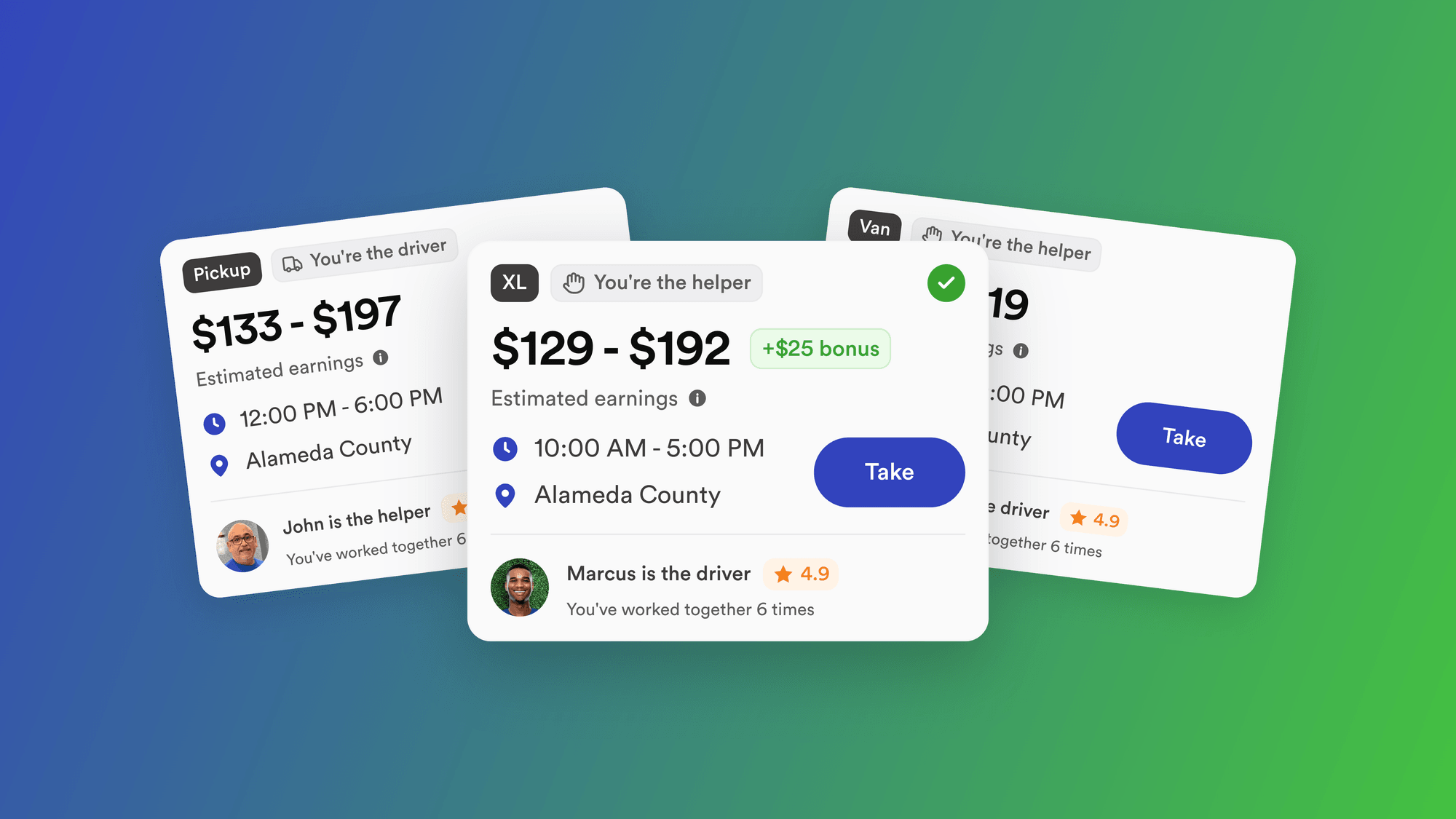
Flexible jobs should let you choose when and how often you work. With Lugg, drivers and moving helpers pick up the slots that fit their schedules. Once you pick up a slot, the customer is expecting you during their scheduled window.
Lugg work is spread across the whole week rather than concentrated on weekends. Friday and Saturday are busiest, but weekday demand remains active. Lugg is an on-demand moving and delivery service that lets drivers and moving helpers pick up local work in blocks that fit their week.
That’s a more useful way to judge flexible schedule jobs than a list of occupations. Flexible work can mean four different things. Most jobs offer only one or two:
| What "flexible" can mean | Working with Lugg |
|---|---|
| You choose which days you work | Yes, you pick up the slots you want, week by week |
| You choose whether you work at all this week | Yes, there's no weekly minimum and nothing to make up afterwards |
| You choose what time you arrive | No, every slot carries an arrival window you've committed to |
| Your income is steady week to week | No, Lugg pays you per job, so a busy day and a quiet one pay differently |
Is there work on the days you're actually free?
Friday and Saturday are the busiest days, but demand doesn’t fall away Monday through Thursday. In Lugg’s recent completed-move data, midweek activity remained close to Saturday levels.
That means a weekday-only schedule can still be workable, depending on your market. Weekend-only patterns can work too; the exact slots available, including evening availability, vary by location.
Your location and the time of month affect how much work is available. A busy city may have more work on Tuesday than a smaller market has on Saturday. Work also tends to pick up around the turn of the month, when leases end and more people move. If you’re choosing between two weeks, the one containing the 1st is often busier.
“I give Lugg four days a week and my own business two to three days. I’m able to juggle both, which equals a very productive week.” That’s how one Lugger in Atlanta described it: Lugg fills the days that something else doesn’t.
How do Lugg slots make the schedule flexible?
A slot is a block of hours you pick up in advance. Inside it, Lugg sends local moving and delivery jobs to your crew as they come in. You’re not committing to the same hours every week, and there’s no weekly minimum to make up after a week you skip.
It’s still variable work. Picking up a slot sets aside that time for work. It doesn’t guarantee the same number of jobs each time. The useful flexibility is control over which blocks you sign up for.
What isn't flexible about it?
The first fixed part is the arrival window. You choose the slots you want, but once you pick one up, the customer has been given a window and is waiting inside it. Choosing the block is yours; honoring it is part of the job.
The second is the amount you earn. Lugg pays you per job, so what you earn depends on how many jobs you complete and how busy your market is. Two Saturdays in the same city can pay differently. Work for a few weeks before deciding how much work you can usually expect.
Can you work a flexible schedule as a driver or a helper?
Yes, both roles let you choose your schedule. The main difference is what you bring to each job.
No qualifying vehicle: moving helpers need a smartphone, must be 18 or older, and must be able to lift up to 125 lbs. They earn $18 an hour on average, plus tips. Read the full moving-helper guide for a detailed walkthrough of the work.
Qualifying truck or van: drivers must be 21 or older and bring an approved vehicle, insurance in their own name, and basic moving equipment. Driver hourly averages vary by vehicle. Compare the current requirements for pickup-truck drivers, cargo-van drivers, box-truck drivers, and non-CDL drivers. Drive for Lugg explains how the paths differ. Both roles require a background check. The cost comes out of future earnings, so you don’t pay it upfront.
How much of a week can flexible moving work fill?
There’s no weekly minimum, and the number of available slots varies by market and week. Some Luggers work only once in a while. Others work part time or full time.
Think about the week in hours rather than starting with a monthly total. Around 20 hours per week is part time, while 40 hours is full time. A moving helper earns $18 an hour on average. Driver averages depend on the vehicle. These are averages, not guaranteed rates.
Plan from the slots you can actually pick up, not the schedule you hope will be there. Signing up early enough to complete the background check gives you a better chance of making your first working week match the time you have available.
Choose the days before you pick up the work
If weekends are the only time you have, the weekend jobs guide covers Saturday and Sunday demand, planning, and pay in detail. If your available days change from week to week, check the open slots and choose the ones that fit your schedule.
Sign-up takes about two minutes and asks for your name, date of birth, and the role you want. Start the background check when you sign up rather than the week you hope to work, because it determines when you can begin. Sign up to work with Lugg and choose the path that fits what you already have.
Galina Hyland
Galina leads operations at Lugg, writing about logistics, supply, and what it takes to power same-day moving at scale.
Subscribe to the Lugg blog
Get the latest moving tips, guides, and Lugg news delivered to your inbox.
Read more about Lugg moves

What It’s Like to Be a Lugg Helper: 6,300 Moves in San Francisco

Holiday jobs near me: flexible work through January

Weekend jobs near me: how to earn on Saturday and Sunday only

Jobs for college students that work around class