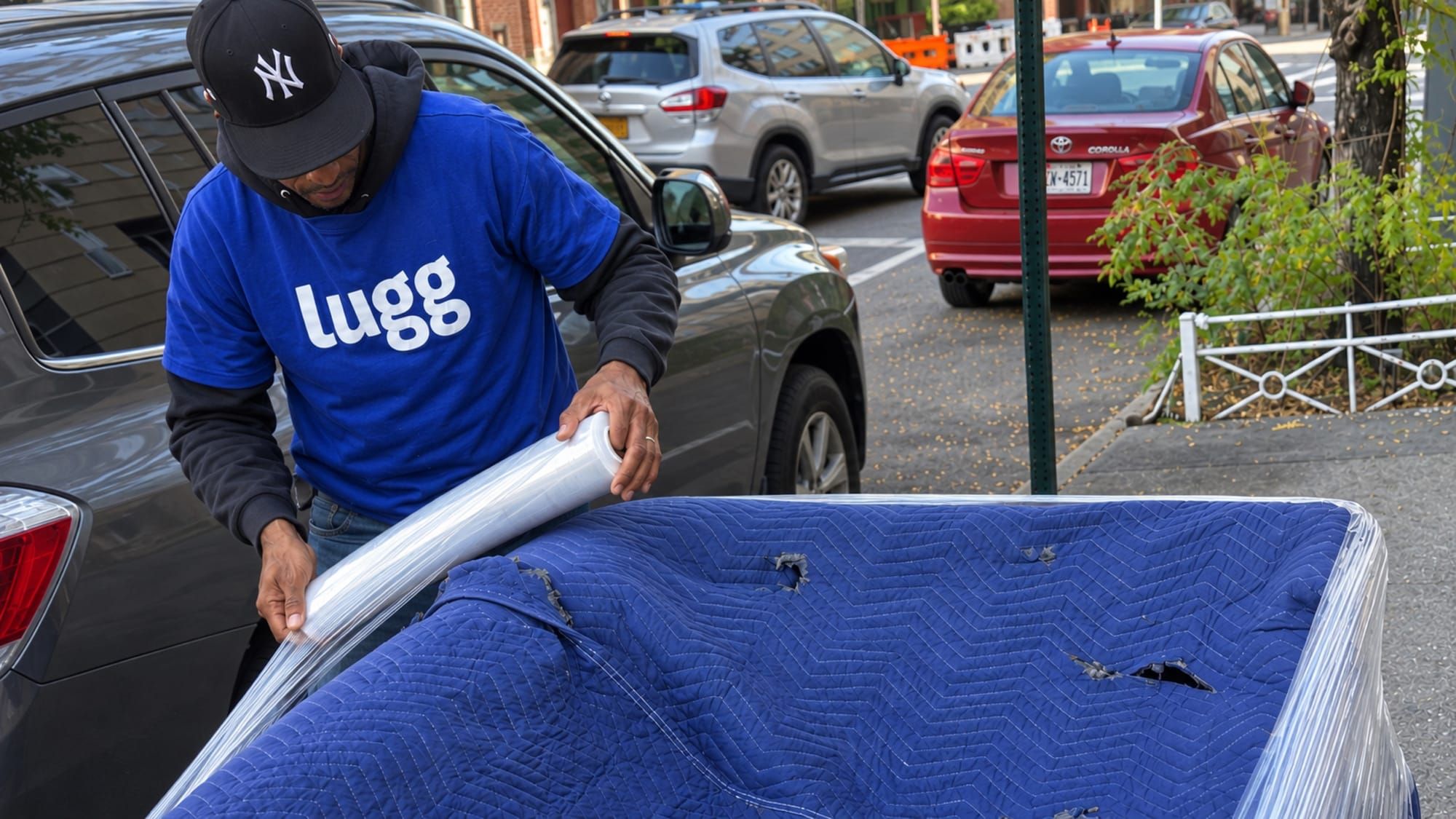
Jobs for veterans: flexible work you can start without a new certification
Veterans can sign up as a Moving Helper or bring a qualifying vehicle to drive. Here’s what each Lugg role pays and requires.

Jobs for veterans do not all need to begin with a new degree, professional certification, or fixed schedule. The Bureau of Labor Statistics counted just over 8 million employed U.S. veterans in 2025, and every transition looks different. Lugg is an on-demand moving and delivery platform that gives veterans who are comfortable with physical work a way to earn on local moves and deliveries as a Driver or Moving Helper, without a CDL.
With Lugg, you choose the times you want to work and get paid for the jobs you complete. This is independent-contractor work, so there is no salary, guaranteed number of hours, or employer-provided benefits. It can make sense as a bridge between roles, income alongside school, or flexible work that fits around other priorities.
What are the two ways to earn with Lugg?
You can bring a qualifying vehicle as a Driver or work as a Moving Helper without one.
| Lugg role | What you bring | Minimum age | Average earnings |
|---|---|---|---|
| Moving Helper | Smartphone and ability to lift up to 125 lbs. | 18 | $18 per hour average, plus tips |
| Driver | Qualifying pickup, van, or box truck, required documents, and moving supplies | 21 | $28–$47 per hour average, plus tips |
Lugg pays per job. The hourly figures above are averages, and actual earnings vary by market, vehicle, demand, and the work you take. You can compare each role and estimate your earnings before choosing a path.
Why can moving and delivery work fit a veteran’s transition plan?
Moving and delivery work can give veterans room to earn while making a bigger career decision. You can pick up slots around classes, interviews, appointments, caregiving responsibilities, or another source of income. There are no fixed weekly hours, and you decide when you are available.
Each job has a clear objective. A customer needs a couch delivered, an apartment moved, a storage unit cleared, or a donation dropped off. You know what needs to move and where it needs to go.
That structure can work well for someone who prefers active work and a defined result. Lugg work involves lifting, loading, driving or riding between stops, navigating stairs, protecting furniture, and communicating with customers. Veterans with injuries, mobility limits, or a preference for desk-based work should weigh those demands before signing up.
The U.S. Department of Labor also treats freelance and independent-contractor work as part of the broader flexible-work landscape in its Flexible Job Options guide. That makes contractor work one option to evaluate alongside full-time roles, training, school, and entrepreneurship.
For veterans considering Lugg, the decision comes down to the physical work, contractor model, role requirements, and local availability.
Which military skills transfer to Lugg work?
Military occupations vary widely, but several practical skills carry directly into local moving and delivery work.
Sunday brings Army logistics experience to Lugg
Sunday served in Iraq and Afghanistan, where he developed logistics skills he now uses as a Lugg Driver. Since joining Lugg in 2022, he has applied route planning, load organization, timing, and clear coordination to local moves and deliveries.
Other veterans bring experience in electronics repair, cavalry reconnaissance, Airborne Ranger service, and Military Police K-9 work. Regardless of background, every prospective Driver and Moving Helper follows the same Lugg role requirements.
Logistics and planning keep a move on track
Luggers work from job details that can include addresses, item lists, access notes, and timing. Reading the plan, checking equipment, and thinking a few steps ahead helps prevent wasted trips and damaged items. Experience with load planning, route awareness, inventory, or time-sensitive tasks can be useful here.
Clear communication builds customer trust
Customers may be stressed, short on time, or unsure whether a large item will fit. Luggers need to explain the plan in plain language, set expectations, and flag a problem early. Calm updates matter as much as lifting strength when a move changes halfway through.
Equipment care and safety protect everyone
Moving blankets, straps, dollies, ramps, and vehicles all need attention. A strong safety habit helps protect the customer’s belongings, the property, and the people doing the work. Steady, careful execution protects people and property when speed would create risk.
The VA’s veteran career resources can also help you translate military experience for a wider civilian search, explore training, and connect with career support.
Should you work as a Moving Helper or a Driver?
Your vehicle, age, and preferred level of responsibility determine which Lugg path makes sense. The roles work together on many jobs, but their requirements and earnings stay separate.
Choose the Moving Helper path if you do not have a vehicle
A Lugg Moving Helper brings a smartphone and the ability to lift up to 125 pounds. Helpers must be at least 18. You help with lifting, loading, unloading, item protection, and customer communication while the Driver handles transportation.
Moving Helpers average $18 per hour plus tips, with same-day payout available to a qualifying debit card. This path can work well if you want active local work without the cost and upkeep of supplying a truck or van. You still need to be ready for stairs, bulky furniture, changing weather, and careful work inside customers’ homes.
Choose the Driver path if you have a qualifying vehicle
Drivers must be at least 21 and bring a qualifying vehicle, proof of insurance, and the required moving equipment. Drivers average $28–$47 per hour plus tips, depending on vehicle type, and same-day payout is available to a qualifying debit card.
Drivers handle transportation as well as moving work. That means checking the route, securing the load, keeping the vehicle ready, and accounting for vehicle expenses, although qualifying zone miles and most required tolls may be reimbursed. Lugg Driver roles use a regular driver’s license rather than a CDL. The vehicle must meet the current size, age, condition, and documentation standards.
What do veterans need to sign up for Lugg?
Veterans and non-veterans follow the same Lugg role requirements. No moving-specific certification is required.
Before signing up, check the current requirements for both roles. Every prospective Lugger needs:
- Eligibility to work in the United States
- A smartphone with a reliable data plan
- The ability to lift up to 125 pounds
- A government-issued photo ID
- A completed background check
Helpers must be at least 18. Drivers must be at least 21 and provide a valid driver’s license, proof of insurance, a qualifying 2001-or-newer vehicle in good cosmetic condition, and the moving supplies required for that vehicle class.
Every prospective Lugger completes a background check during onboarding. Review the latest requirements during signup, since they can change.
Most approved Luggers can be ready in about a week, depending on how quickly they complete onboarding and the background check.
How should Lugg fit into a broader post-service plan?
Working with Lugg can provide flexible local income when physical contractor work fits your post-service plan. Compare the contractor model with the stability, benefits, training, advancement, and physical demands of other jobs for military veterans.
Ask yourself a few direct questions:
- Do I want active, customer-facing work?
- Can I safely lift and move bulky items?
- Do I need to control when I work?
- If I drive, have I counted fuel, maintenance, insurance, and taxes?
- Am I looking for a bridge, side income, or a longer-term independent work option?
For a wider career search, use the VA’s transition resources and the Department of Labor’s veteran services alongside your own network. Those programs can help with skills translation, training, career exploration, and local support. Lugg can provide flexible income while you work through that larger plan.
Ready to move with Lugg?
If the physical work, contractor model, and role requirements fit what you want next, choose the path that matches what you can bring. A smartphone is enough to start the Moving Helper path. A qualifying pickup, van, or box truck opens the Driver path and its vehicle-based rates.
Sign up to become a Lugger, complete onboarding, and pick the times that work for you after approval.
Galina Hyland
Galina leads operations at Lugg, writing about logistics, supply, and what it takes to power same-day moving at scale.
Subscribe to the Lugg blog
Get the latest moving tips, guides, and Lugg news delivered to your inbox.
Read more about Lugg moves

Inside a Decade Driving for Lugg: Edgar’s 10,000-Move Story

What It’s Like to Be a Lugg Helper: 6,300 Moves in San Francisco
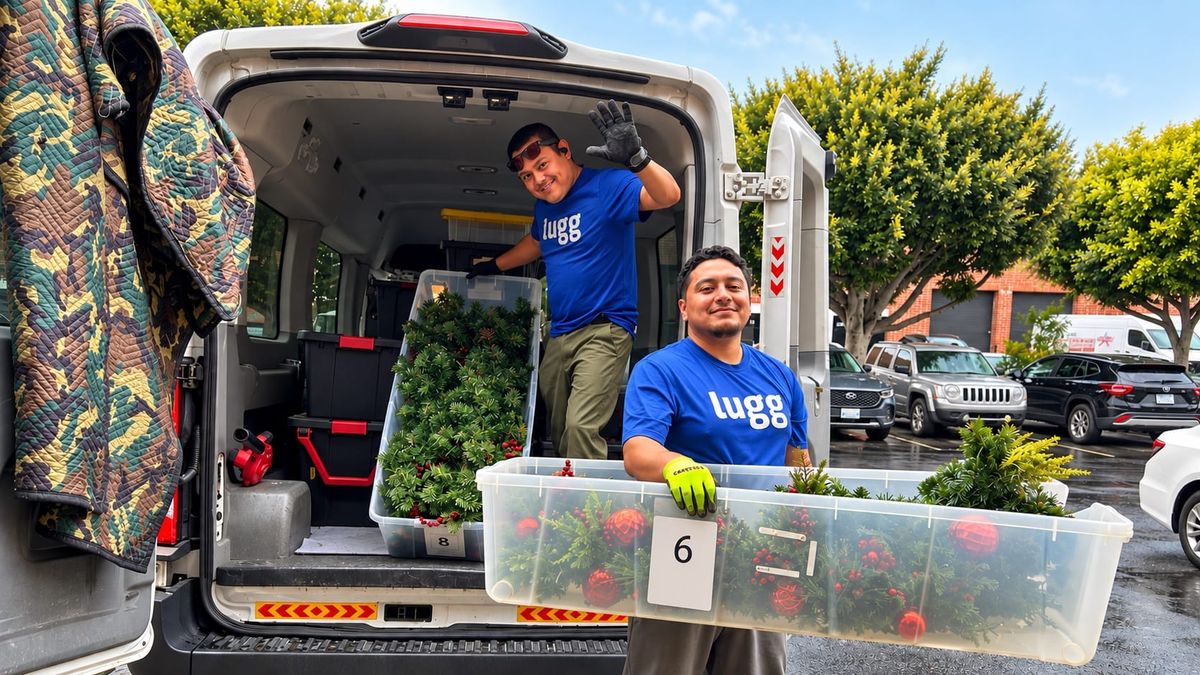
Holiday jobs near me: flexible work through January
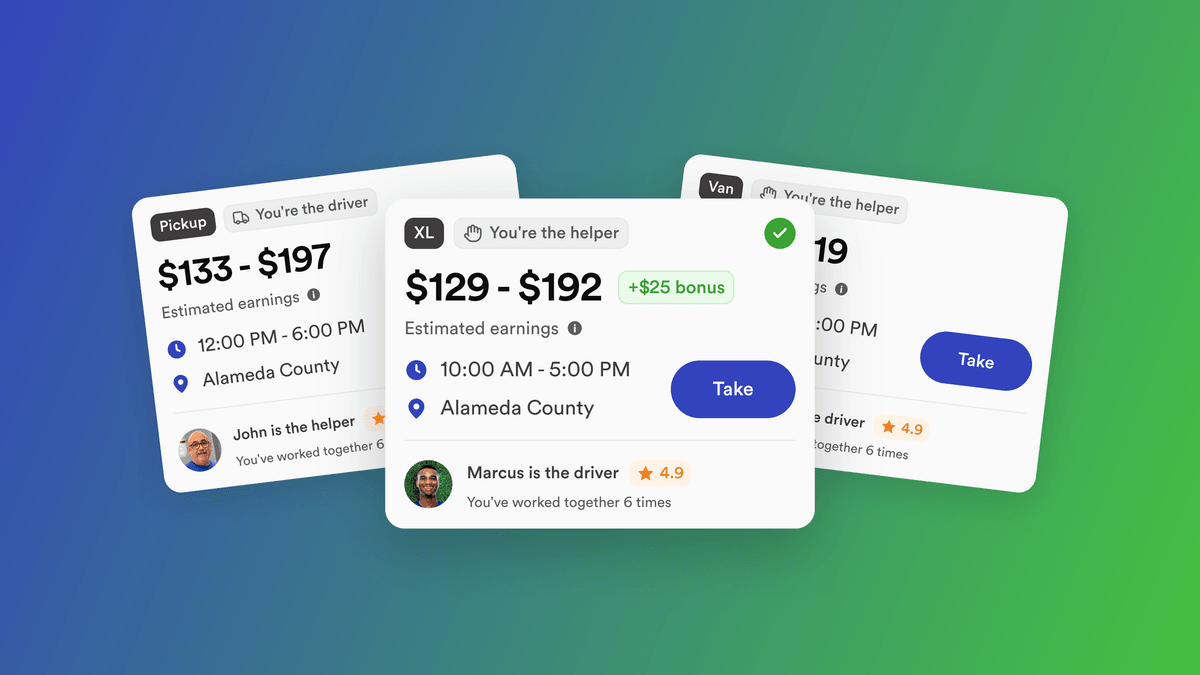
Flexible jobs: work the hours you actually have