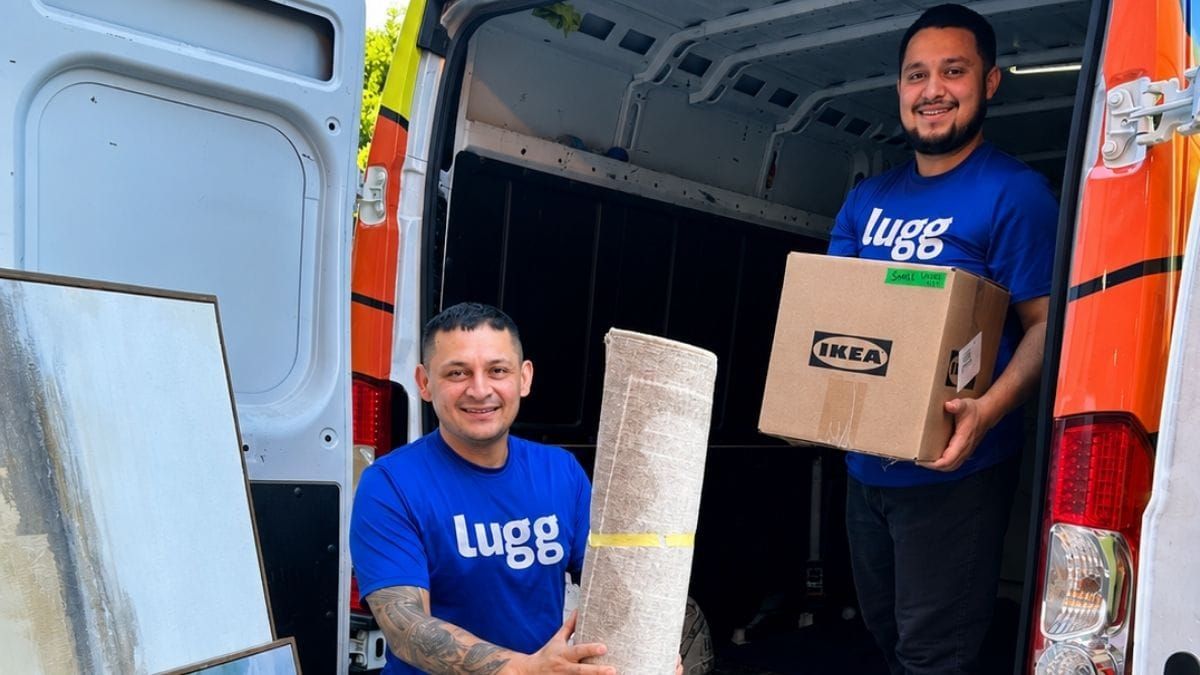
Back-to-School Storage: A University Partnership Playbook for Storage Operators
Students don't have trucks. The storage operator who can pick up from the dorm in May and redeliver in August is the one who wins the campus.

Every spring, the student-storage business shows up on the same compressed schedule: a few hundred residents per hall clearing out in the same two-week window, then nothing until August. U.S. colleges enroll roughly 19 million students, according to the National Center for Education Statistics, and a big share of the on-campus ones need somewhere to put their stuff over the summer. The operators who capture that surge are the ones who can get a freshman's boxes from a third-floor dorm to the unit on move-out day — when the student has no truck, no help, and 48 hours to be gone. Proximity to campus barely matters if you can't solve the haul.
Most storage operators underrate that round trip, and it's what actually sells student storage. A student booking summer storage is really trying to solve one thing: "how does this mini-fridge get out of my room and back in September." Solve that and you win the campus. Don't, and the booking goes to a door-to-door service that already did.
What Student Storage Actually Demands From an Operator
| Factor | What it looks like | Why it decides the booking |
|---|---|---|
| Timing | Move-out compressed into ~2 weeks in May; redelivery in a 2-week window in August | The whole year's student volume lands twice, fast — staffing the haul is the bottleneck |
| Unit size | Small: boxes, a mini-fridge, a bike, a TV — not a household | Price the offering for a dorm, not a 1-bedroom |
| The haul | Dorm → facility in spring, facility → new address in fall | Students don't own trucks; this is the make-or-break step |
| Price point | Door-to-door summer storage runs a few hundred dollars for the season (often ~$400) | Sets the ceiling students will pay for "everything handled" |
| Channel | Residence life, move-out emails, parent orientation | The university referral is the cheapest acquisition you'll find |
How Summer Storage for College Students Works
The model students expect is end-to-end: someone picks up the packed boxes from the dorm, stores them over the summer, and redelivers to wherever they live in the fall. Companies like Storage Scholars built their whole business on that round trip — supplies dropped off in advance, movers collecting on a scheduled day, climate-controlled storage for four months, everything back at move-in — and they've done it across 150+ campuses and 75,000+ student moves. The student never touches a truck.
A traditional self-storage operator sells one-third of that. You have the unit and the climate control. What you don't have is the pickup in May and the redelivery in August — the two-thirds students are actually paying for. The summer-storage market runs into the billions and is growing fast — one estimate puts it near $4.2 billion in 2023, roughly doubling by 2033 — and most of that growth is going to operators who close the gap between the shelf and the dorm room.
How Storage Operators Win the Student Booking
Proximity, small units, and flexible terms get you on the list; solving the haul gets you the booking. Every facility within a few miles of campus is already running the same playbook — campus flyers, first-month-free promotions, month-to-month terms, smaller units — so a sharper promotion won't move the needle. The door-to-door services win for one reason: they own the move, so the student never has to think about it. A student weighing "rent a unit and figure out the truck yourself" against "they handle everything for ~$400" picks the second one almost every time, even when your unit is cheaper.
You compete by being the only operator on the list who can say "we'll pick it up from your room and bring it back in the fall." Offer that round trip and you win on convenience against the door-to-door players, instead of racing the facility down the street to the bottom on price.
Contract the Haul Instead of Building It
Offering the round trip sounds like it means standing up a moving company, and that math never works: student demand lands in a two-week window in May and again in August, with nothing in between — the same crunch apartment operators feel during peak move-in season. Hiring and training crews for two weeks a year doesn't pencil out, and renting trucks you can't keep busy the other fifty is worse.
The operators who pull it off contract the haul instead of building it. Partner with an on-demand mover like Lugg and you resell the complete package — storage, pickup, and fall redelivery — under your own name, while Lugg supplies the crews, the trucks, and the capacity behind the scenes. Movers arrive in as little as 30 minutes and book same-day across 4,000+ U.S. cities, so the May surge becomes a scheduling problem instead of a hiring one. The cost turns variable: ten pickups one afternoon, forty the next Saturday, zero in June — no idle crew on payroll, no truck sitting in your lot.
Sell the University the Whole Package
That complete package is what a university actually says yes to. A housing office wants a single vendor it can hand the entire move-out to: clear the halls, store the stuff, bring it back in August, and take the donation overflow off their hands. A single Lugg booking runs up to five stops, so one route picks up from the dorm, drops a donation load at the campus collection point, and finishes at your facility — the "new item in, old item out" story a sustainability-minded housing office wants to advertise. Promise all of that and the university referral — the move-out email, the housing portal, parent orientation — is yours to win.
Give Students One Checkout for Storage and the Move
There are two ways to plug the move into your booking flow. If you have a website or POS you can build on, the Lugg API embeds it directly: a student reserves the unit, taps a "Book movers" button, and schedules the pickup and redelivery in a checkout that never leaves your site. If you'd rather not touch code, Lugg gives you a unique booking link that drops the student onto a one-page checkout sheet. Either way it lives on your site under your brand — just a "powered by Lugg" credit at checkout — so to the student and the school it feels like one service, start to finish.
You decide how the money works, too: cover the delivery cost and build it into your own price, or let the student pay at checkout — partners run it both ways. Behind the scenes, the Lugg Business Portal rolls invoicing, consolidated billing, and delivery reporting into one account, so a twelve-location program runs as one program instead of twelve seasonal scrambles, with analytics on every move. And because each booking carries the Damage Protection Guarantee with real-time tracking, the parent watching their kid's stuff move across town sees exactly where it is — the reassurance that closes a hesitant family.
Partners have seen strong pickup just by adding a "book your movers" banner to their reservation-confirmation emails — one of a range of lightweight activation tools, alongside digital assets, co-marketing, and campaign support, that Lugg supplies so you can drive student bookings from day one. Lugg provides the pieces and helps you launch, so you're set up to convert the partnership instead of figuring out promotion on your own.
In May, students book a pickup; Lugg movers collect the boxes and the mini-fridge from the room, and the load goes straight to your climate-controlled unit — no student-owned truck, no parents lifting down three flights. In August, the same booking runs in reverse, redelivering to a dorm or a new off-campus apartment before classes start.
Whoever Solves the Haul Gets the Unit
Student storage comes down to one question — who can move a dorm room twice a year. The unit is table stakes. The pickup in May and the redelivery in August are what the student is actually buying, and the operator who offers them is the one the university wants to put in front of 19 million students every fall. If your team is building a back-to-school program and the move is the missing piece, we'd want to hear about it — lugg.com/retailers.
Alex Dolat
With nearly a decade at Lugg, Alex leads business partnerships and writes about retail logistics, enterprise delivery, and what it takes to power same-day fulfillment for thousands of brands.
Subscribe to the Lugg blog
Get the latest moving tips, guides, and Lugg news delivered to your inbox.
Read more about Lugg moves

Country Living Fair 2026: A Shopper's Guide to Rhinebeck

How Home Staging Companies Actually Book Delivery
How to Close More Sales on Labor Day
Furniture Delivery for Interior Designers: Getting Every Vendor's Piece There on Install Day