How to Close More Sales on Labor Day
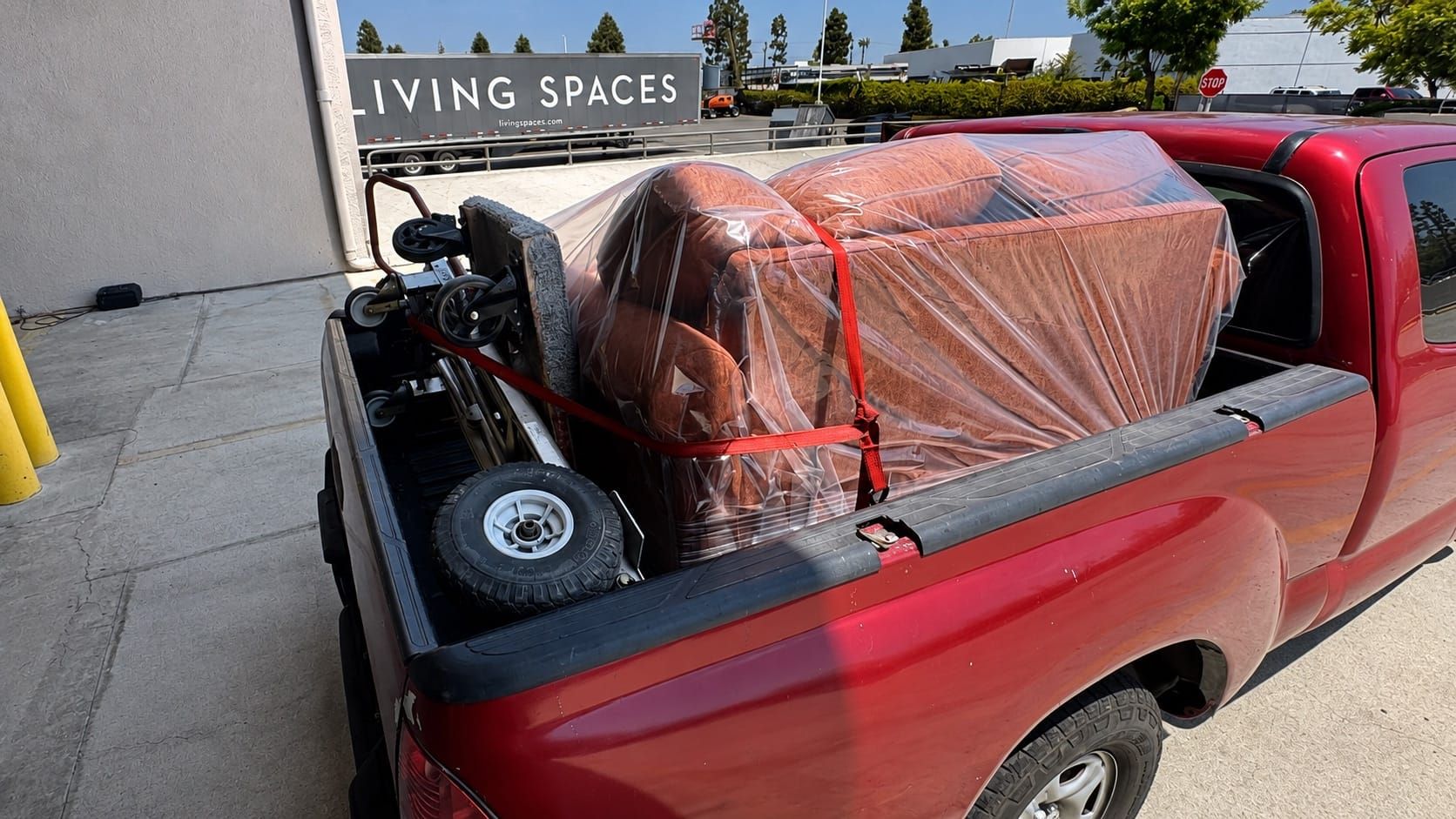
Labor Day is the weekend a store's sales floor runs full while the delivery calendar runs short. Retail-store pickups run about 20% above a normal August weekend — here's how to stop the delivery date from closing the sale for you.

On a holiday weekend, the delivery date closes more furniture sales than the discount does. Labor Day is the one weekend of the year where a store's sales floor is running at full strength while the warehouse and the delivery calendar both run behind, and the customer standing in front of a sectional on Saturday afternoon is asking one question: can I have this today?
Across three consecutive Labor Day weekends, completed Lugg deliveries that started at a retail store ran roughly 20% above a normal August weekend — and they outpaced the lift in Lugg's overall weekend volume every one of those three years. Take-it-home-today demand doesn't soften over the holiday. It concentrates.
Lugg is an on-demand moving and delivery service that gives retailers a same-day delivery option at the point of sale, picking a customer's purchase up from the store and carrying it into their room of choice. Perfect for stores that don't run a delivery fleet, or for holiday weekends when an in-house one is already fully booked.
Why the Sales Floor Stays Open and the Delivery Calendar Doesn't
The promotion is built to get more customers into the store and on the floor, and it works. The back half of the operation moves in the other direction over the same three days: deliveries run on a holiday schedule, routes run tighter, and the Monday holiday takes a delivery day out of the week entirely.
So the gap between sold and delivered is at its widest in the exact hours when volume is at its highest. A Saturday purchase that would normally land a mid-week slot gets quoted into the following week, and the quote happens at the register, in front of the customer, after they've already decided they want the piece.
Customers stopped grading your delivery date against the furniture store down the road. AlixPartners' 2026 home delivery survey found that the free-delivery expectation now runs to 3.2 days for large general merchandise, the most patient category they measured, against 0.9 days for groceries. And 52% of shoppers say one or two deliveries going wrong is enough for them to stop buying from a retailer at all. The delivery date can't be a fulfillment detail that gets sorted out later. On a holiday weekend when the sale is short lived, it decides whether you make the sale.
What the Customer Actually Does When the Delivery Date Slips
This is the half of the transaction a store can't see from inside its own four walls, and it's where the online data is useful. Among online shoppers who abandoned a cart for a real reason rather than browsing, 40% named extra costs like shipping, tax and fees, and 20% named delivery being too slow. Those two objections are the delivery line item, twice.
In a store the same decision happens without leaving a record. Nobody logs an abandonment. The customer says they want to measure the space again.
There are two versions of that walkout, and the second one is more expensive because it doesn't look like a loss:
- The customer leaves and doesn't come back. That one is visible, and it's the one floor staff report.
- The customer buys down. They take the loveseat instead of the sofa, or the accent chair instead of the pair, because the smaller piece fits in the car today and the bigger one arrives in eleven days. That closes as a sale, it shows up in the conversion number, and the margin difference never gets attributed to logistics.
Retailers running holiday promotions tend to instrument the first one and miss the second entirely. Average ticket on a promotional weekend is a delivery metric as much as it's a merchandising one.
How to Measure What the Delivery Date Costs You
Most stores already have the numbers for this. They just live in two different reports — delivery in fulfillment, average ticket in merchandising — so nobody puts them side by side.
Start with average ticket on your last promotional weekend, split between the orders you delivered and the orders customers carried out themselves. Run the same split on an ordinary weekend. If the carry-out share goes up on promotional weekends while its average ticket goes down, you're watching customers buy smaller so they can take it home that day.
Then look at the delivery dates you quoted on the orders that never closed. Most POS systems save the quote even when the sale falls through. If the dates on lost orders sit further out than the dates on won orders from the same afternoon, you're losing those sales to the calendar rather than the price.
Both of those run against numbers you already have. They take an afternoon, and they give you a dollar figure to put next to what a delivery option costs.
How Same-Day Delivery for Retailers Works Without a Fleet
The store doesn't dispatch anything, doesn't route anything, and doesn't own the truck. Lugg is an on-demand moving and delivery service that runs same-day store delivery in more than 4,000 U.S. cities and 8,000 ZIP codes, so a store can offer a today option without adding a truck, a driver or a route. Movers are on the way within the hour, or at the customer's preferred time window, and the purchase gets wrapped, loaded, hauled across town, carried up stairs, into elevators and down long hallways to the room it's going in.
The customer picks the vehicle for what they bought, so nobody at the register has to size a truck for them. The store's only job is making sure the option is communicated.
You don't have to be a Lugg Partner to start. Any store can point a customer at same-day store delivery today and have the piece home that afternoon. The customer books it themselves and pays the standard upfront estimate rather than partner flat-rate pricing, and either way the sale closes on the floor instead of walking out the door.
What the customer gets is the same either way. Up to five stops on one booking, so the new piece goes in and the old one comes out on the same trip — which matters most on a mattress sale, where the question right after "when can I get it" is always "what happens to the old one." The Damage Protection Guarantee on every booking. And live tracking the whole way, so when a store hands a customer off on its biggest weekend of the quarter, nobody is guessing where the truck is.
Becoming a Lugg Retail Partner is what changes the economics for the store, and it usually takes a couple of days to set up. Four things matter once you're a Lugg Partner:
- Flat-rate partnership pricing. For eligible retail partners, flat-rate takes the per-minute labor variable out of the number. Cost still scales by vehicle and by distance from the store to the drop-off, but the labor minutes come out, so you can put a real figure on the tag instead of a range. Typical ranges:
| Vehicle | Typical flat-rate range |
|---|---|
| Lite | $55–65 |
| Pickup | $85–95 |
| Van | $120–140 |
| XL | $165–190 |
| Box | $220–250 |
| Box+ | $285–340 |
- The Lugg Business Portal. Monthly invoicing and consolidated billing across stores, plus delivery reporting, so a multi-store operator isn't reconciling individual transactions from a holiday weekend in October.
- Priority partner support. Partners route to a partner support team instead of the general customer queue, on a one-hour email and five-minute live-chat response standard, with damage claims resolved inside three days. That gap matters far more on Labor Day weekend than it does in February.
- Marketing materials and co-marketing. Table tents, flyers, in-store signage and digital assets, sent to the store at no charge — Lugg prints them and ships them, so the delivery option is visible on the floor without anyone at the store designing or paying for it. Where there's a story worth telling, joint announcements and content collaboration on top of that.
Assembly is worth knowing about before the weekend either way, because it's the question right behind the delivery date on anything that ships in a box. Lugg movers can assemble the piece right there in the room, which matters most on the flat-packed items a Labor Day promotion moves in volume — the bed frame, the dining set, the media console — so the customer can use it that night.
How much of this matters depends on the size of the store. A single storefront mostly needs the option to exist and someone on the floor who knows what it costs. A multi-store operator needs the portal, because consolidated billing across locations is what keeps a delivery line item alive through a finance review.
How Do I Add a Same-Day Delivery Option Before the Weekend?
Three moves, and none of them need a partnership in place first.
1: Move the delivery date earlier in the conversation
Right now the delivery date usually surfaces at the register, after the customer has already talked themselves into the piece. Move it forward, onto the tag or into the first conversation on the floor. A customer who hears "this can be at your place tonight" while they're still deciding is being sold something different from the customer who finds out at checkout that it's eleven days out.
The easiest version of this is a flyer by the register. Lugg will send table tents and flyers to the store at no charge, and if the timing is tight before a weekend, a card the store prints itself does the same job. All it has to say is that there's an app and a website, and the piece can be home that afternoon.
2: Decide who pays, and put the answer on the price tag
Either the store covers delivery and builds it into the promotional price, or the customer pays at checkout. Both work. Leaving it undecided until a customer asks is what causes trouble, because then the floor improvises and the answer changes by salesperson.
3: Give the sales floor one line they can say without checking
Staff need a single sentence they can deliver on the spot: the piece can go home today, and here's what it costs. If the answer needs a manager lookup, nobody offers it on the busiest afternoon of the quarter.
Lugg supplies the scripting and the cheat sheets for this, and for stores that want more hands-on help, a rep can come in and walk the sales team through it. How much of that a store takes is up to the store.
What Labor Day Tells You About the Rest of Your Promotional Calendar
Labor Day is a good test because it's short. Three days, peak traffic, and the delivery calendar tightening at exactly the moment demand spikes. Memorial Day does the same thing. So does Black Friday weekend, and so does any clearance event that puts a floor full of large items in front of people who drove there in a sedan.
The stores that treat the delivery date as part of the offer, rather than something to sort out after the sale, are the ones whose promotional weekends hit the average ticket they planned for. If your team is running into this ahead of a promotion, we'd want to hear about it — partner with Lugg.
If you want the customer-side version of this weekend, the Labor Day furniture sales roundup is what shoppers are reading, and what last mile delivery actually involves covers the fulfillment mechanics underneath all of it.
Alex Dolat
With nearly a decade at Lugg, Alex leads business partnerships and writes about retail logistics, enterprise delivery, and what it takes to power same-day fulfillment for thousands of brands.
Subscribe to the Lugg blog
Get the latest moving tips, guides, and Lugg news delivered to your inbox.
Read more about Lugg moves
Country Living Fair 2026: A Shopper's Guide to Rhinebeck

How Home Staging Companies Actually Book Delivery
Furniture Delivery for Interior Designers: Getting Every Vendor's Piece There on Install Day
Furniture Donation Pickup: How Donation Centers Scale Donor-Side Logistics