What Is Last Mile Delivery? A Retailer's Guide to the Final Step
The last mile is the most expensive part of fulfillment, and the part most likely to decide whether a customer comes back. Here's how it works.

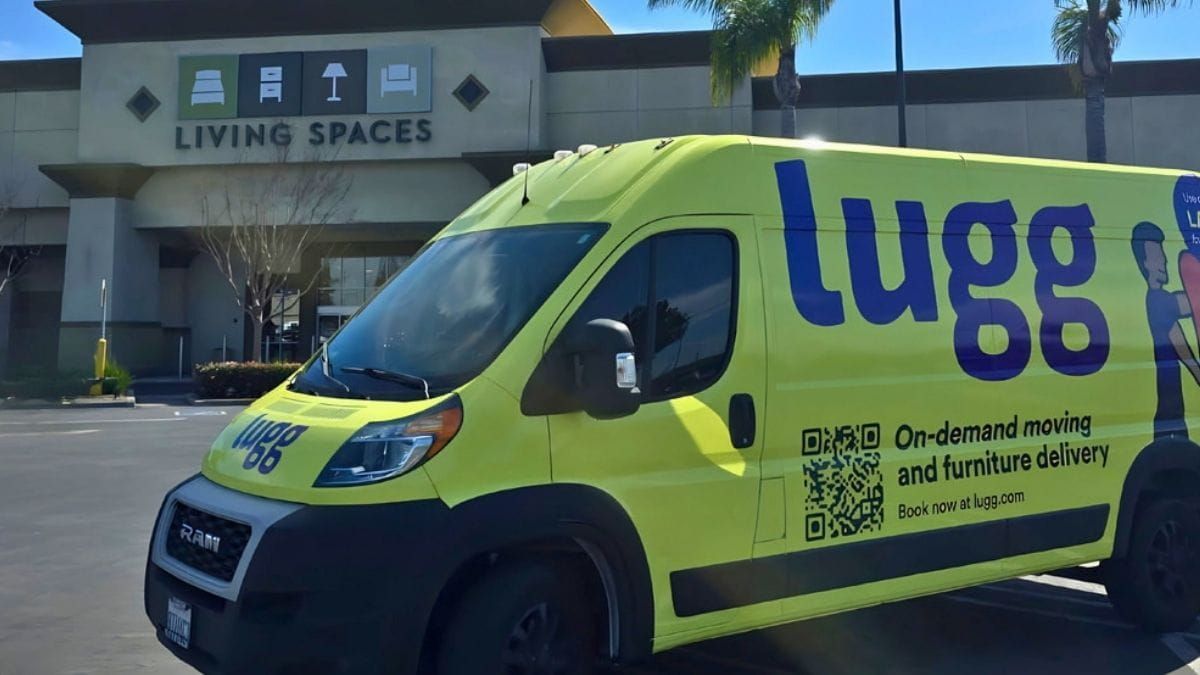
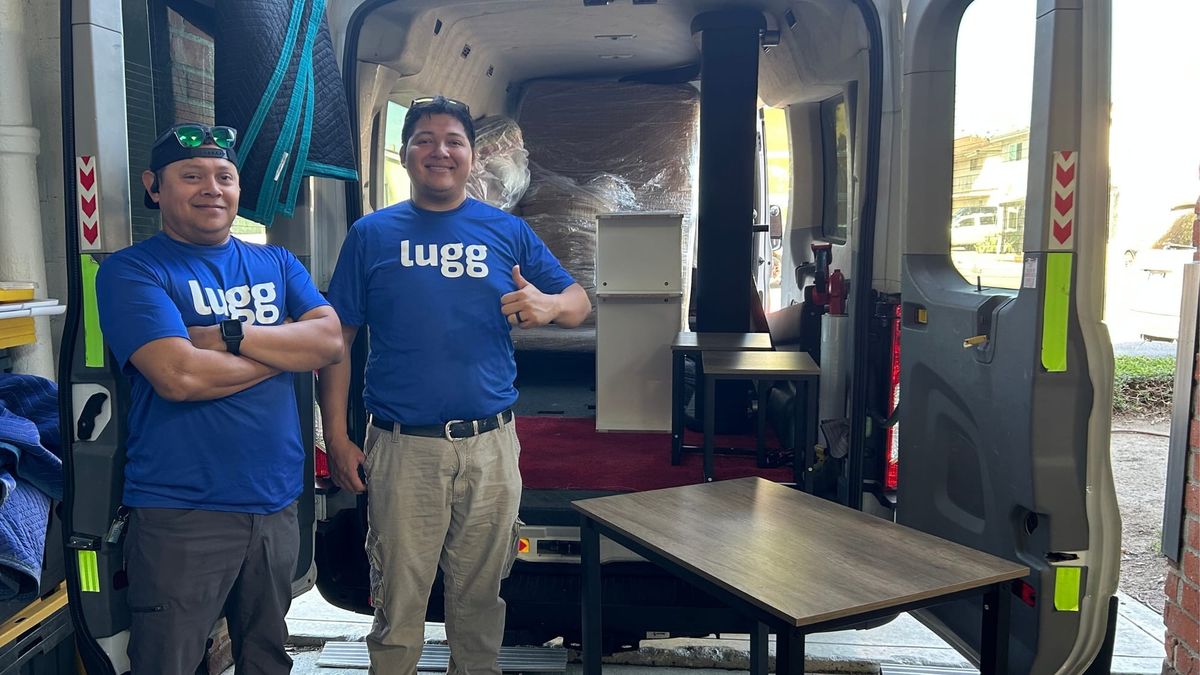
Last mile delivery is the final leg of a product's journey: the trip from a local fulfillment center, distribution hub, or retail store to the customer's door. It's the step where a couch you ordered actually arrives in your living room, where a mattress gets carried up your stairs, where a refrigerator gets placed in your kitchen instead of left on the curb. Lugg is an on-demand moving and delivery service that handles same-day last mile delivery for retailers, collecting big-and-bulky purchases at the store and bringing them into the customer's home, for stores that would rather not run their own fleet.
For retailers, it's also the most expensive part of the supply chain. The Capgemini Research Institute found that last-mile delivery accounts for 41% of overall supply chain costs. For furniture, appliance, and big-and-bulky retailers, it's also the part of fulfillment most likely to determine whether a customer leaves a 5-star review or returns the order.
Here's how the last mile delivery process works, why it's so expensive, and what retailers running a delivery program should look for.
What does "last mile delivery" actually mean?
Last mile delivery refers to the final stage of the delivery process, when a product moves from the closest distribution point to the end customer. The term names a stage, and the distance varies: the "last mile" might be 200 feet from a curbside hub or 30 miles from a regional warehouse.
You'll also hear it called 'final mile.' In most retail and logistics conversations the two are interchangeable. Some carriers use 'final mile' to signal a higher service level (scheduled-day, big-and-bulky, in-home placement), but there's no industry-wide rule.
What "picked up by last mile carrier" means
It's also the phrase your customers see. When a tracking page says a package was "picked up by last mile carrier," the shipment has left the national network and been handed to the carrier that makes the final delivery, often a regional courier or the postal service. A "last mile facility" is the local depot where that handoff happens, the last sort before the package goes out on a delivery route.
That status usually means the package has reached the delivery area, and the timing from there depends on the carrier. For a retailer, it's also the point where the customer starts refreshing the tracking page.
The category covers everything from a $20 envelope dropped on a porch to a 250-pound sectional carried into a third-floor apartment. For parcel-scale items, it usually means a single driver and a route of 80–150 stops a day. For furniture, appliances, and big-and-bulky goods, it means a bigger crew, a larger vehicle, and 6–12 stops a day, often with in-home placement.
The phrase started in telecom, where the "last mile" was the final wire from a switching station to a home, and migrated to logistics in the early 2010s as e-commerce turned the final leg into the bottleneck of fulfillment.
Last mile delivery vs. middle mile vs. first mile
First mile is the trip from a product's origin (a factory, a supplier, an overseas port) to a regional distribution hub. Goods move in bulk by container ship, rail, or long-haul truck.
Middle mile is the inland trip from that hub to a local fulfillment center, retail store, or last-mile facility. Still bulk, still planned days or weeks ahead.
Last mile is the final hop from the local node to the customer. It's the only leg the customer actually experiences, and the one with the most variability: traffic, weather, parking, building access, whether the customer is home.
Retailers running their own delivery often optimize the first and middle miles in-house and outsource the last mile to specialists, because the operating model is fundamentally different.
| Supply chain stage | What happens | Who handles it |
|---|---|---|
| First mile | Manufacturer or supplier ships goods to a regional distribution hub | Long-haul freight, container shipping, rail |
| Middle mile | Goods move from regional hub to a local fulfillment center or retail store | Regional carriers, dedicated fleets |
| Last mile | The final hop from local node to the customer's door | Parcel carriers for small items; specialty couriers and on-demand platforms for big-and-bulky |
Why last mile delivery is the most expensive part of fulfillment
The last mile is expensive for a structural reason: there's no economy of scale on the final hop. A single truck might carry 1,000 packages through the middle mile, but those packages unbundle into individual stops at the end, each with its own driveway, doorway, elevator, and customer expectations.
Three drivers explain the cost:
Routing inefficiency. A 100-stop residential route can't optimize density the way a long-haul carrier can. Stops are scattered, customers are home or not, and missed windows mean a second trip.
Labor. People are the biggest cost on the last mile. Big-and-bulky deliveries need extra hands, careful handling, and on-site time that doesn't compress.
Customer expectations. Same-day, two-hour windows, real-time tracking, and in-home placement all carry real cost, and retailers can't count on passing it through. McKinsey found that almost half of omnichannel consumers will shop elsewhere when delivery takes too long, yet most remain unwilling to pay extra for speed. The program has to absorb the cost and still hit the window.
For furniture and appliance retailers, the last mile runs higher than the parcel average, because big-and-bulky goods require larger vehicles, more crew time, and in-home services small-parcel networks aren't built for.
The biggest last mile delivery problems retailers run into
Last mile delivery for retailers tends to break in the same five places, regardless of category or scale.
Delivery windows that slip. Nearly half of big-and-bulky customers have had an item delivered outside the scheduled window: 44%, in one industry survey. When a customer has taken a half-day off work, a missed window generates support volume, refund requests, and the occasional negative review.
The hand-off from store to customer. This is where most delivery programs lose their NPS. The customer made the purchase decision in-store, then doesn't see the product again until a crew arrives at their door. Everything in between is the brand promise, and most of it isn't in the retailer's direct control.
Damage on big-and-bulky. Furniture, appliances, and large electronics run materially higher damage rates than parcel shipments. Tipping on stairwells, doorframe scrapes, and corner damage are the most common claims, and the cost shows up in refunds, replacements, and review scores.
Capacity at peak. Holiday season, end-of-month furniture sales, and big promotional events compress demand into narrow windows. Retailers relying on their own fleet hit capacity ceilings; retailers relying on a single carrier hit availability ceilings.
Same-day fulfillment. The structural gap: a customer wants the item today, the store can't deliver same-day, and the customer either walks out or buys and returns. Closing that gap is the difference between a delivery program that's a cost center and one that's a point-of-sale lever.
How the last mile delivery process actually works
Most retail last-mile programs run on roughly the same flow, regardless of carrier.
1: Order capture
Customer purchases in-store or online. Delivery is either scheduled at point of sale (the best case) or assigned after the fact. The retailers with the strongest delivery economics close this step at the register, not in a follow-up email.
2: Routing and dispatch
The order gets assigned to a route, either pre-planned for next day or assigned in real time for same-day jobs. The routing system balances vehicle capacity, drive time, and committed delivery windows.
3: Pickup at the local node
A driver and crew arrive at the store, warehouse, or fulfillment center, load the item, and start the route. For big-and-bulky, vehicle fit matters here: a sectional in the wrong-size truck means a redo.
4: Transit and tracking
The customer gets a tracking link with a live ETA. Consumer expectations have caught up to live tracking; the question is whether the last-mile partner has.
5: Drop-off and in-home placement
For big-and-bulky, service level splits two ways here. Threshold delivery drops the item at the first dry, accessible point (porch, garage, or lobby), while white-glove brings it to the room of choice, unboxes, can include light assembly, and removes packaging. Threshold is cheaper per stop but generates more support volume; white-glove costs more but materially improves NPS and cuts damage claims. Either way, most damage claims are filed at this step, which is why crew vetting and a clear damage protection policy matter.
6: Confirmation and review
Order confirmed; the customer reviews and reports any issues. Anything outside the window or with damage goes to support.
The retailers that run this well treat it as one funnel, not six handoffs. The ones that run it poorly let it fragment across three or four vendors and lose visibility at every step.
Types of last mile delivery companies, services, and solutions
Last mile delivery breaks into four broad solutions, depending on item size and service level.
Parcel carriers (FedEx, UPS, USPS, Amazon Logistics). Built for small-package, high-density routes. Cost-efficient for items under 70 pounds and standard dimensions. Not designed for in-home placement, scheduled windows, or big-and-bulky.
Dedicated final-mile carriers (Pilot Freight, Ryder Last Mile, and similar). Specialty operators, typically next-day or scheduled-day, larger crews, white-glove available. Higher cost per stop.
On-demand local delivery platforms, the category Lugg is in. Customer-facing booking or API integration, movers on standby, same-day or scheduled windows, flat-rate partner pricing for eligible retail partners, and a business portal for multi-store booking, billing, and reporting. Used by retailers like Living Spaces, HomeGoods, and Mattress Firm to handle store delivery, appliance delivery, and big furniture pickups without standing fleet cost.
In-house fleets. The retailer owns trucks, employs drivers, and runs delivery itself. Highest control, highest fixed cost. Common for furniture chains with regional density; uneconomical without consistent route volume.
The right mix depends on the catalog. Retailers with broad inventories often run a hybrid: parcel carriers for small items, an in-house fleet for high-density next-day routes, and on-demand partners for same-day, surge capacity, and the markets where in-house density doesn't pencil.
What to look for in a last mile delivery partner
When a retailer is evaluating a delivery partner, the levers that actually matter fall into five buckets. That's based on what we see across the 4,000+ U.S. cities and towns where Lugg runs deliveries.
Pricing predictability. Flat-rate partnership pricing strips out the per-minute labor variable that makes standard on-demand delivery hard to budget. Cost still scales by vehicle type and distance, but the labor minutes, which swing wildly with stairs, traffic, and building access, come out of the equation. The result is a delivery line item finance can model and the store team can quote at point of sale.
Same-day availability. If a delivery option requires booking two or three days out, a meaningful share of customers won't take it. Same-day or next-day windows are what turn delivery into a real point-of-sale lever rather than a backend logistics line.
API integration at checkout. A partner that embeds directly into checkout or POS through an API converts much better than one that lives in a separate booking flow. The fewer clicks between "I want this delivered" and "it's scheduled," the higher the attach rate.
A business portal for multi-store management. For retailers with more than a handful of locations, transaction-by-transaction booking falls apart fast. A dedicated portal for booking, monthly invoicing, and user permissions across stores is the difference between a program that scales and one that creates a new ops headache.
Real-time tracking and reporting. A good last-mile partner gives visibility into both individual deliveries and program-level performance. Live tracking has come a long way, but it still isn't standard. Plenty of partners ship "tracking" that's really an ETA email plus radio silence, and fewer share post-delivery ratings or program-level reporting. The partners worth working with do both, alongside background-checked crews and a clear damage protection program.
If you're running a retail program and any of these levers feels like a gap, that's the right place to start the conversation.
A snapshot of the market
To put numbers around it: the U.S. big-and-bulky last-mile segment was valued at roughly $10.15 billion in 2024, growing 11.8% annually through 2025. The broader last-mile market is estimated at $160–180 billion in 2024 and projected to top $300 billion by the early 2030s, driven by e-commerce growth and the shift to same-day expectations.
For retailers, that growth has a flip side: it's a competitive floor. Same-day big-and-bulky delivery used to be a differentiator. It's increasingly the baseline.
Last mile delivery is where retail fulfillment either works or doesn't
The supply chain can be efficient, the product priced right, the store experience great, but if the customer has a bad delivery experience, all of that gets undone in one visit. For retailers running a delivery program, the definition matters less than the execution: can the program handle same-day windows, big-and-bulky volume, peak capacity, and customer expectations that keep climbing?
A store doesn't need a partnership to offer this. Any retailer can point customers to Lugg for same-day delivery today, and the customer books at the standard upfront estimate. Becoming a Lugg Retail Partner adds flat-rate partnership pricing, the Lugg Business Portal, priority partner support, and in-store marketing materials sent to the store at no charge.
If your team is exploring a last-mile partner for your stores, we'd want to hear about it: tell us about your operation and we'll walk through how this would look in your markets.
Alex Dolat
With nearly a decade at Lugg, Alex leads business partnerships and writes about retail logistics, enterprise delivery, and what it takes to power same-day fulfillment for thousands of brands.
Subscribe to the Lugg blog
Get the latest moving tips, guides, and Lugg news delivered to your inbox.
Read more about Lugg moves
Country Living Fair 2026: A Shopper's Guide to Rhinebeck

How Home Staging Companies Actually Book Delivery
How to Close More Sales on Labor Day
Furniture Delivery for Interior Designers: Getting Every Vendor's Piece There on Install Day