Furniture Delivery for Interior Designers: Getting Every Vendor's Piece There on Install Day
The dozen vendor deliveries before install day are what eat a project's margin. When to rent a warehouse, and when to route instead.

Install day is where a design project's margin gets made or eaten, and what eats it is usually the dozen deliveries that come before the final one.
A receiving warehouse is the right tool when pieces ship by freight over weeks and the client's site can't take a single carton yet. On a locally sourced, quick-turn room it's mostly storage you're renting for furniture that could have moved the day it was ready. Lugg is an on-demand moving and delivery service that can consolidate pickups from up to five vendors into a single route, which fits designers sourcing locally on a compressed install timeline. It covers more than 4,000 cities and 8,000 ZIP codes, so a project's sourcing radius rarely decides the answer.
The U.S. interior design industry runs about $26.4 billion in 2026, and a real slice of that revenue leaks out coordinating deliveries no one built a system to catch. One project pulls pieces from a to-the-trade vendor, two local showrooms, a marketplace find, and a custom workroom, each arriving on its own schedule with nowhere central to land.
The default fix the industry sells is a receiving warehouse. It's the right tool for some projects and overkill for others. Here's how designers decide which they need — and how they pull a scattered vendor list into a single route when a warehouse isn't the answer.
Receiving Warehouse vs. Multi-Stop Route: Which Fits the Project
Most of the delivery decision comes down to how a project is sourced and how long pieces sit before they're installed.
| Project profile | Receiving warehouse | Multi-stop route |
|---|---|---|
| Custom, to-the-trade, freight-shipped over weeks or months | Best fit — receive, inspect, hold until the reveal | Not built for long holds |
| In-stock, local and regional retail, marketplace, compressed timeline | Overkill — you pay to store what you could route | Best fit — consolidate pickups, place on install day |
| Long gap between purchase and install | Warehouse holds it | Book once the site is ready |
| Client home ready on delivery day | Adds a handling and delivery leg | One booking, up to five stops, room-of-choice placement |
A lot of designers pay for a warehouse contract on projects that never needed one.
When a Receiving Warehouse Earns Its Cost
Four things make it the right call: freight-shipped custom and to-the-trade orders landing weeks apart, a client's home mid-renovation that can't take a carton, and a reveal where the whole value is that the client never sees a half-finished room. Early damage detection is the fourth — catching a cracked veneer on receipt instead of on install day can save the date.
To-the-trade shipments usually arrive with no in-room service. The carrier drops a crated dining table at the curb or in the garage, marks it delivered, and leaves. Someone still has to uncrate it, inspect it, and hold it until the room is ready.
Lugg is not a receiving warehouse and doesn't hold long-term storage. What it replaces is the coordination, not the building.
How to Consolidate Multi-Vendor Deliveries Into One Route
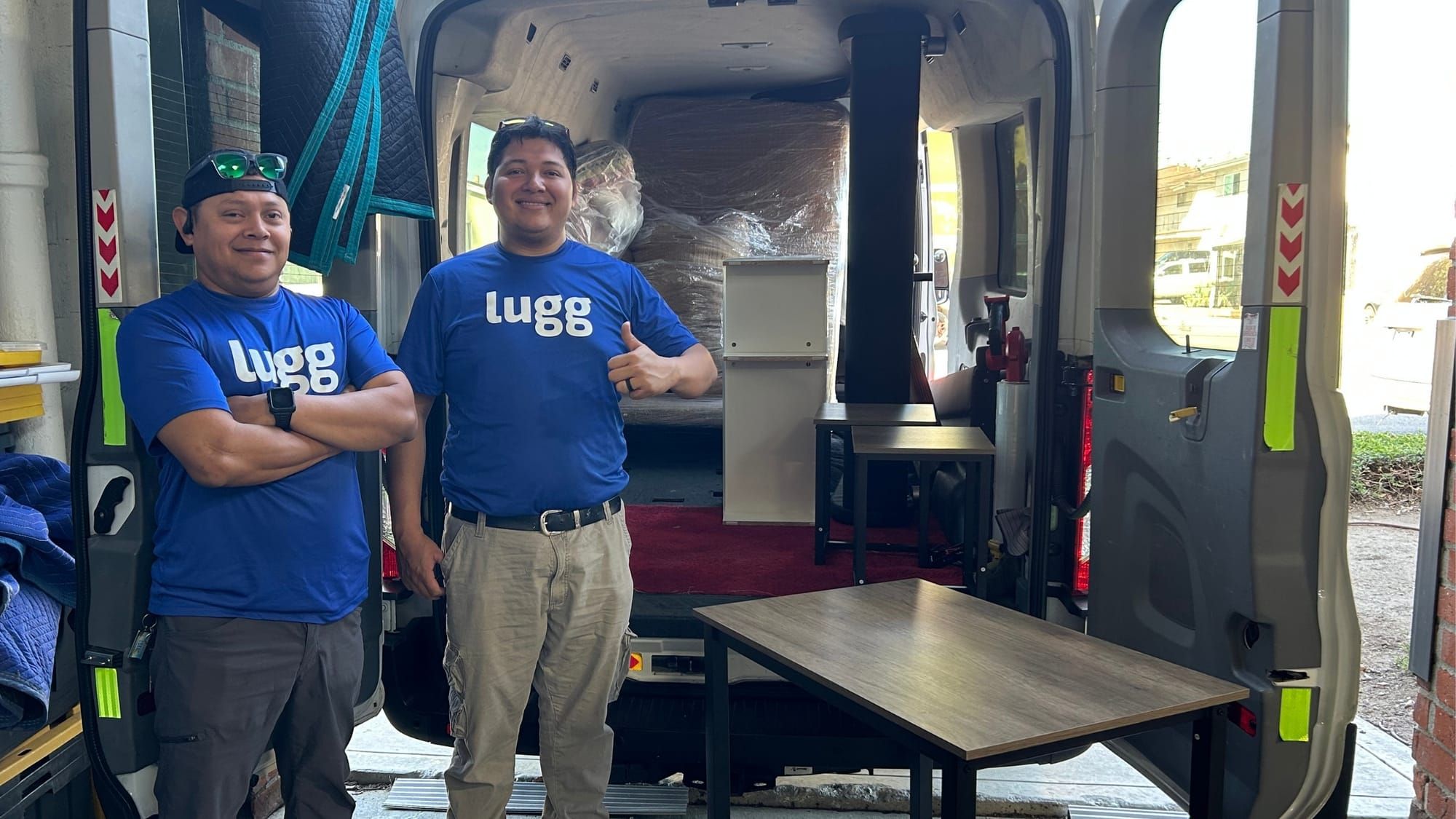
When the pieces are ready and the site is ready, the job is the route. A single Lugg booking allows up to five stops, so one crew can hit two showrooms, swing by a marketplace pickup, grab a piece waiting at the retail store, and drop everything at the client's home in one trip. New item in, old item out — you can add a donation or disposal stop in the same booking to clear what the redesign replaced.
You pick the vehicle to the load — a cargo van for a few accent pieces, a box truck for a full living room — so you're not paying for space you don't use or squeezing a sectional into something too small. And because Lugg has real-time live tracking, you and the client both watch the same route move instead of sitting through a four-hour "delivery window." For designers juggling several projects in a week, that visibility is what protects the calendar.
A real route looks like this. A designer closing out a smaller room books a van: two accent chairs from a showroom, a vintage sideboard off Facebook Marketplace, and a rug from a local shop, sequenced so the crew loads in pickup order and unloads in placement order at the client's home. A bigger project the same week takes a box truck — a sofa, dining set, and bed frame from two retail stops, dropped and placed room by room. Two bookings, two routes, and nobody sitting at a job site waiting on a carrier that said "sometime Thursday."
What Room-of-Choice Delivery Should Cover on Install Day
Threshold delivery drops your pieces at the door. Room-of-choice means they land where they're going — the sofa in the living room, the bed frame in the primary suite, the console against the right wall.
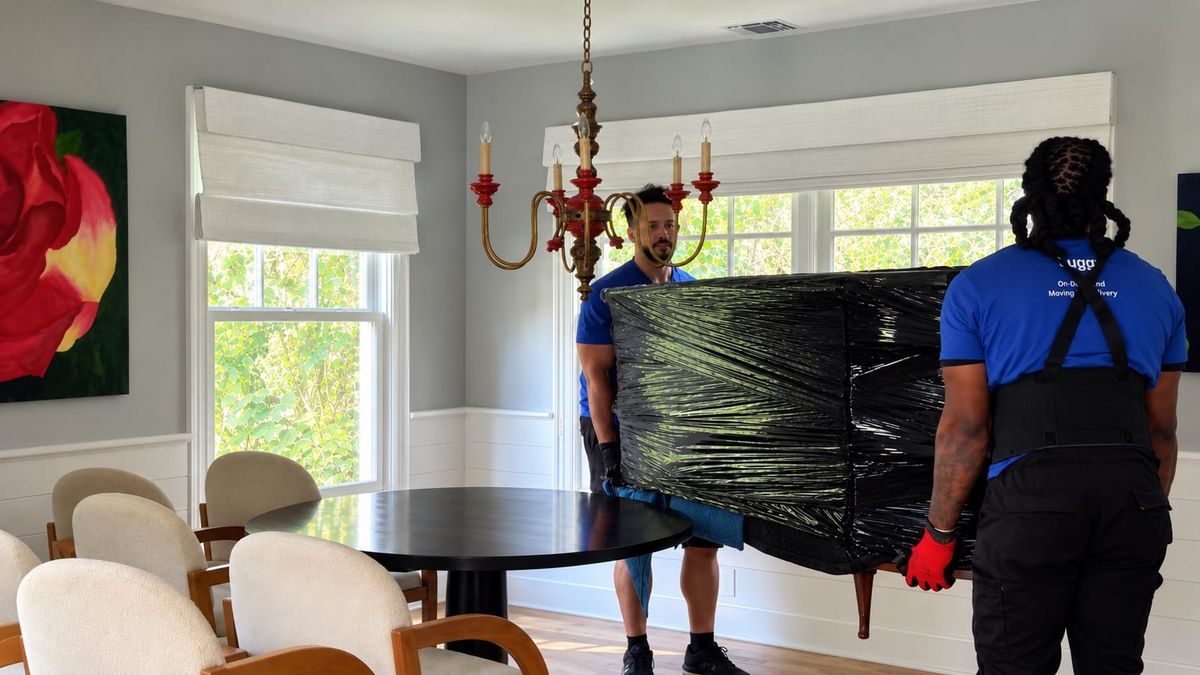
You book the delivery to your install window — same-day when a piece comes in late, or scheduled up to 60 days out for a planned reveal — so the crew arrives when the room is ready and you're there to direct placement rather than fielding calls from a driver at the curb. The crew brings the blankets, straps, dollies, and stretch wrap, and can handle basic assembly and disassembly — a bed frame, a table, legs back onto a console. They place appliances in the room, but not electrical, plumbing or gas hookups, and anything torque-specific or warranty-sensitive should go to a technician. Every mover is background-checked, performance-monitored, holds a 4.7-plus rating to stay on the platform, and has prior furniture experience — which matters when they're carrying a client's $6,000 credenza up a staircase.
What Designer Delivery Actually Costs
Standard Lugg pricing is a base fare, per-minute labor that pauses during transit, and mileage between stops — with an upfront estimate before you book. There are no hourly minimums, so a 30-minute drop doesn't get billed as two hours the way a lot of task-based help does.
Set that against a receiving-warehouse contract, which typically means monthly storage plus handling fees on both ends plus the delivery leg. On a long-lead custom project, that structure is worth every dollar. On a quick-turn room sourced locally, most of that spend is storage for pieces that were ready to go the day you bought them.
Who's on the Hook When a Piece Gets Dinged
Damage is the question designers actually lose sleep over, because a scratched dining table surfaces in front of the client. With direct-to-site vendor deliveries, damage often doesn't show up until install day, when it's too late to reorder. The warehouse model earns its keep here by inspecting on receipt — that's a real advantage of paying for one.
When you route deliveries through Lugg instead, every booking is covered by the Damage Protection Guarantee, and the crew documents condition at pickup rather than leaving it a mystery until the reveal. If something does go wrong, Lugg works toward a damage-claim resolution in about three days. It's not a receiving warehouse's inspection-and-inventory system, but for locally sourced, quick-turn work, a covered route with a crew that checks pieces at the curb closes most of the gap the warehouse was there to close.
Buy the Warehouse When the Project Earns It — Route the Rest
Using a receiving warehouse by reflex is what costs you, including on projects that were only ever a pickup list and an install date. Long-lead, freight-shipped, custom work belongs in a warehouse. Locally sourced, quick-turn rooms belong on a route — consolidated into a single multi-stop delivery that lands room-of-choice on the day you actually need it.
Set up a Lugg account, enter the addresses for your next install, and book the whole run in one go.
Alex Dolat
With nearly a decade at Lugg, Alex leads business partnerships and writes about retail logistics, enterprise delivery, and what it takes to power same-day fulfillment for thousands of brands.
Subscribe to the Lugg blog
Get the latest moving tips, guides, and Lugg news delivered to your inbox.
Read more about Lugg moves

Country Living Fair 2026: A Shopper's Guide to Rhinebeck

How Home Staging Companies Actually Book Delivery
How to Close More Sales on Labor Day
Furniture Donation Pickup: How Donation Centers Scale Donor-Side Logistics