Furniture Donation Pickup: How Donation Centers Scale Donor-Side Logistics
The couch a donor gives up on is the floor sale you never made. How to scale furniture donation pickup without buying more trucks.

For a donation center, furniture donation pickup is the top of the intake funnel, and it leaks. Most of the inventory that never reaches your floor was lost at the donor's front door, when someone with a couch to give couldn't get a pickup scheduled fast enough and threw it out, sold it, or called someone else.
Demand for a faster option is measurable. Booked donation pickups across Lugg's donation-center partners are up about 60% year over year.
ReStore chapters publish their own scheduling windows, and they run long: Habitat DC-NOVA schedules free pickups one to three weeks out depending on request volume, and Habitat Charlotte Region books standard pickups one to two weeks from request. A donor motivated on Saturday is a different donor two or three weekends later. ReStore Charlotte also sells a priority pickup completed within 48 hours for a fee, which is a reasonable proof that donors will pay for speed when the free option is too slow.
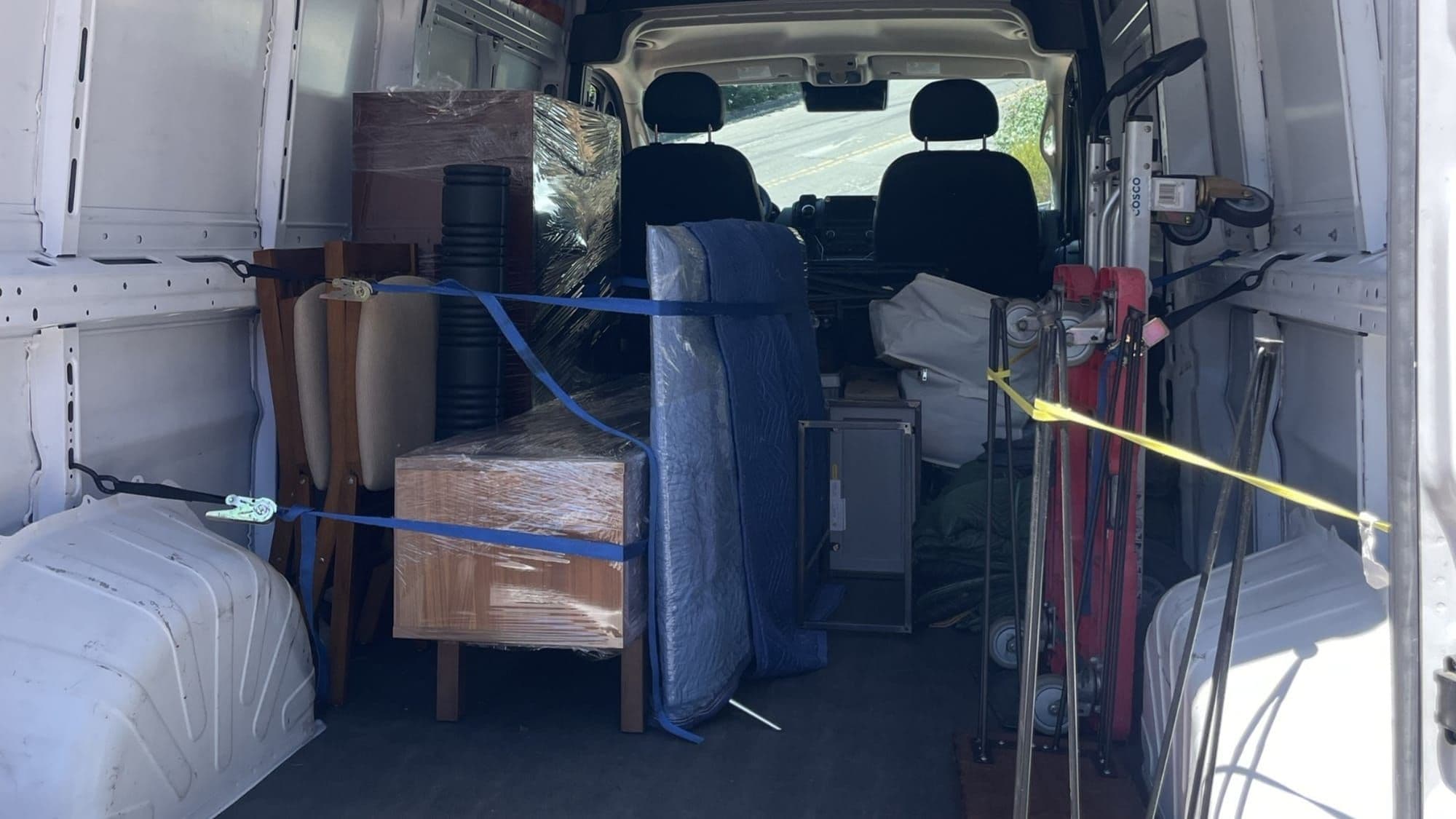
Lugg is an on-demand furniture donation pickup service that sends two movers and a truck to a donor's door the same day and delivers the donation to any charity the donor chooses, for items too big for a donor to bring in themselves.
This is a playbook for scaling the donor side of your operation without buying more trucks.
Pickup Models at a Glance
Here's how the three ways a center gets furniture off a donor's floor compare:
| In-house truck + route | Third-party junk-removal pickup | On-demand pickup partner | |
|---|---|---|---|
| Typical lead time | 1–3 weeks, longer in peak season | 1–3 days | Same-day |
| Geographic reach | Fixed service area or radius | Broader, priced per job | No route boundary |
| Cost structure | Fixed fleet + labor overhead | Per-job fee to the donor or center | Donor pays by default; partner can absorb it |
| Scales with volume | Poorly — capped by trucks and drivers | Yes, but the donor pays | Yes — add stops and bookings on demand |
| Donor experience | Long wait, missed windows | Fast, but usually a fee | Fast, live-tracked, no hourly minimums |
The in-house route is the default because it feels free. It isn't. It's a fixed cost that caps your intake at whatever your trucks and drivers can clear in a week, and that cap binds hardest in the weeks when donations spike.
Why Free Donation Pickup Takes Weeks
Free pickup runs a fixed fleet against variable demand, so a donor's wait is set by when their zip code next comes up rather than by truck availability on any given day. Batching by zip is what makes the route efficient, and it's also why published windows get quoted as ranges instead of dates. The full sequence runs four steps — a donor requests a pickup, someone screens the item for condition and fit, the address gets slotted into a route, and a crew collects it — and steps three and four are where it breaks.
The wait matters because of who donates furniture. People who are moving, downsizing, redecorating, or settling an estate are almost all working against a date, and a donor clearing a place before a closing can't hold a sectional for two weeks. It goes to the curb or to a same-day junk hauler, and because it never entered your system, the loss never appears in any report you run.
Why Donations Outside Your Radius Never Happen
The same cap applies geographically. Habitat DC-NOVA limits free pickup to Fairfax, Alexandria, and Falls Church plus Fairfax and Arlington counties, with only limited coverage in Loudoun. Every mile past that boundary is drive time your own driver absorbs on a route that's already full, so the boundary holds and the donations beyond it go to whoever can actually show up. DC-NOVA's own workaround is the telling part: for addresses it can't reach, it points donors to a paid third-party service that collects within 48 hours.
Lugg covers 4,000+ U.S. cities and towns, and a booking isn't bound to anyone's route map. A center can dispatch a same-day furniture donation pickup the day a donor is ready, with movers arriving in as little as an hour, including for a donor well outside its own service area and without adding a truck, a driver, or a route day. Sometimes the answer is hybrid: the fixed route keeps the predictable batched work it's good at, and on-demand absorbs the deadlines and the outliers it can't reach.
What Donation Centers Accept — and the Gap Between the Call and the Curb
Centers accept furniture in good, sellable condition and decline the rest. Habitat Charlotte Region's published list is a fair template: furniture, appliances within age limits, lighting, and building supplies in, and "broken, stained, inoperable items" out, along with mattresses, tube TVs, carpet, and clothing. Much of that screening happens sight-unseen, over the phone, because a fixed route can't afford a wasted stop on an item that won't sell.
The harder problem sits between that phone call and the curb. Your team says yes to an item over the phone, and then on arrival it gets refused for a condition the donor described generously, or the dock has simply filled up for the day. Now a donor is standing in a driveway with a couch and no plan, and what happens next is entirely out of your hands.
Up to 5 stops on a single booking gives that moment somewhere to go. The same trip can carry on to another donation center nearby, or pick up a disposal or recycling stop for the piece that won't make your floor — "new item in, old item out" — so the donor's problem still gets solved.
The Donor-Side Economics: Who Actually Pays
Cost per donation captured is the number that matters here, and the donor-side answer is unusual: most on-demand donation pickups are already paid for by the donor, who books the trip to your facility themselves. Your in-house truck carries a fixed monthly cost whether it runs full or half-empty, and its capacity is hard-capped in exactly the high-demand weeks when every missed donation is a lost floor sale. A donor-booked pickup adds intake capacity without adding a line to your budget.
A center that integrates gets to choose which way that runs. Absorb the cost and you can aim it at the large-item categories that actually sell on your floor. Leave it with the donor and the couch still reaches your dock for nothing.
For a nonprofit running this at volume, the mechanics matter. A center can hold its own account and book pickups on behalf of the organization, so the trip gets arranged by someone who knows what the dock can take that day rather than left to the donor to work out alone. Partners also get consolidated invoicing and delivery insights — on-time rate, volume by market — reported at either the store or the organization level, so a multi-location nonprofit can see which sites are actually pulling donor demand. Every booking carries the Damage Protection Guarantee, which matters when a donor's piece is riding to your dock in someone else's truck. None of that requires you to stand up a fleet, add drivers, or run a route board.
The fleet math isn't hypothetical, though the clearest example comes from another vertical. Sloat Garden Center, a 12-location Bay Area retailer, kept a pickup truck at every store and one to three approved drivers on staff before it started routing deliveries through Lugg. It has since cut its fleet from 14 or 15 trucks down to four. Different business, identical fixed-fleet math, and the labor line is what their CFO felt first:
"I hated when our assistant manager would be out on the road all day in spring. It was so inefficient." — Zack Straus, President and CFO, Sloat Garden Center
Read "assistant manager" as "donation coordinator" and it's the same lost shift in the same peak weeks. Sloat's summary of the savings: "It's massive on the P&L."
Where the Donation Actually Gets Booked
Every center already has the moment that matters. A donor calls or submits a request, and someone screens the item for condition and fit. That is the highest-intent point in the entire donation funnel, and most centers close it by saying they'll add the donor to the route and call back. The callback is where motivated donors leak out.
Three ways to close that gap, in rising order of effort:
- A booking link wherever you already talk to donors. No build and no integration. Every center already runs a "donate your items" page, a pickup-request auto-reply, and an email list, and a link or embedded banner in any of those reaches a donor at the moment they've decided to give something away. It covers the two places intent actually forms: the donation page someone lands on after searching, and the newsletter that arrives during a spring clean-out. The same link turns "we can't get there until the 14th" from a dead end into an alternative.
- Your staff books it during the call. A center can hold an account and book on a donor's behalf, through the Lugg Business Portal or the account directly, which means one conversation, a confirmed window, and no callback queue. Sloat runs a version of this at the register rather than asking customers to download an app, and the staffing result was blunt: "We cut a bunch of hours and didn't see a decrease in sales."
- Pickup scheduling inside your own donor request form, via the Lugg API. The API books at live pricing, so the form returns real same-day or scheduled windows instead of a "we'll be in touch" confirmation, and the donor's intent converts while it still exists.
A Sense of Home runs the plainest version of this. Its donate furniture page asks donors to bring items to the Hawthorne warehouse by Tuesday appointment "or have companies such as Lugg to do so" — one sentence, no integration, sitting where the donor has already decided to give something away.
ASOH has no pickup route to be backed up. Its leak isn't a three-week wait, it's that a donor without a truck and a free Tuesday can't donate at all. Different cause, same fix: give the donor a way to get the piece there on their own schedule, and the donation happens instead of not happening.
One practical detail worth writing into your donor instructions is the receipt. The crew can photograph it and text it over, which covers most donors, and anyone who needs the physical copy can meet the crew at your facility to collect it in person.
The metric to watch is the share of donor requests that end as collected donations. A center that answers "when can you come?" with a date instead of a callback moves that number.
The Two-Sided Partnership: Donor Pickups and Buyer Deliveries
The same on-demand capacity that fixes intake also fixes resale checkout. A buyer who falls for a sectional but drives a sedan is a sale you lose at the register, and plenty of those buyers leave saying they'll figure out the truck and never come back.
Lugg already runs both directions with donation partners including Goodwill, Habitat for Humanity ReStore, and A Sense of Home. On the intake side, Lugg collects donated furniture from donor homes and delivers it to your facility, or to any charity a donor names, since the pickup isn't bound to a single organization. On the resale side, a thrift buyer can take home the piece they just bought the same day, at a delivery price that doesn't erase the deal that drew them in. One partnership, both ends of the funnel.
On-site signage is the cheap half of this. Complimentary fliers and table tents at the donation desk and next to the register tell the same person that Lugg runs both directions: bring a donation in, take a purchase home. The donor dropping off a chair this weekend is often the buyer eyeing a dresser they can't fit in their car.
Donation Volume Starts at the Donor's Door
Every strategy to grow donations — the marketing, the tax-receipt messaging, the community drives — dead-ends if a motivated donor can't get a couch picked up before they change their mind. The centers growing intake fastest are the ones that stopped making donors wait for a route day, which is the pattern underneath that 60% jump in partner pickups. If your team is running into that wall, we'd want to hear about it — lugg.com/retailers.
Alex Dolat
With nearly a decade at Lugg, Alex leads business partnerships and writes about retail logistics, enterprise delivery, and what it takes to power same-day fulfillment for thousands of brands.
Subscribe to the Lugg blog
Get the latest moving tips, guides, and Lugg news delivered to your inbox.
Read more about Lugg moves

Country Living Fair 2026: A Shopper's Guide to Rhinebeck

How Home Staging Companies Actually Book Delivery
How to Close More Sales on Labor Day
Furniture Delivery for Interior Designers: Getting Every Vendor's Piece There on Install Day
