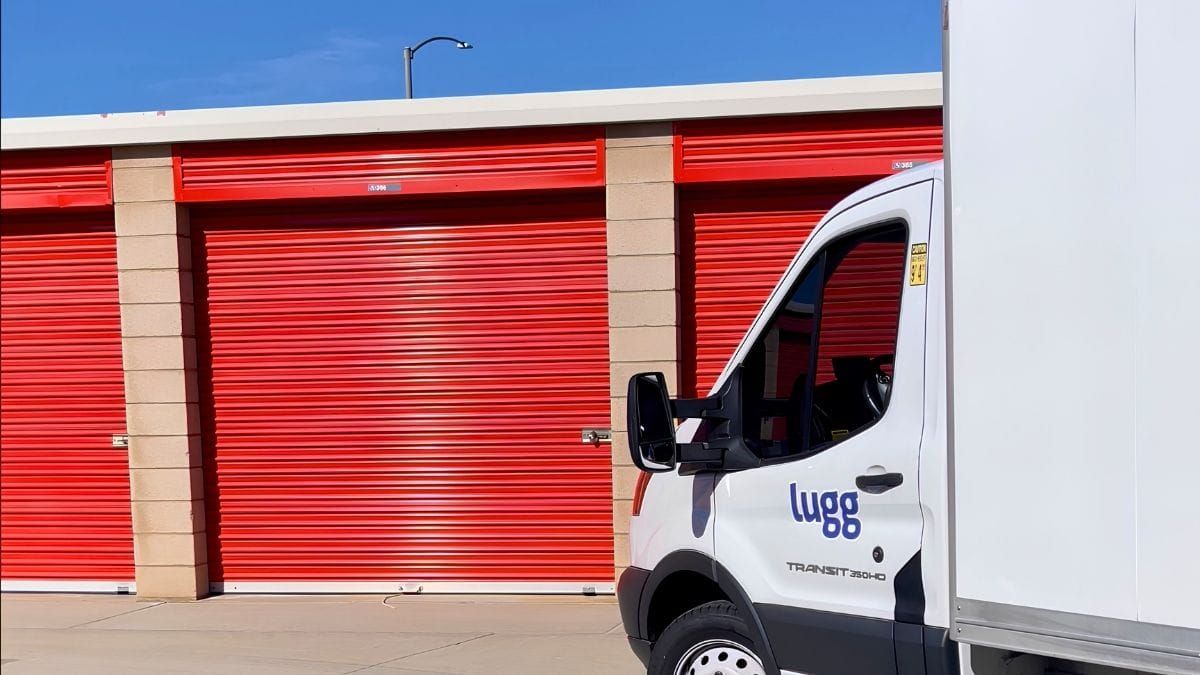
Storage facility move-in services: closing the move-in conversion gap
People rent storage in the middle of another move and want in today. Here's how operators turn those reservations into occupied, paying units.

Storage facility move-in services are the on-demand delivery and moving help an operator offers a new customer so their belongings actually reach the unit — usually the same day they rent. What separates storage from every other kind of move-in is when it happens: people rent storage in the middle of something else. A move between homes, a downsize, a renovation, a death in the family. They decide fast, often reserve online, and they want in today.
That timing is the whole game. One in three Americans now rent self-storage, but operators have been fighting harder for each new renter — move-in rates only turned positive year over year in the second half of 2025 after more than a year of declines. In that market, a customer who reserves a unit and then can't get their stuff there isn't a logistics footnote. It's a rental that never becomes revenue.
| Why they're renting | What it means for the move-in |
|---|---|
| Moving between homes, with a timing gap | Same-day matters; belongings often come straight from the old place |
| Downsizing or empty-nesting | Bigger load, lots of furniture; the vehicle has to fit it |
| Renovating, or staging a home to sell | Recurring and time-boxed; fast in, fast back out |
| A divorce, death, or sudden change | Urgent, stressful, usually no help lined up |
| Business or inventory overflow | Repeat volume; predictable enough to schedule |
Storage gets rented in the middle of another move
The defining trait of a storage customer is that storage is never the main event. They're already moving, downsizing, renovating, or sorting out a hard life moment, and the unit is one more thing to solve in the middle of it. That's why so many of them show up with no truck and no help — they're mid-transition, not planning a clean point-A-to-point-B move with a calendar and helpers lined up.
So the operator who removes the "how do I actually get this there" step captures rentals that would otherwise stall in someone's garage or back seat. In practice that's giving the customer a way to book same-day movers and a truck the moment they rent — same-day movers and the right-size truck, arriving in as little as 30 minutes across 4,000+ U.S. cities and towns, with the equipment already on board. The faster the gap between "I rented a unit" and "my stuff is in it" closes, the fewer reservations leak out.
And the leak is real. A reservation that doesn't turn into an actual move-in is the easiest kind of customer to lose — they haven't committed anything physical yet, so the unit stays empty, the first payment slips, and a stalled rental often gets cancelled before it ever earns. The move-in is the moment that locks the rental in.
The decision happens online, so the offer has to live there
Storage is increasingly rented online, and the window between reserving a unit and wanting to move in is measured in hours, not weeks. That changes where a move-in offer has to sit. A flier at the front desk is useless to a customer who reserved from their phone and is never going to stand at your counter before move-in day.
The highest-converting place to put a move-in option is inside the rental flow itself — an embedded booking step in the online reservation, or a link in the confirmation that drops straight into scheduling. It works because of timing: the customer is actively solving the storage problem in that exact moment, before they've defaulted to cramming everything into a borrowed sedan. Reach them then and the move-in books itself; reach them a day later and they've already improvised.
That's where the Lugg API earns its place: operators can build the move-in option directly into their own site or rental software, and deliver it as a white-label, branded experience so the customer never leaves the operator's brand to solve the part they were most worried about. The same booking can cover up to 5 stops, which matters for the customer pulling a few things from home and a few from a store on the way to the unit.
In a business that competes on price and location, move-in is the lever you can pull
Self-storage is close to commoditized. Two facilities a mile apart tend to offer near-identical unit sizes at near-identical rates, and a customer usually picks on price, location, and whatever promo is running that week. None of those are easy to win on — you can't move your building, and racing competitors to the bottom on the first month's rate is how move-in revenue gets thinner.
There's a longer-tail reason the move-in is worth getting right, too: storage is a recurring-revenue business with a long average stay — the typical self-storage customer keeps a unit well over a year. A move-in that goes smoothly doesn't just capture one month's rent; it protects the whole stay that follows. Spending a little to make the move-in effortless is cheap insurance on a long revenue stream, which is exactly the math a one-time mover never gets to run.
The move-in experience is also one of the few differentiators still sitting unused. It's the part of the category almost no independent operator offers in-house, because buying trucks and carrying movers for a service that spikes around rentals and sits idle otherwise doesn't pencil out. Partnering it out flips that: the operator gets a real point of difference — "we'll get your stuff here today" — without the fleet, the payroll, or the liability. The operator takes on none of the cost.
Credentialing matters most when it's your facility's name attached to whoever shows up at a customer's door. So the thing to look for in any move-in partner is straightforward: movers who are background-checked and vetted, and a long track record of strong customer reviews. A service like Lugg clears that bar — background-checked movers held to a 4.7+ rating, the Damage Protection Guarantee on every job, and more than a million moves at a 4.92 / 5 average — but the standard is what matters, whoever you end up working with.
What it looks like in practice
A storage operator doesn't have to rebuild anything to offer this. The move-in option lives wherever the customer already is — embedded in the online rental flow through the Lugg API for operators who want it inside their own software, or as a simple branded link handed over at reservation for those who don't. The operator watches the reservation turn into an occupied, paying unit faster than it would have on its own.
It's the model behind partnerships like Snapbox Self Storage's work with Lugg and Stuf Storage's move-in delivery partnership — both built so a customer who rents a unit can get their belongings into it the same day, without the operator standing up a single truck.
The move-in is where a storage reservation turns into revenue
A reservation that started online doesn't pay off until the stuff is in the unit. The operators pulling ahead in a flat market are the ones who stopped treating the move-in as the customer's problem and built it into the rental — same-day, online, and branded as their own. In a category where you can't easily win on price or location, that's the difference between a unit that's reserved and one that's earning.
If you run facilities heading into a busy rental stretch, that's the lever most operators leave on the table. You can partner with Lugg to put a same-day, branded move-in option inside your rental flow, or get an instant estimate to see what a single move-in runs in your market before you offer it.
Alex Dolat
With nearly a decade at Lugg, Alex leads business partnerships and writes about retail logistics, enterprise delivery, and what it takes to power same-day fulfillment for thousands of brands.
Subscribe to the Lugg blog
Get the latest moving tips, guides, and Lugg news delivered to your inbox.
Read more about Lugg moves

Country Living Fair 2026: A Shopper's Guide to Rhinebeck

How Home Staging Companies Actually Book Delivery
How to Close More Sales on Labor Day
Furniture Delivery for Interior Designers: Getting Every Vendor's Piece There on Install Day