What shoppers actually haul home on Black Friday
Ten years of Black Friday delivery data show sofas outnumber TVs at least two to one, year after year, plus what to check before buying something big.

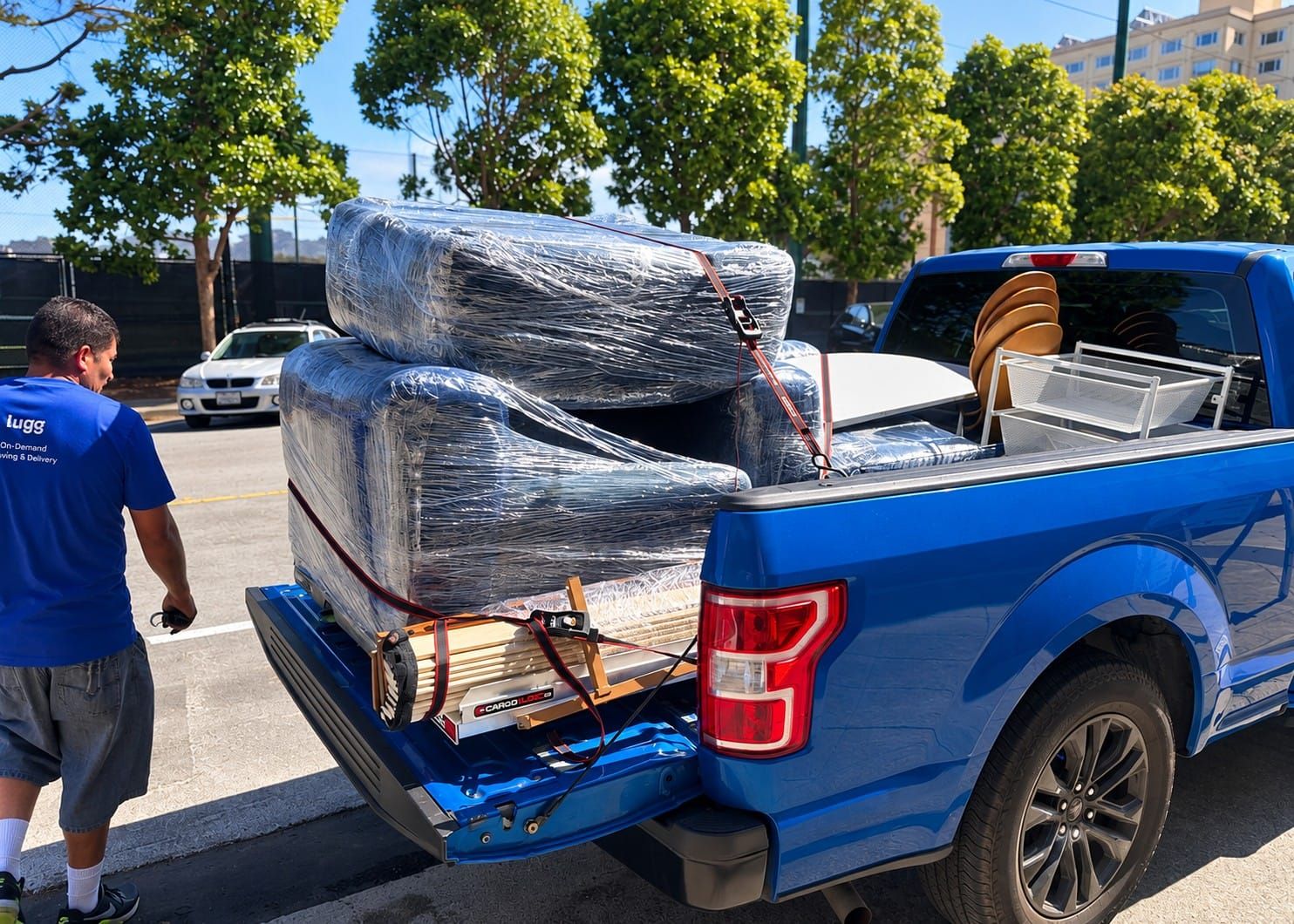
The best Black Friday sofa deal can turn into a problem in the store parking lot. The store may want it gone the same day, especially if it's a floor model, and nobody has worked out how it gets up the stairs at home. The Friday after Thanksgiving is a strange day to own a truck. Fewer people want to move apartments, but plenty of people are standing in a furniture store next to a sofa that won't fit in their car.
Ten years of local job data from Lugg, an on-demand moving and delivery service, show the holiday weekend splitting in two. Every Black Friday weekend since 2017, people put off moves, junk hauls and cleanouts, while trips home from the store held up better than everything else. They also show which purchases most often need that help. Across ten Black Friday weekends, from 2016 to 2025, sofas outnumbered TVs among store pickups by at least two to one, year after year. A move or a garage cleanout can wait a week. A sale-priced sofa sitting at the store is harder to put off.
Friday and Saturday carry the pickup rush
In the last three years, most of the shift happened in the first two days. On Black Friday, moves, junk hauls and other jobs that didn't start at a store fell sharply compared with an ordinary Friday, while store pickups held about level. On the Saturday after, those other jobs were still below normal. By Sunday, the mix looked like any other November weekend.
That lines up with when people are in stores. According to the National Retail Federation, a record 203 million people shopped over the five days from Thanksgiving through Cyber Monday in 2025, and Black Friday (80.3 million in-store shoppers) and Saturday (62.7 million) were the two busiest days in stores. Many of the weekend's best in-store deals are also limited, marked "while supplies last," which rewards shopping early.
The ride home from the store is often booked on the spot. About half of store pickups are booked within four hours of pickup, on Black Friday weekend and any other weekend, and over the holiday a few more shoppers booked on demand instead of for a scheduled time.
Sofas lead what shoppers bring home
Black Friday ads lead with TVs, but the thing people most often need help getting home is a sofa. In the last three years, sofas showed up in about a third of store pickups that named the item.
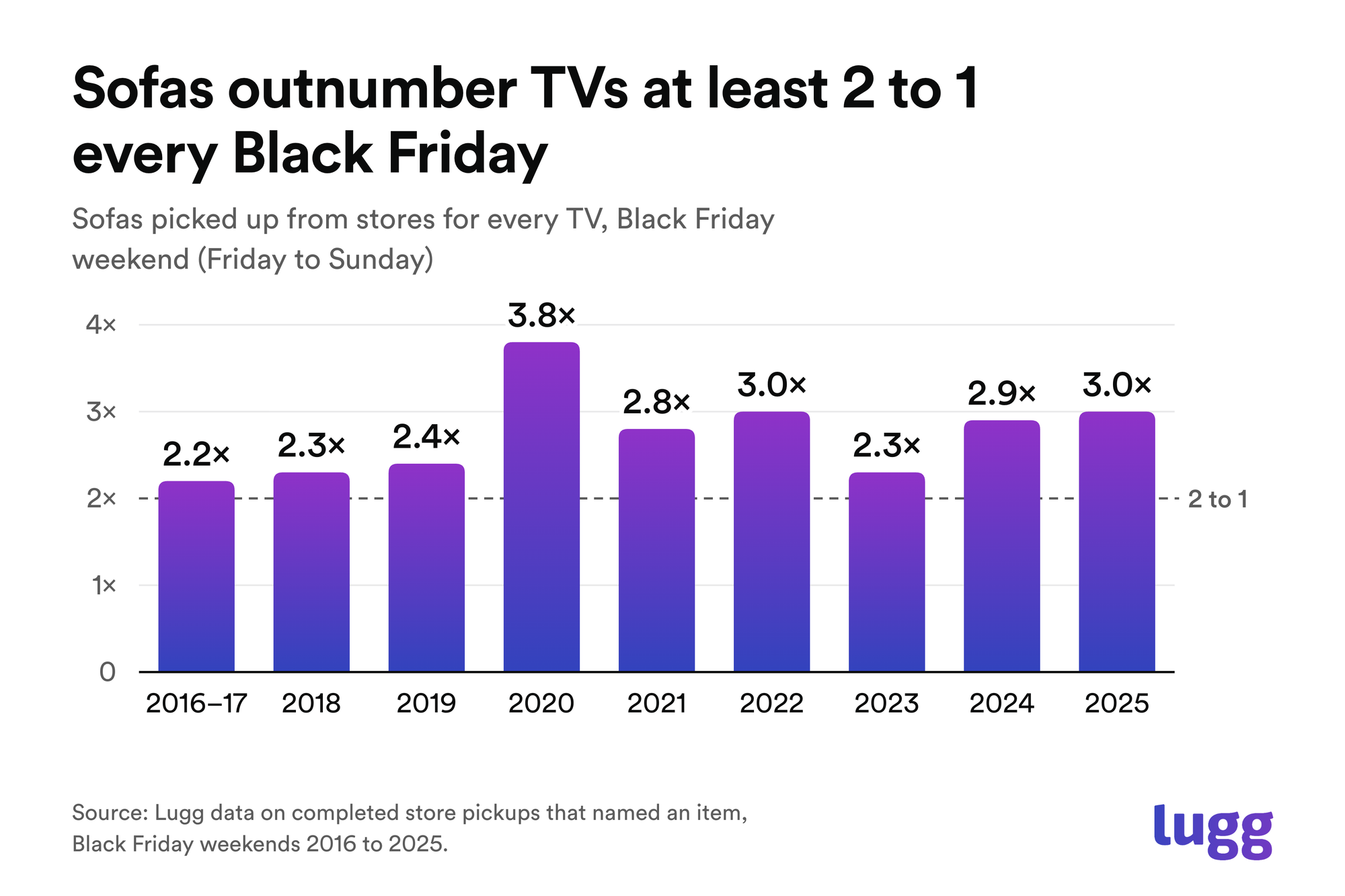
Chairs come next, followed by tables and desks, then beds and mattresses, with TVs further down the list. It's much the same lineup on any weekend of the year. What people need help with is whatever won't fit in the car, and that's usually the sofa.
Before you buy something big
The deal is the easy part. Most of that parking-lot problem can be avoided with a few minutes of checking before paying.
For a TV, measure the box, not the screen. A 65-inch TV ships in a box roughly 62 to 67 inches long and 37 to 39 inches tall, weighing 46 to 83 pounds, according to manufacturer spec sheets for Samsung, LG, TCL and Hisense models. A 98-inch set comes in a box 55 to 61 inches tall that can top 200 pounds. TV makers such as LG say to keep the box upright in transit, which rules out laying it flat across a back seat.
For a sofa, measure the way in. The numbers that matter are its depth and height against the narrowest point on the path inside, usually a doorway or the turn at the top of a staircase. Length matters less, since a sofa can often be tipped on end to clear a door.
For a mattress, ask how it's packed. One sold flat needs a vehicle long enough to carry it without bending and a clear route to the bedroom. A boxed one fits in more vehicles.
For a floor model, get the details first. Ask whether it's sold as-is, what comes with it, such as legs, cushions or hardware, whether it can be returned, and exactly when it has to leave the showroom.
Then pick the day. Ask the store how long it will hold the item, since that decides whether the trip home can wait or has to happen that afternoon. If it can wait, Sunday is the calmer day to go back: the National Retail Federation counted 32.6 million in-store shoppers that Sunday, against 80.3 million on Black Friday.
Cyber Monday barely registers
By Cyber Monday, store pickups' share of jobs was level with or lower than on an ordinary Monday in each of the last three years. Adobe Analytics counted $14.25 billion in U.S. online sales on Cyber Monday 2025, more than the $11.8 billion spent online on Black Friday. But an online order shows up at the door. A sofa bought in a store on Friday needs a ride home.
Booking data can't say why any one person picked one day over another. Ten years of it tell the same story each time: the moves and cleanouts that can wait, wait, and the big purchases still need to get home. For anyone planning to buy something bulky, a pickup guide covers the measurements and deadlines to check before paying.
Loren Couse
Loren manages Growth and Online Strategy at Lugg. With a deep passion for consumer technology, he stays on the cutting edge of the latest digital trends. When he isn’t strategizing, he spends his free time building personal coding projects.
Subscribe to the Lugg blog
Get the latest moving tips, guides, and Lugg news delivered to your inbox.
Read more about Lugg loads

Bought furniture on Black Friday? How to get it home today

Round Top Antiques Fair: how to shop it and get it home

Where unwanted furniture goes: why mattresses don't get a second life

Country Living Fair 2026: A Shopper's Guide to Rhinebeck