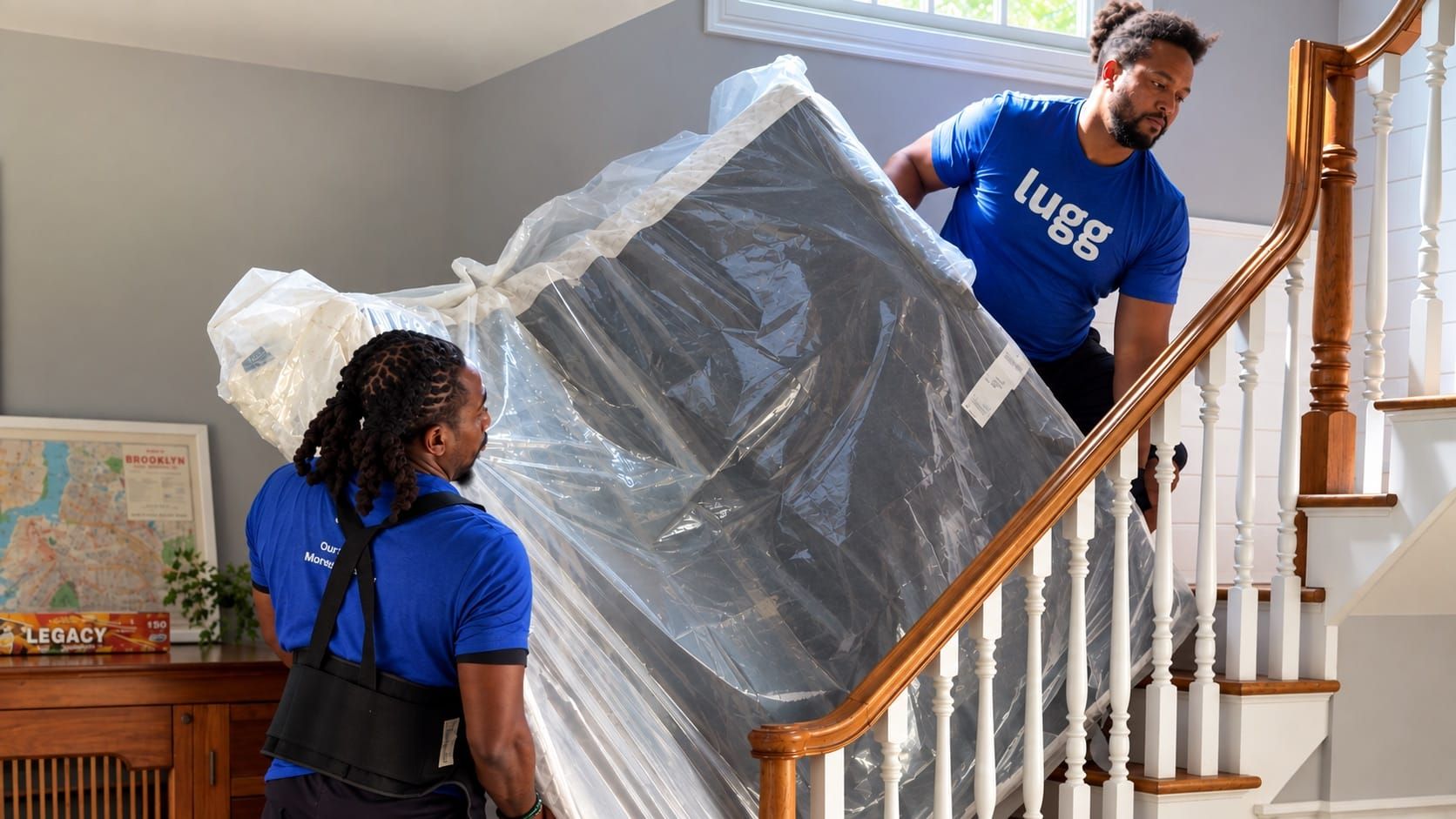
Where unwanted furniture goes: why mattresses don't get a second life
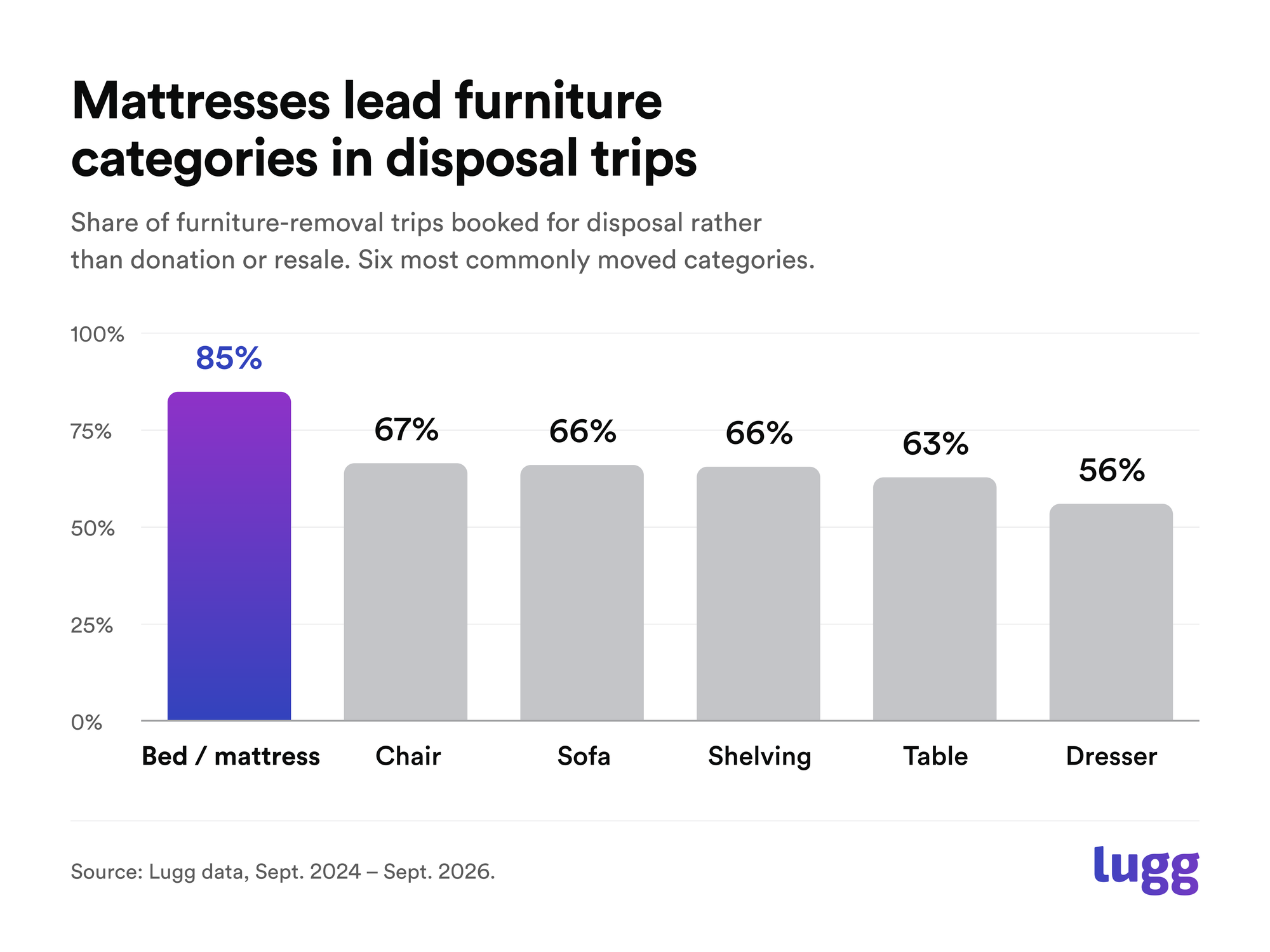
When a bed or mattress leaves a home, it is headed for disposal about 85% of the time, more often than any other major furniture category, and it has ranked first every year since 2021.

Across more than 1.5 million completed moves, couches were the furniture people most often booked Lugg to move. But among furniture leaving a home, beds and mattresses were much more likely to be headed for disposal.
In Lugg's two-year analysis of furniture leaving a home, about 85% of bed and mattress trips were headed for disposal, while no other major furniture category exceeded roughly two-thirds. Lugg is an on-demand moving and delivery service that can transport a mattress to wherever it needs to go—to a recycling facility, disposal site or approved curbside collection point.
Mattresses have led the disposal ranking for six years
During the latest two-year period, 85% of bed and mattress trips were headed for disposal. Chairs, sofas, shelving and tables clustered between about 63% and 67%. Dressers were lowest among the six categories at 56%.
The difference is not simply that mattresses are large or difficult to carry. Sofas and chairs pose many of the same moving challenges, yet their disposal shares remained well below the mattress figure. Beds and mattresses were the only category for which disposal accounted for an overwhelming majority of trips. That ranking has held in every year of Lugg data from 2021 through September 2026. Even as the category in second place changed; the one in first did not.
That consistency points to a problem specific to mattresses: the routes available for other used furniture narrow considerably once a bed is stained, damaged or subject to local acceptance rules. The difference begins before anyone decides how to transport it.
Why mattresses head for disposal more often
A dresser or dining table can still have an obvious next stop: a buyer, a neighbor, a relative or a charity. A used mattress has fewer exits.
Donation rules vary by organization and location, and secondhand-bedding laws can add requirements for businesses that resell used mattresses. Virginia's bedding rule, for example, requires used bedding offered commercially to be sanitized through an approved process and labeled afterward. Certain donations to a permitted sanitizer are exempt, but resale still involves more than putting a used mattress on a showroom floor.
Together, those rules and acceptance limits give a used mattress fewer possible destinations than a table, chair or dresser. When donation is unavailable and resale requires additional handling, disposal may be the only practical option left.
Condition narrows the field further: stains, moisture, mold, structural damage or signs of pests can take donation and recycling locations off the list. A mattress can be too worn for reuse even when much of the material inside it remains recoverable.
Where mattress recycling works
A mattress can be recycled. Steel, foam, fabric and wood can be separated and used again. Connecticut's environmental agency says dedicated recyclers can recover 80% to 95% of a mattress and box spring's materials. Steel can return to scrap markets, foam can become carpet padding, fibers can be used in insulation and wood can be processed for fuel.
But access is uneven. California, Connecticut, Oregon and Rhode Island have statewide mattress-recycling programs funded by a fee charged when a mattress or box spring is sold. The programs are administered by the Mattress Recycling Council, and residents can use participating collection sites subject to local acceptance rules.
Where statewide mattress recycling programs exist
California, Connecticut, Oregon and Rhode Island require a recycling fee or stewardship assessment on mattress and box-spring sales to fund statewide programs. The Mattress Recycling Council's program FAQ notes that accepted items and condition requirements vary by state and, in some cases, by collection site. Residency rules also apply.
California and Oregon participating sites accept mattresses and box springs regardless of condition. Connecticut and Rhode Island require recyclable condition, while local sites decide whether severely damaged, wet, moldy or infested items can be dropped off without a fee. California is the only state program that accepts detachable futon mattresses, while Connecticut is the only one that accepts crib mattresses. The program's locator is the starting point, but the receiving site still has the final say.
Massachusetts takes a different approach. Since November 2022, the state has banned most mattresses from disposal or transport for disposal. Contaminated mattresses and several related sleep products are excluded. The state directs residents to municipal and private recycling options rather than a single stewardship program.
These statewide approaches remain unusual. The Product Stewardship Institute estimates that more than 50,000 mattresses are sent to landfills each day and fewer than 5% are recycled. The Mattress Recycling Council, which administers the state programs, says it recycles 2 million mattresses a year.
Mattresses also create practical problems for waste systems. Connecticut's environmental agency notes that they are bulky, difficult to compress and capable of tangling in equipment. The agency also identifies them as a recurring illegal-dumping problem on curbs, vacant lots and roadsides.
Before the mattress leaves home
The destination should be settled before anyone loads the mattress. Four checks can prevent a recyclable or reusable mattress from becoming a last-minute disposal job.
- Ask whether a specific location will accept it. Donation policies can vary between locations run by the same organization. Confirm the mattress's size and condition with the location that would receive it.
- Look for a dedicated mattress-recycling program. Start with a statewide program where one exists. Elsewhere, check the local solid-waste agency, recycling coordinator or transfer station, or review a mattress-disposal guide for local options.
- Check the limits before loading. Collection sites may restrict damaged, wet, moldy or infested mattresses. They may also impose residency, quantity or appointment requirements.
- Confirm the destination, then arrange transportation. Do not assume a retailer's delivery team, an apartment building's trash room or regular curbside collection will take a mattress. If local options are unclear, review the city or county's solid-waste directory or learn how to find a nearby dump or donation center before loading it. Lugg can load and transport the mattress after the customer confirms that the destination will accept it; the customer remains responsible for any facility fees.
A move-out is the moment to make the plan
The decision often arrives at the least convenient time: a lease is ending, a home is being cleared or a replacement mattress has already been delivered. By then, a table can still be offered to a neighbor and a dresser can still be listed for sale. A mattress may already be outside the pool of items a local organization accepts. For anyone clearing one out, the order matters: find the acceptable destination first and arrange transportation second.
Loren Couse
Loren manages Growth and Online Strategy at Lugg. With a deep passion for consumer technology, he stays on the cutting edge of the latest digital trends. When he isn’t strategizing, he spends his free time building personal coding projects.
Subscribe to the Lugg blog
Get the latest moving tips, guides, and Lugg news delivered to your inbox.
Read more about Lugg removals
Spring Cleaning: How to Find a Dump or Donation Center Near You

How to Get Rid of a Mattress (Donation & Disposal Guide)

Lugg vs Dolly vs Taskrabbit: which should you use?

How to Properly Dispose of Hazardous Materials Before a Move