
How much does it cost to rent a U-Haul in 2026? The real math, after the $19.95
The $19.95 is real — it's everything after it that decides what a U-Haul costs. Here's the 2026 math, line by line, including the labor.

A one-way local U-Haul rental in 2026 runs roughly $130 to $220 for a typical one-bedroom move — and that figure is the truck alone, no movers. It's the base rate plus everything U-Haul bills on top of it: mileage, gas, insurance, and supplies. The $19.95 or $29.95 on the side of the truck is only that base rate. Lugg is an on-demand moving and delivery service that sends movers with a truck in a single booking, for a local move or one large item, with the estimate shown before you book.
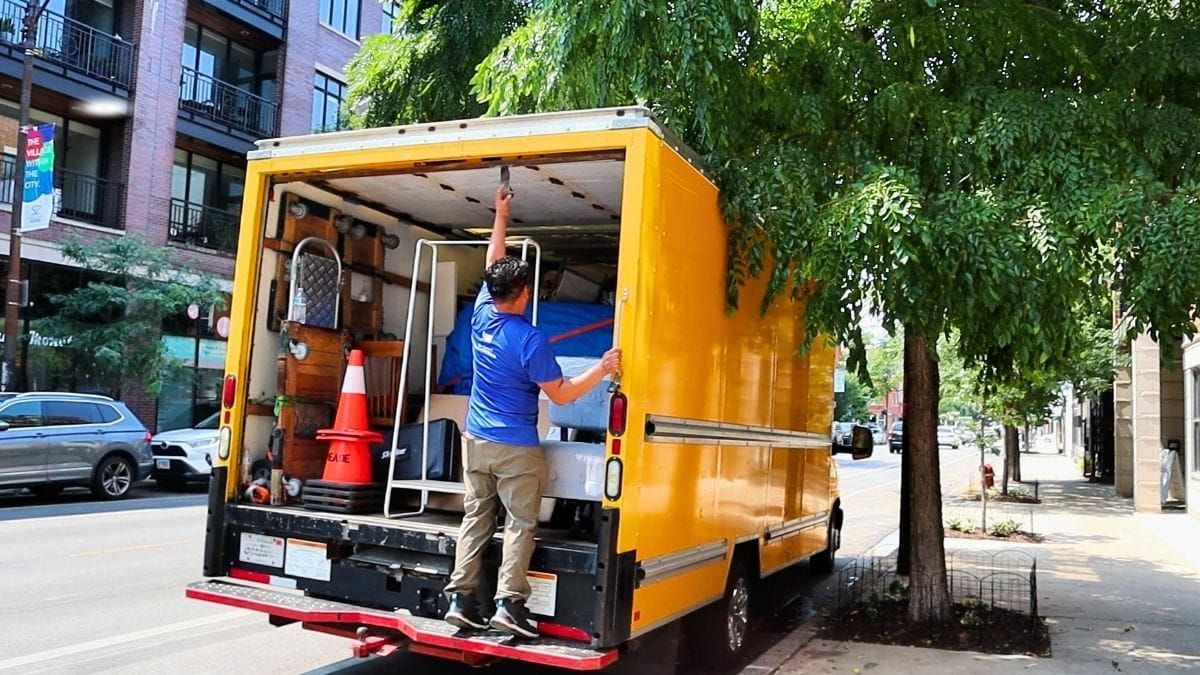
And "no movers" is the part that's easy to skim past. It means you're the labor — every box, every flight of stairs, the couch wedged in a doorway — and you're the one driving a 15-foot box truck through city traffic, often for the first time. The hardest, most physical part of the move is the part U-Haul doesn't put on the receipt, because you're the one handling it.
If you're moving this summer — peak season, when trucks book out and rates climb — the gap between the sticker price and the real number only gets wider. A U-Haul is supposed to undercut what full-service movers charge — but only if you can carry your own couch.
Here's the honest receipt.
What a U-Haul actually costs in 2026 (vs. Lugg)
| 1BR local move | U-Haul | Lugg Box |
|---|---|---|
| Truck (base rate) | $29.95 | Included |
| Mileage (40–60 mi) | $40–$77 | Included |
| Gas (10 MPG) | $25–$35 | Included |
| Damage protection | $15–$30 (SafeMove — truck only) | Included (Damage Protection Guarantee) |
| Equipment (dolly + pads) | $20–$30 | Included |
| Movers | $160–$450 — separate booking, different company | Included (background-checked movers) |
| All-in | $290–$650 | $566 |
The Lugg Box figure is a median across completed Lugg Box bookings over the past year, before tip. U-Haul figures are typical 2026 in-town rates plus mileage, gas, fees, equipment, and separately hired labor.
Look at the movers line. With a U-Haul, that's a second booking with a different company — so on move day you're managing a truck reservation and coordinating a separate labor crew, two vendors who don't talk to each other. With Lugg, the truck and the movers are the same booking. One thing to manage — which is the whole case for an an alternative to renting a U-Haul.
Those separately hired crews also come with hourly minimums — you pay for two hours even if your move takes seventy minutes. Lugg bills by the minute instead, and the clock pauses during drive time, so you only pay for the time you actually use.
That all-in number is the part nobody puts on the side of the truck. Real customers say it better than a spreadsheet can.
"Way cheaper and much much less hassle than dealing with U-Haul and all their unnecessary drama, extra charges, and complete lack of service. Why get ripped off overpaying to rent a truck that always costs more than originally quoted?" — Griffin, Google Reviews (November 2025)
Here's where each line on the receipt comes from.
The $19.95 promise (and what it actually covers)
The $19.95 in-town rate is one of the most effective anchor prices in moving. It exists, it's real, and it covers a smaller truck than most one-bedroom moves need — before a single mile is on the clock.
That headline number covers three vehicles: the 8' pickup, the 9' cargo van, and the 10' box truck. The pickup and van hold a studio's worth of stuff at most, or one large piece of furniture; the 10' truck is a genuine small-move option. For a one-bedroom apartment, most people size up to the 15' truck, which starts at $29.95 in-town. A 20' truck (a small two-bedroom) starts at $39.95. The 26' (a full house) starts at $49.95.
These are starting rates. They cover the rental period (typically 1 day) and the truck itself. They do not cover anything that happens after you turn the key.
The mileage fee is where the bill doubles
This is the line item that catches people off guard. The base rate doesn't include any miles. Every mile the wheels turn — including the empty-truck miles from the rental lot to your apartment, and from your new place back to the lot — is billed separately.
The rate runs roughly $0.79 to $1.29 per mile depending on the truck size, the day of the week, and your market — $0.79 on the pickup, $0.89 on the 10' truck, $0.99 on the 15'. Weekend and summer-peak rates are typically higher. For an across-town one-bedroom move on the 15' truck, the all-in mileage looks something like this:
- 10 miles: empty truck from the U-Haul lot to your current apartment
- 15 miles: loaded truck from old apartment to new apartment
- 15 miles: empty truck from new apartment back to the U-Haul lot
- Total: 40 miles × $0.99 = $39.60
If you're moving from one side of a metro area to another, that number climbs to 60+ miles fast. At $1.29 a mile on a weekend, that's $77 in mileage alone.
The labor problem: U-Haul gives you a truck, not movers
This is the cost that doesn't show up on the U-Haul receipt at all — and it's the line item that decides whether a rental actually saves you money.
The truck has no idea how to angle your sectional through a 30-inch doorway, and it has no opinion about whether the dresser should go on the long edge or the short. You have three options for solving the labor problem, and each one has a real cost.
Option 1: Hire labor separately. You can hire loading and unloading help on its own — U-Haul will even sell you a crew through its own moving-help marketplace, though those are independent movers you book and coordinate separately. Expect about $80 to $150 an hour for a two-mover crew with a two-hour minimum, so roughly $160 to $450 for a one-bedroom, depending on your city and the stairs at either end. You're still driving the truck.
If you're set on driving the truck yourself, you don't have to do the heavy part alone. Lugg offers labor-only help — book background-checked movers to load up at your old place, unload at the new one, or both, same-day and on-demand. It's the move you call when you started solo and realized halfway up the stairs it was more than you bargained for.
Option 2: Do it yourself. A one-bedroom apartment is roughly a full Saturday of physical work for two reasonably fit people, longer if you're solo or if there are stairs at either end. Add the cost of the recovery — most people are useless for the rest of the weekend after a move.
Option 3: Ask friends. The cultural minimum for asking a friend to help you move is a real meal, usually delivery. Figure $40 to $80 in food and drinks, more if you're feeding three or four people. You also owe each one a favor back. The pizza-and-takeout tax is real even when nobody calls it that.
None of these options shows up on the U-Haul reservation page. All three are part of the actual cost of a U-Haul move.
Insurance and fees: what SafeMove covers (and what it doesn't)
Your personal auto insurance probably doesn't extend to a U-Haul. Collision and comprehensive coverage typically only transfers to a private passenger vehicle, not to a rented moving van — which leaves you on the hook for damage if anything happens on the road.
That's why U-Haul offers two optional coverage tiers: SafeMove, at roughly $15 a day, and SafeMove Plus, at roughly $28 a day. The fine print is what matters:
- ✅ Covered: Damage to the U-Haul truck itself (collision, theft, overhead damage) — SafeMove carries a $250 deductible on overhead damage, SafeMove Plus $0.
- ✅ Covered: Some basic medical and life coverage for the renter.
- ❌ Not covered: Handling damage to your belongings. Both tiers cover cargo if the truck is in a collision, fire, windstorm or overturn — but not if something breaks while you're carrying it. Drop the TV on the stairs and that's on you.
- ❌ Not covered: Damage to your home or apartment. The gouge in the hardwood, the chipped doorframe, the drywall ding from the sofa corner — all out of pocket. Your security deposit is on the line.
If you're moving with hired movers, that handling risk is typically the company's. Lugg includes the Damage Protection Guarantee on every booking, which covers damage to your items and your home during the move.
Gas: the 10-MPG reality
Moving trucks are not built for fuel economy. U-Haul publishes its own mileage estimates, and they're sobering:
- 10' truck: about 12 MPG
- 15' truck: about 10 MPG
- 20' truck: about 10 MPG
- 26' truck: about 10 MPG (older units closer to 8)
You're required to return the truck with the same fuel level you started with. If the gauge is even slightly under when you bring it back, U-Haul charges a fueling fee plus a service charge — typically more than what you'd pay at the pump.
With the 2026 national gas average sitting just over $4 a gallon, fuel adds up faster than the 10-MPG sticker suggests — a loaded 15' truck realistically returns closer to 8. A 50- to 60-mile local move burns 6 to 7 gallons, or about $25 to $30 at the pump. Then comes the return rule: bring the tank back even slightly low and U-Haul adds a fueling fee plus a service charge, usually more than it would cost to top off yourself.
The rental doesn't end at the truck: supplies and the dolly tax
The truck is the start of what you're renting, not the end. U-Haul has built a whole secondary business out of the supplies you actually need to use the truck safely.
- Furniture dolly: $7–$10 per rental. You need at least one. A second helps if two people are loading at once.
- Appliance dolly: $10–$15. Non-negotiable if you're moving a fridge or a washer.
- Utility dolly: $7–$10. The basic two-wheel hand truck.
- Furniture pads (a dozen): $5–$10 per rental. Plan on at least 12 — ideally 18 — to wrap dressers, headboards, mirrors, and table tops.
- Tie-down straps: $3–$5 each. Necessary for keeping a loaded truck from shifting in transit.
- Boxes, tape, mattress bags: $1 to $50+ depending on how much packing you still need to do.
A bare-minimum supply add-on (one dolly + a dozen pads + a couple of straps) is typically $20 to $30. If you also need to buy boxes and packing materials, the number climbs fast. All of it is rented or sold separately from the truck — not part of the headline price.
When a U-Haul actually makes sense
Worth saying out loud, because this isn't a takedown: there are real cases where renting a U-Haul is the right call.
- You're moving a single large item, like a couch or a dresser, and you already have the help to load it.
- You actually enjoy driving box trucks. Some people do.
- You have a friend with a box-truck driving background who's offered to help, and you trust the logistics.
- You're moving far enough that local options aren't on the table (most on-demand moving services, including Lugg, are local-only).
If the move is small, you have the help, and you have the day — the U-Haul math holds up. Those cases are the exception, though, not the rule. If you do go the U-Haul route, how big of a moving truck you actually need walks through which size fits your place.
When booking movers is the smarter math
A U-Haul can look cheaper on paper than hiring movers — until you price in the labor. The real comparison is about the long-term and the hidden costs — the labor, the time, the risk, and the things that don't show up on the rental receipt.
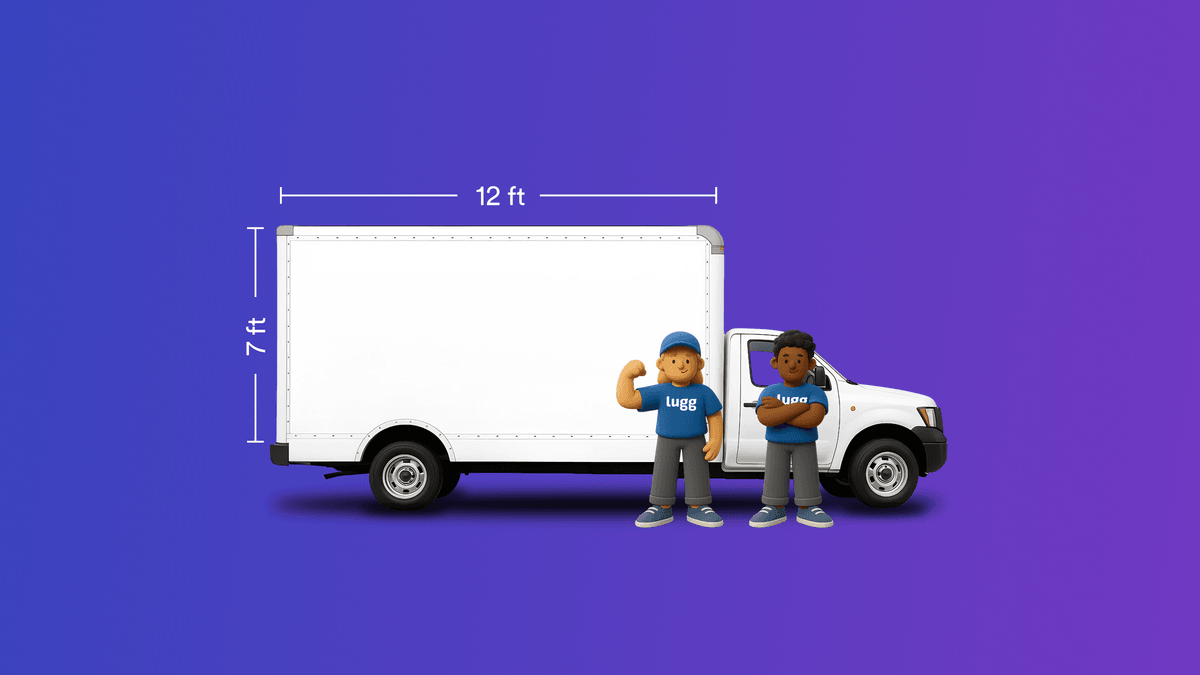
Booking same-day movers through Lugg puts the truck and the movers on one booking. Vehicles run from a pickup up to Lugg Box for a 2+ bedroom home, and in select markets Lugg Box+ — an 18-to-24-foot box truck built for a 3+ bedroom move, home staging or a commercial job. There's no separate labor line, no mileage fee that surprises you at drop-off, no dollies and pads to rent, no SafeMove tier to decide between, and no gas to refill — and no trip to a U-Haul lot, no box truck to drive through city traffic, no return run to top off the tank. You enter your two addresses and see the estimate before you book, with the Damage Protection Guarantee covering your items and your home if something goes wrong, and a live tracking map showing exactly where your movers are. The convenience shows up in customer feedback: Lugg Box bookings average a 4.94/5 rating, with 96.8% of customers leaving a perfect 5 stars.
For a side-by-side on common move sizes, Lugg vs. U-Haul walks through the cost gap. And if you've already rented the truck and just need help loading and unloading, moving across town without renting a truck covers the labor-only option.
Prices also swing by metro — this breakdown of local moving costs by city shows how much.
For a lot of people, that math just doesn't beat hiring movers in the first place. If you'd rather not be the labor, the driver, and the one who owes everyone pizza, Lugg's upfront estimate covers the truck and the crew in one booking.
Holly Benjamin
Holly leads marketing at Lugg and is passionate about making the utilitarian task of moving into something people actually rave about.
Subscribe to the Lugg blog
Get the latest moving tips, guides, and Lugg news delivered to your inbox.
Read more about Lugg moves

How much does a moving company cost? How to read your quote
How Big of a Moving Truck Do You Need?

What Is the Best U-Haul Alternative for Your Move?
Lugg Box: Same-Day Box Truck Moving Service with Professional Movers