7 Eco-friendly moving tips: how to move with less waste
Here’s how to clear out responsibly, pack smarter, and move without the guilt.

The most eco-friendly move is the one where you move less. Before any box gets taped, any truck gets booked, or any packing tape unspooled, the biggest environmental lever you have is deciding what doesn't make the trip. A focused pre-move declutter doesn't just reduce waste — according to moving industry data, it directly reduces your truck size, your trip count, and your overall moving cost.
Whether you're moving across town or across the country, these practical eco-friendly moving tips will help you significantly reduce your environmental impact while often saving money in the process— without making an already stressful process harder.
The Environmental Impact of a Typical Move
Did you know the average move uses approximately 60 cardboard boxes? If those boxes aren’t recycled, they contribute to the millions of tons of paper waste produced annually. In 2026, sustainable moving isn't just a trend; it's a necessity for the conscious consumer.
| Moving Component | Traditional Impact | Eco-Friendly Alternative |
|---|---|---|
| Packing Material | Bubble wrap & Styrofoam | Biodegradable wrap & towels/linens |
| Boxes | New cardboard boxes | Rentable plastic bins or used boxes |
| Transportation | Multiple trips in a personal car | One efficient trip with a professional van |
| Old Furniture | Landfill disposal | Donation, upcycling, or resale |
At a glance: eco-friendly moving tips
| What | Tip | Why it matters |
|---|---|---|
| Use what you own | Pack suitcases, baskets, and bins you already have | Zero new materials needed |
| Ditch the bubble wrap | Use towels, blankets, and clothing as padding | Skips bubble wrap and packing paper entirely |
| Rent reusable bins | Rent plastic moving bins instead of buying cardboard | One bin set replaces ~30 cardboard boxes |
| Source boxes responsibly | Get free boxes from liquor stores, Buy Nothing groups, or Box Cycle | Keeps cardboard out of landfills |
| Declutter first | Donate, sell, or toss before you pack — not after | Moving less = lower cost, less waste |
| Combine trips | Combine donation drop + junk haul in one run | ~8% of moves already do this; saves fuel |
| Plan smarter | Book the right vehicle size and consolidate everything into one trip | Fewer trips = less fuel, less cost |
Step-by-step guide: How to move with less waste
1: Use what you already own
Laundry baskets, duffel bags, suitcases, tote bags, and storage bins are all perfectly good moving containers. Books fit in rolling suitcases. Lightweight clothes can stay in dresser drawers if you tape them shut. Use what you have first. It’s not just more sustainable — it’s faster and cheaper.
2: Replace bubble wrap with what's already in your home
Bubble wrap is one of the most wasteful parts of a standard move — and it's almost entirely unnecessary. Most household items can be packed safely using materials you already own, with zero additional waste.
- Wrap dishes and glassware in dish towels, cloth napkins, or t-shirts
- Use socks to pad mugs and small ceramic pieces
- Pack throw pillows and soft goods around fragile items in the same box
- Use moving blankets (included with most professional moves) for mirrors, artwork, and furniture edges
- Tuck linens and towels into boxes as filler rather than packing peanuts
If you do need packing peanuts for fragile items, biodegradable cornstarch peanuts are widely available and dissolve in water — no landfill contribution. They're sold under several brand names and are available on Amazon and most office supply stores.
The one material worth keeping on hand: good-quality packing tape. That part doesn't have an eco-friendly substitute.
3: Rent Reusable Moving Bins
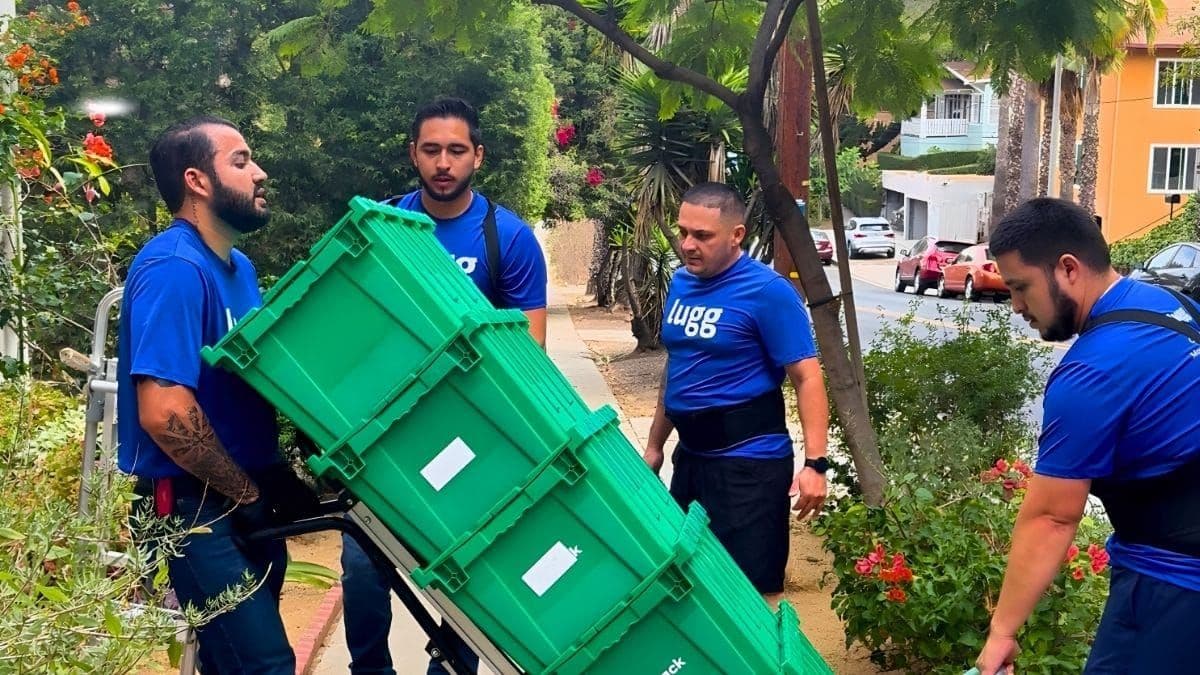
Reducing box consumption is one of the easiest eco-friendly swaps with no downside to the moving process itself. Instead of buying 50 cardboard boxes that will likely end up in the trash, look into a bin rental company. Plastic moving bin rentals (sometimes called "moving box rental" or "crate rental") are available in most major cities. You pay a weekly rental fee, the company drops the bins at your door, you move, and they pick them up after to be sanitized and reused by the next person. One set of rental bins typically replaces 30+ cardboard boxes, and they stack more cleanly in a truck.
The tradeoff: you're on a return schedule, so they work best if your move-in date is confirmed. If you're storing things or have a gap between move-out and move-in, cardboard may still be the right call for certain items.
4: Source boxes responsibly when you do need them
Liquor stores, bookstores, and grocery stores regularly have free boxes available. Buy Nothing groups and neighborhood Facebook pages are also reliable sources. If you do buy boxes, look for ones made with recycled content — and plan to either resell them (Box Cycle and similar sites exist specifically for this) or pass them to the next person moving.
5: Declutter before you move — not after
The single most impactful eco-friendly moving tip is also the most practical: get rid of things before you pack them. Moving is one of the most natural forcing functions for a declutter, and doing it early pays off in multiple ways — smaller truck, fewer boxes, lower cost, and a lot less stuff going to landfill.
The standard advice is to work room by room, but the frame that actually works is the "new home test": would you go out and buy this item for your next place? If the answer is no, that's your answer.
What to do with what you're not taking: Sell it. Facebook Marketplace, OfferUp, and Craigslist move furniture fast — especially couches, dressers, and dining sets. Price things to sell within a week, not to maximize every dollar. Time is more valuable during a move.
Donate it. Goodwill, Salvation Army, and Habitat for Humanity ReStore are the three most common destinations for donated furniture and household goods. Each has different acceptance criteria — ReStore focuses on furniture, appliances, and building materials; Goodwill takes most household goods; Salvation Army accepts furniture by appointment in many markets.
Gift it. A quick post to a neighborhood Facebook group or Nextdoor can rehome a piece of furniture the same day. “Free to good home” posts almost always get responses within hours.
Responsibly dispose of it. For things that can't be donated or sold — broken electronics, worn-out mattresses, appliances past their life — look up your municipality's bulk pickup schedule or e-waste drop-off. Don't just set them on the curb and hope for the best.
One of the most common donation mistakes is hauling a piece of furniture to Goodwill and getting turned away at the door. Different organizations have different standards, and knowing the rules before you load the truck saves everyone time.
| Organization | Typically accepts | Typically won't take |
|---|---|---|
| Goodwill | Clothing, small furniture, housewares, books, electronics | Mattresses, large appliances, items with damage/stains/odors |
| Salvation Army | Furniture, clothing, appliances (varies by location) | Mattresses, items in poor condition; call ahead |
| Habitat ReStore | Furniture, building materials, appliances, tools | Clothing, bedding, items that don't meet safety standards |
A few rules of thumb: if it smells, has visible mold, or is structurally broken, it won't be accepted anywhere. If you're not sure, call ahead — most donation centers have a quick phone line or website FAQ for accepted items. Showing up with a truckload of unusable furniture wastes your time and theirs.
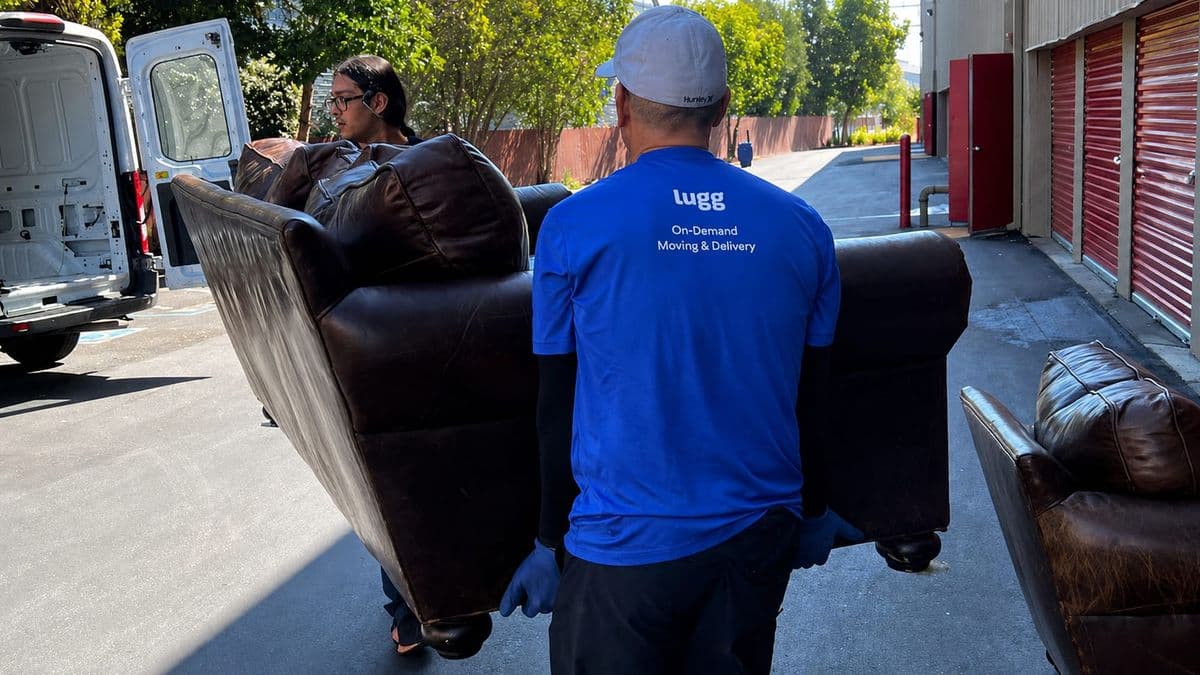
Couches, sofas, and loveseats are the most commonly donated large item — they appear in 14.9% of all donation pickups, based on Lugg Moving data, as of 2025. They do find homes. Just make sure the upholstery is clean and the frame is intact before you call it a donation.
6: Combine your donation drop with your junk haul
Nearly 8% of donation moves include a simultaneous junk or trash haul — both stops on the same booking, based on Lugg data (2025). If you’re clearing out a house, there’s almost always a mix of “donate” and “toss” items. Instead of two separate runs, schedule them as a single multi-stop trip. You save time, the mover saves a trip, and less fuel gets burned overall.
If you have flexibility on when to donate, January and May are the peak months for donation volume — 9.8% and 9.5% of annual donation moves happen in those months, based on Lugg Moving data (2025). Organizations are staffed for it. Spring and the new year are also when thrift stores tend to process incoming donations faster, which means your items move to the floor (and to a new owner) more quickly.
7: Make fewer trips by planning smarter
Every additional trip is more fuel, more emissions, and more time. Strategic trip planning is both the most practical and most environmentally sound thing you can do on move day.
Book the right vehicle size. Oversizing your truck wastes fuel and money. Undersizing means a second trip. Take 15 minutes before you book to inventory what’s actually moving — furniture count, box estimate, large awkward items — and match your vehicle accordingly. Most on-demand moving services give you a vehicle guide to help with this.
A note on "zero waste" moving
"Zero waste moving" is a real search term and a real goal — but it's worth being honest that truly zero-waste moving is nearly impossible. Cardboard gets damaged. Things break. Some items can't be donated. The more realistic frame is lowest-impact moving: fewer trips, less packaging, more rehoming, and better decisions at each step.
The good news: most of the highest-impact changes are also the cheapest ones. Decluttering reduces your move cost. Reusing packing materials means buying less. Combining donation and junk trips means fewer bookings. Sustainable moving and affordable moving are largely the same thing.
Frequently Asked Questions
What's the most eco-friendly way to move?
The most eco-friendly approach is to reduce the volume of items you move, use reusable packing materials where possible, and consolidate trips. Renting plastic moving bins instead of buying cardboard and using household textiles as padding eliminates the two biggest sources of packing waste.
Are cardboard boxes better than plastic bins?
Only if they are recycled! If you use second-hand cardboard boxes and recycle them after use, they are very eco-friendly. However, if you are buying new, renting reusable plastic bins is the more sustainable eco-friendly moving tip.
How can I find used boxes for free?
In 2026, "Buy Nothing" groups on social media are the best source. You can also check with local liquor stores or grocery stores, which often have high-quality boxes they are happy to give away.
Are biodegradable packing peanuts worth it?
Yes, if you need loose fill packing material. Cornstarch-based packing peanuts dissolve completely in water, create no microplastic waste, and protect fragile items just as well as foam. They're widely available and competitively priced with foam alternatives.
Can I donate furniture when I'm moving?
Yes — and it's one of the most impactful things you can do. Goodwill, Salvation Army, and Habitat for Humanity ReStore are the most accessible options. Acceptance criteria vary, so call ahead if you have large or unusual items. Couches, dressers, tables, and beds are the most frequently donated furniture during moves.
What do donation centers not accept?
Most donation centers won't accept mattresses, items with visible damage, stained upholstery, broken structural components, or anything with mold or strong odors. Some don't take large appliances. Call the specific location ahead of time to confirm — policies vary by market.
When is the best time to donate during a move?
January and May are the highest-volume months for donation moves — organizations tend to be well-staffed and processing quickly. If you have flexibility, those months mean faster intake and higher likelihood your items reach the floor (and a new owner) sooner. That said, donation centers accept year-round.
What's the difference between Goodwill, Salvation Army, and Habitat ReStore?
Goodwill accepts a broad range of household goods, clothing, and small furniture. Salvation Army accepts furniture and clothing, sometimes by appointment for large items. Habitat ReStore focuses specifically on furniture, appliances, and building materials — it's the best destination for a full room's worth of functional furniture.
How do I move a couch to a donation center without a truck?
On-demand moving services like Lugg handle single-item donation trips — including couches, dressers, and other furniture too large for a car. You can book same-day in most markets, and the Lugg movers will load, transport, and drop off at the donation center of your choice.
Does Lugg offer eco-friendly options?
By consolidating your move into fewer trips and using a professional vehicle instead of multiple smaller cars, Lugg inherently reduces the carbon emissions of your move. Additionally, we help you get your unwanted items to donation centers efficiently, ensuring they don't end up in a landfill.
Holly Benjamin
Holly leads marketing at Lugg and is passionate about making the utilitarian task of moving into something people actually rave about.
Subscribe to the Lugg blog
Get the latest moving tips, guides, and Lugg news delivered to your inbox.
Read more about Lugg moves

Moving to Salt Lake City: where to live along the Wasatch Front

How to move with a cat and minimize stress


Moving to Las Vegas: where to live across the valley
How to move a couch through a narrow doorway or hallway
