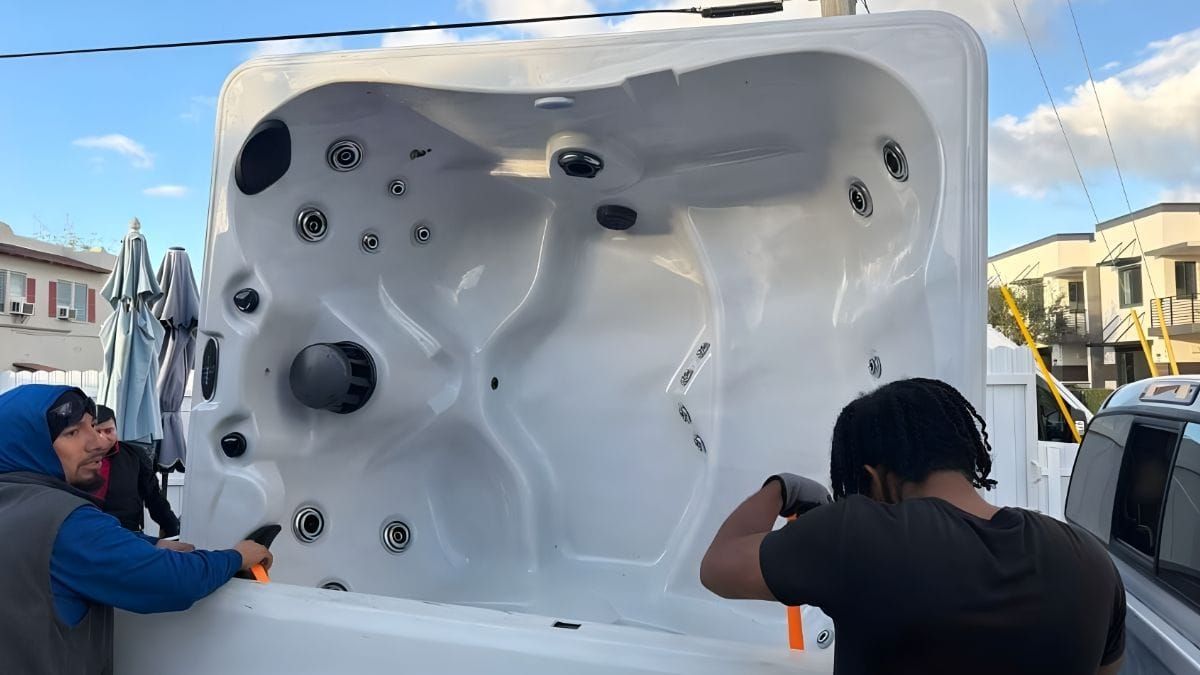
How to Move a Hot Tub: A Step-by-Step Guide
Hot tubs weigh up to 900 pounds dry. Here’s the 8-step rundown to move one without wrecking your back or the tub.

Moving a hot tub — whether you call it a spa or a jacuzzi — requires draining the water completely, disconnecting the unit from power, tipping it onto heavy-duty dollies, and rolling it onto a flat-ramp moving truck. You’ll need at least three or four strong people, and in most cases it’s worth hiring professionals. The difficulty comes from the weight: standard hot tubs weigh 500 to 900 pounds dry and water-filled units exceed 3,000 pounds, per manufacturer specifications from Jacuzzi, Master Spas, and Bullfrog Spas (2025).
Key takeaways
- A standard hot tub weighs 500–900 pounds empty and over 3,000 pounds full — always drain completely before moving.
- You need at least 3–4 people, two appliance dollies (or one specialized spa dolly), moving straps, a truck, and sometimes plywood for soft ground.
- Tip the tub onto the side opposite the equipment bay — the control panel and heater side can crack under load.
- DIY moves cost $100–$300 in rentals but carry real injury and damage risk; professional hot tub movers typically charge $350–$800+ for a local move.
- Plan for 4–8 hours door-to-door, including draining, line clearing, loading, and refilling. Drain the day before, not the morning of.
How to Move a Hot Tub
1: Decide Between DIY or Professional Movers
Before renting a truck, determine if this is a job for you or a specialist. While a DIY move saves money, it carries significant risk. If you have to navigate narrow staircases, steep hills, or lift the spa over a fence, hire professionals.
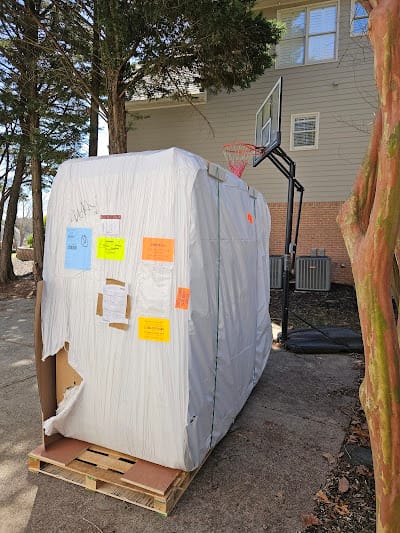
“I needed a hot tub moved from my driveway to its final spot in the backyard. The terrain was tricky. Kevin and Dwayne came up with a plan and got it done, without damaging it.” — Dave, Atlanta, GA (Google Reviews)
2: Gather Your Essential Equipment
You cannot move a hot tub with sheer muscle alone. Gather these supplies before move day:
- Two Appliance Dollies: Ideally, rent a specialized Spa Dolly.
- Furniture Moving Straps: To secure the tub to your dollies.
- 4x4 Lumber (4 pieces): To prop up the spa for dolly placement (if DIY).
- Plywood Sheets (2-4): To create a smooth path over grass or gravel (if DIY).
- Basic Tools: A drill/screwdriver for panels and a Wet/Dry Vac.
3: Drain the Water and Clear the Lines
Preparation should happen the day before the move. Do not try to drain and move on the same day.
- Drain the Tub: Use the drainage spigot (slow) or a submersible pump (fast—drains in about 20 minutes).
- Clear the Plumbing: Gallons of water remain in the internal pipes even after draining. Open the access panel and loosen the unions on the heater and pumps.
- The Vac Method: Use a Wet/Dry Vac on "blow" mode against the jets to force water out, then switch to "suck" mode to remove the remaining puddles. This prevents weight gain and protects against pipe damage.
4: Disconnect the Electrical System
WARNING: Ensure the breaker at the main panel is OFF before touching the wiring — most hot tubs run on a 240-volt, 50-amp dedicated circuit, which is easily enough to be fatal.
- Hardwired Spas: Open the spa pack, disconnect the wires, and pull the "whip" (flexible conduit) out of the spa completely.
- Plug-and-Play Spas: Unplug the cord and bundle it tight with tape or a velcro strap so it can’t drag or catch under a dolly during the move.
If you’re not comfortable identifying a hardwired connection, pay a licensed electrician for 30 minutes of work — per OSHA electrical safety standards, working on live 240-volt circuits is a qualified-person job.
5: Map Your Route and Prepare the Path
Walk the route from the old pad to the truck.
- Measure Everything: Check the height of the spa when it is tipped on its side against the width of gates and eaves.
- Lay Plywood: Hot tub dollies have small wheels that sink into soft ground. Lay plywood over grass or gravel to create a solid "road."
6: Tip and Secure the Spa onto Dollies
Most spas are transported on their side.
- Identify the Equipment Side: Locate the side with the control panel and heater. Do NOT rest the spa on this side, or you will crush the internal components.
- The Lift: Have helpers lift one side while another slides 4x4 lumber underneath.
- The Tip: Place your dollies next to the "flat" side. With a full team spotting, gently tip the spa onto its side so it rests on the dollies.
- Strap it Down: Use moving straps to secure the tub to the dollies so they move as a single unit.
7: Load the Hot Tub onto the Truck
This is the most dangerous phase of the move.
- Push, Don't Pull: Keep your strongest people at the back pushing, with one person at the front steering.
- Ramp Safety: Line the dollies up perfectly with the truck ramp. Never stand below the spa on the ramp. If it slips, the weight can be fatal. Use a winch if the truck is equipped with one.
8: Install and Refill at the New Location
Once you arrive, reverse the process to set the spa on its new level surface.
- Lowering: Roll the spa into position, lower it onto 4x4 lumber, and then slide the lumber out to set it flat.
- The Air Lock Trick: When refilling, place the hose inside the filter well. This forces water through the pumps first, pushing out air bubbles. This prevents an "Air Lock," which can stop your heater from working.
Common mistakes to avoid
- Don't lift by the headrests: They are not load-bearing and will snap.
- Don't drag the tub: This will tear the acrylic shell or the wooden skirt.
- Remove the cover: Transport the cover separately; it is fragile and can be damaged if used as a handhold.
- Empty every drop: Even 6 inches of water adds hundreds of pounds and creates "sloshing" momentum that can tip the dollies.
- Don’t rest the tub on the equipment side: The control panel, heater, and pumps will crack under load.
Frequently asked questions
Can you move a hot tub by yourself?
You should not move a hot tub alone — even empty, most tubs weigh 500 to 900 pounds. The realistic minimum is three people: two handling the dollies and one spotting the ramp. Four is safer, especially if any part of the route includes a slope, steps, or a gate.
How many people does it take to move a hot tub?
A hot tub move requires at least three people, with four being the safer standard — two handling the dollies and the ramp, plus one or two spotters.
Can you move a hot tub on its side?
Yes — most hot tubs are designed to be moved tipped onto one side, but never the side housing the control panel, heater, and pumps. That equipment bay is structurally fragile and will crack under the weight. Rest the tub on the opposite “flat” side, with dollies distributing the load evenly. Keep it tipped for transit only — resting on the shell for more than a day or two can deform the acrylic, especially in warm weather.
How do you move a hot tub over grass or soft ground?
Lay plywood sheets end-to-end to create a solid rolling path — spa dolly wheels sink into soft ground and stop the move cold. Standard 4-by-8 plywood sheets work for most yards; leapfrog them as you go, moving the back sheet to the front. For longer runs or muddy conditions, use 3/4-inch construction-grade plywood. Avoid moving a hot tub across wet grass if possible — saturated ground won’t hold the weight even under plywood.
How long does it take to move a hot tub?
Plan for 4 to 8 hours total for a standard local hot tub move. That includes draining the water (roughly 1 to 2 hours with a submersible pump, plus line clearing), disconnecting electrical (15 to 30 minutes), loading and transport (1 to 2 hours), and unloading and refilling at the new site (1.5 to 2 hours). Draining should happen the day before. Any added complexity — stairs, gates, long carries — can push active move time to a full day.
What happens if you don't drain a hot tub before moving?
A full hot tub weighs over 3,000 pounds, making it both unmoveable with standard equipment and unsafe to tip. Even a few inches of leftover water add 50 to 100 pounds of sloshing momentum that can destabilize dollies mid-move. Undrained tubs also damage internal plumbing: water trapped in pump housings and heater unions can freeze-crack in cold weather or leak onto electrical components in transit. Always drain completely, including the lines, the day before the move.
Loren Couse
Loren manages Growth and Online Strategy at Lugg. With a deep passion for consumer technology, he stays on the cutting edge of the latest digital trends. When he isn’t strategizing, he spends his free time building personal coding projects.
Subscribe to the Lugg blog
Get the latest moving tips, guides, and Lugg news delivered to your inbox.
Read more about Lugg moves

Movers only: book Lugg movers without a truck


Bought furniture on Black Friday? How to get it home today
Round Top Antiques Fair: how to shop it and get it home

How to Find Free Moving Boxes (and How Many You Need)