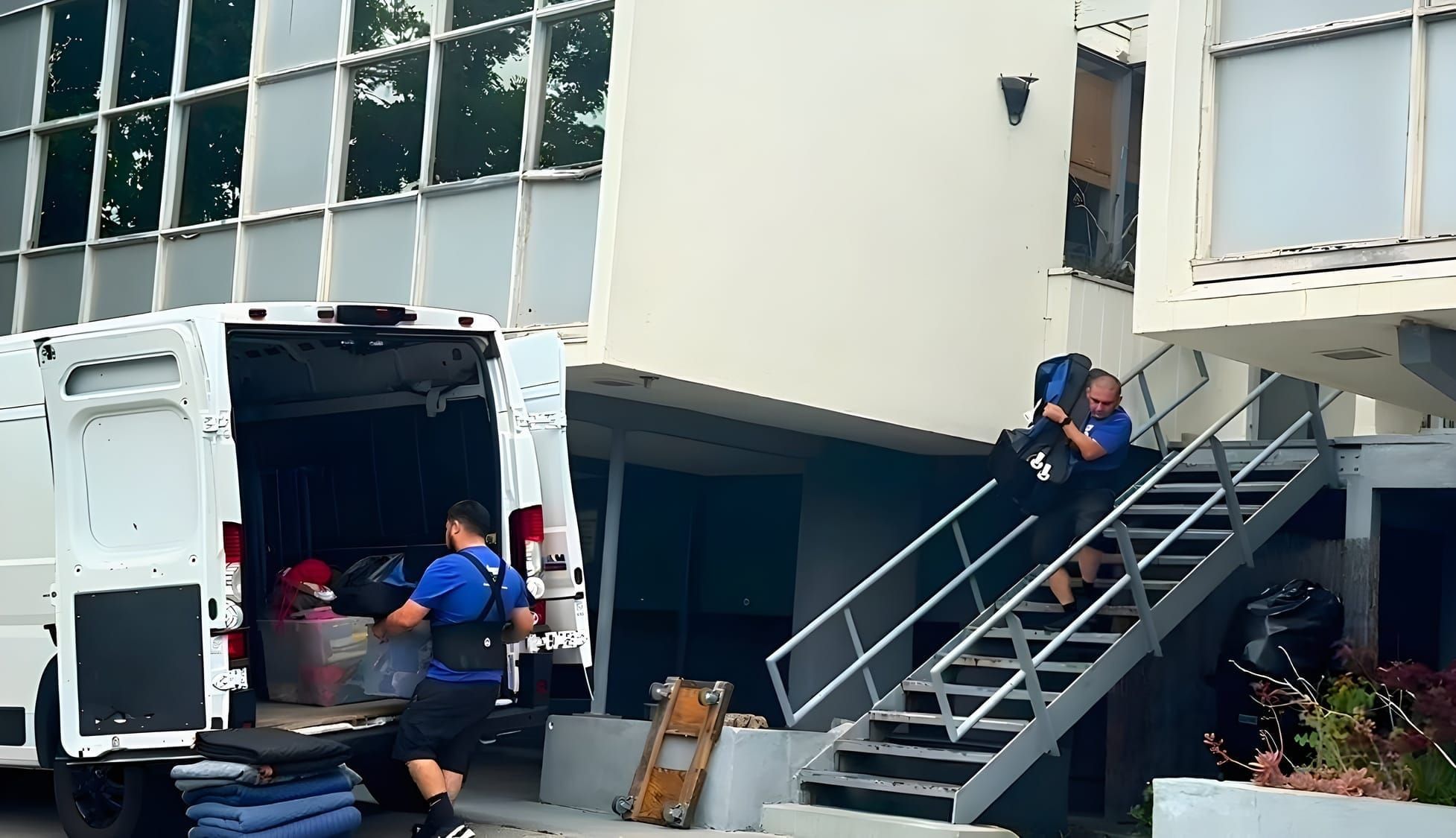
Commercial Moving Services for Businesses: How to Relocate with No Downtime
The real cost of an office move isn't the truck — it's downtime. How local commercial movers keep your business open: phased windows and same-day crews.

Commercial movers handle the physical relocation of a business — desks, workstations, server racks, conference furniture, retail stock — usually on a schedule built around keeping the business open. The cost line most office moves underestimate isn't the truck or the labor. It's downtime. ITIC's 2024 survey found a single hour of downtime now tops $300,000 for more than 90% of mid-size and large enterprises, and even for a small office the math is the same: every hour you can't operate is the real bill. So the question that matters for a local commercial move isn't "who's cheapest" — it's "who can move us without taking us offline."
This post is for the person who owns that problem: the office manager, ops lead, or owner-operator scheduling a local move and trying to keep the team working through it. Here's how local commercial moving actually works, where on-demand movers fit, and how to budget the part most checklists leave out.
What commercial movers do that residential movers don't
Commercial movers move a business, not a household, and the difference is mostly about timing and access. A home move can sprawl across a Saturday. An office move has to fit the hours the business can afford to be down — which usually means evenings, weekends, or a phased move over several short windows so half the team keeps working while the other half relocates.
The load is different too. You're moving workstations that have to come apart and go back together the same way, filing and records that can't get scrambled, and shared equipment that needs to land in a specific spot to be usable on day one. Retail and showroom moves add inventory and display pieces. None of that is exotic, but it rewards a move that's sequenced rather than dumped.
Here's a quick reference for matching a local commercial load to the right vehicle:
| Vehicle | Crew | Cargo space | Typical commercial use |
|---|---|---|---|
| Lugg Van | Cargo van + 2 movers | 8' L × 4' W × 4.5' H | A few workstations, chairs, boxed records |
| Lugg XL | Sprinter van + 2 movers | 10' L × 5.5' W × 6.4' H | Small office, conference furniture, retail fixtures |
| Lugg Box | Box truck + 2 movers | 12' L × 6' W × 7' H | A full office floor or showroom |
| Lugg Box+ | Larger box truck + 2 movers | 18–24' L × 6' W × 7' H | The heaviest, highest-volume commercial moves |
Booking the right vehicle for the load is the single easiest way to avoid a second trip — and a second trip is where a tidy after-hours move turns into a Monday-morning problem.
Why downtime is the line item most office-move budgets miss
Downtime is expensive because it compounds: idle staff, paused billing, and for client-facing businesses, missed orders all stack up while the office is in boxes. Industry estimates put the average office relocation at two to three days of reduced productivity, and most moving budgets only count the visible costs — trucks, labor, packing materials — while that productivity gap goes unpriced.
The fix isn't a bigger crew. It's controlling when the move happens. Three levers do most of the work: move outside operating hours, move in phases so part of the team is always working, and compress the actual transport so the gap between "loaded here" and "unloaded there" is as short as possible. On-demand local movers are built for exactly that compression. With Lugg, movers can arrive in as little as 30 minutes and the move happens same-day across 4,000+ U.S. cities and towns, so a Friday-evening office move can be done and reset before the team logs in Monday.
How to move a local office without shutting down
The most reliable way to keep a business open through a move is to break the move into windows the business can absorb, then sequence each window so nothing critical is offline at once. In practice that looks like this:
- Move the non-essential first. Storage, archives, spare furniture, and seldom-used equipment can go a week ahead, off-hours, with no impact on operations.
- Phase the workstations. Move one department or floor at a time so the rest of the team keeps working. A 2-mover crew can clear and reset a small department in a single evening window.
- Schedule the transport tight. Book the heavy move for an evening or weekend, and keep pickup and drop-off in one trip. Lugg supports up to 5 stops per booking, so an old-office clear-out, a storage drop, and the new-office delivery can go as one route instead of three separate jobs.
- Keep eyes on the move. Real-time live tracking lets your ops lead watch the move progress without standing in the parking lot — useful when you're coordinating IT setup at the new space against the truck's arrival.
- Reset on arrival. Movers place items in the room of choice, so workstations and equipment land where they need to be instead of piled by the door.
Because you can book a Lugg up to 60 days out, you can lock the move date into the project plan early and still keep same-day flexibility for the smaller pre-move runs. That combination — scheduled certainty for the big window, on-demand speed for everything around it — is what keeps a move from bleeding into business hours.
Where on-demand movers fit (and where they don't)
Lugg is built for local commercial moves, not cross-country ones. Drop-offs are supported within a 150-mile radius of pickup, which covers the overwhelming majority of office and retail relocations — a business moving across town, to a larger suite a few miles away, or consolidating two locations into one. If you're relocating a headquarters to another state, that's a long-haul job and a different kind of provider.
It's also worth knowing the edges of the job up front. Movers handle the physical relocation — loading, transport, placement, and basic disassembly and reassembly of furniture — but they don't reconnect IT, networking, or utilities, and they can't perform appliance hookups involving electrical, plumbing, or gas. Plan the move so your IT and facilities setup at the new space happens in parallel with the furniture coming in, not after it, and the reset stays inside your off-hours window.
For everything inside that local radius, the on-demand model removes the two things that usually make commercial moving painful: the wait and the guesswork. Bookings are instantly confirmed — there's no waiting for a mover to "accept" your job the night before a move — and pricing is upfront, with no hourly minimums, no charge for flights of stairs, and no surge pricing on a Friday-night slot. The New Wheel, an electric bike shop on Valencia Street in San Francisco, used Lugg to relocate its shop — the kind of inventory-heavy local move where a missed window costs real sales.
This also extends past the move itself. If part of the job is clearing out old furniture or fixtures the new space doesn't need, that's a local commercial removal Lugg can fold into the same booking — new piece in, old piece out — rather than leaving you to coordinate a separate haul-away.
What a local commercial move costs
Standard local commercial pricing on Lugg is built from a base fare, per-minute active labor (the clock pauses during transit), and per-mile distance — all shown as an upfront estimate before you book, so there's no hourly minimum padding the bill. For a one-off office move, that's usually the simplest path: get an instant estimate, pick your vehicle and window, and the price is set before the crew arrives. Every booking is covered by the Lugg Damage Protection Guarantee, and the movers handling commercial loads are background-checked and performance-monitored, with a 4.7+ rating required to stay on the platform — the credentialing that matters when you're handing someone access to your office after hours.
Move on your schedule
For a local office or retail move, the provider question is really a downtime question. Sequence the move into windows the business can absorb, keep the transport tight, and book a model that fits how often you move. If your team is planning a local commercial relocation — or coordinating enough that deliveries that it's becoming its own operational line — set up a Lugg account for your business and we'll walk through how it would look in your markets.
Alex Dolat
With nearly a decade at Lugg, Alex leads business partnerships and writes about retail logistics, enterprise delivery, and what it takes to power same-day fulfillment for thousands of brands.
Subscribe to the Lugg blog
Get the latest moving tips, guides, and Lugg news delivered to your inbox.
Read more about Lugg moves

Country Living Fair 2026: A Shopper's Guide to Rhinebeck

How Home Staging Companies Actually Book Delivery
How to Close More Sales on Labor Day
Furniture Delivery for Interior Designers: Getting Every Vendor's Piece There on Install Day