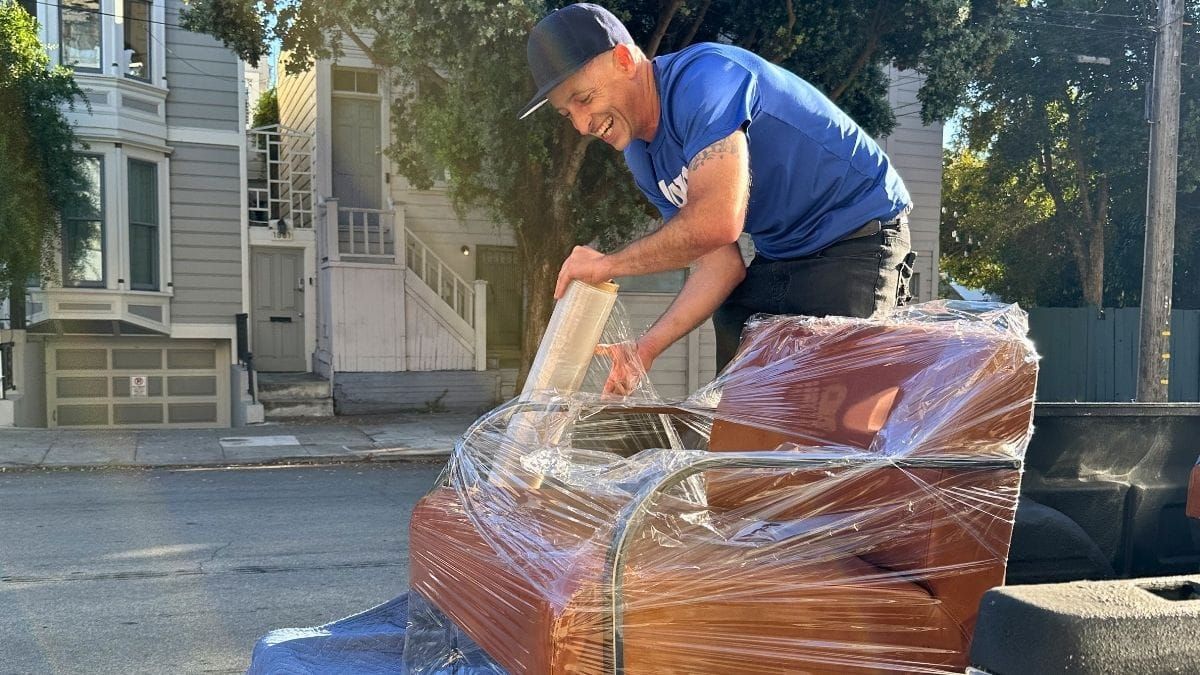
Can Uber Courier or UberXL move furniture?
Four Uber products touch delivery and none will move a couch. What each one actually carries, and where a mattress has to go.

Uber has four products that touch delivery, and none of them will move furniture. Uber Courier — renamed from Uber Connect, and the one most people mean — is built for a sealed box the driver never has to lift, and it won't take anything fragile. UberX and UberXL are rides, and their drivers can decline any cargo they think will mark up an interior. Uber Direct is for businesses, and Uber Freight moves pallets between states. Lugg is an on-demand moving and delivery service that moves couches, mattresses and whole apartment loads, with movers arriving within an hour who carry it up the stairs and into the room. Here's what each Uber product allows, the exact limits, and where a mattress actually has to go.
What Uber will and won't carry
| Item | UberX / UberXL | Uber Courier | On-demand movers (Lugg) |
|---|---|---|---|
| Small sealed box, under 30 lbs | Driver discretion | Yes, if it fits a trunk | Yes |
| Lamp or floor mirror | Maybe — driver discretion | Likely too tall | Yes |
| Single chair or side table | Driver discretion | No — over the weight cap | Yes |
| Dresser | No — driver will decline | No | Yes |
| Sofa or sectional | No | No | Yes |
| Mattress (any size) | No | No | Yes |
| Refrigerator or washer | No | No | Yes |
| Studio or 1-BR apartment | No | No | Yes, up to five stops per booking |
| Anything fragile | Driver discretion | No — prohibited outright | Yes, blankets and stretch wrap included |
| Loading and stairs | None — you load and unload | None — curb to curb | Movers do the carrying |
| If something breaks | None | None | Damage Protection Guarantee |
Uber Courier, Connect, Direct, Freight — which is which
Only one of the four is even theoretically usable for moving an item, and it isn't the one most people open first.
UberX, UberXL, Uber Comfort. Rideshare. Built to move people, with room for a reasonable amount of luggage. The most generous, UberXL, is typically a Suburban, Sienna or Odyssey — useful luggage capacity, not cargo capacity. Drivers can refuse anything that might damage the interior or create a safety risk. A folded floor mirror has a shot; a solid-wood dresser doesn't.
Uber Courier. The closest thing Uber has to a delivery product for individuals, and the one this whole question really turns on. If you're searching for Uber Connect, this is it — Uber renamed it. The rules are tight: Uber caps a car delivery at a combined 30 pounds and asks that the item fit comfortably in the trunk of a mid-size vehicle, closed and securely sealed and ready when the driver arrives. Bike and scooter deliveries are tighter still, capped at 15 pounds and $100 of combined value. Fragile items are prohibited outright, alongside alcohol, cannabis, weapons, pharmaceuticals and perishables. The driver doesn't get out of the car — you load it, and whoever's receiving it unloads it.
Uber Direct. Uber's same-day delivery product for businesses, the one restaurants and retailers wire into their own checkout. You can't book it yourself from the Uber app. It shares the brand and nothing else.
Uber Freight. A full-truckload trucking marketplace for shippers moving pallets across states. If you've been searching “Uber Freight for my apartment move,” that's a dead end.
So when someone asks whether Uber can move furniture, they're almost always asking about UberXL or Courier — and for either one the answer is no.
When Uber Courier does work
Courier is a genuinely good product inside its limits. It works if you can answer yes to all three:
- The item is under 30 pounds.
- It's already sealed in a box or bag, with nothing fragile inside.
- You and whoever's receiving it can both meet the driver at the curb.
That's the realistic universe: a forgotten box of clothes from a friend's place, a sealed package across town, a stack of books to your sister. A single lamp is borderline — Courier won't take it if it doesn't sit comfortably in a trunk, and an UberXL driver may decline a tall awkward item. If you need to move one small sealed thing and you can be at both ends, you have an option.
Where it stops
Four things break the moment your move is bigger than a backseat, and every one of them is a hard stop.
Drivers can decline you on sight. UberX and UberXL drivers are independent contractors and can refuse any item that might damage their car. They usually do. Showing up with a wrapped sofa and trying to negotiate gets you a cancellation, not a ride.
No loading help, no equipment, no stairs. Uber drivers don't bring straps, dollies, blankets or a spare pair of hands. If you can't get the item to the curb and into the vehicle yourself, the answer is no. There's no version of Uber where someone carries a headboard up a flight of stairs.
Nothing is covered. Courier's prohibited list names fragile items directly, so anything that breaks in transit is on you. Rideshare coverage protects the vehicle and the people in it, not the contents of the trunk.
There's no truck. This is the one that catches people. The reason you're searching “Uber moving truck” is that you want a truck and a driver on demand — and Uber doesn't operate trucks for consumer bookings. The truck in Uber Freight is a semi crossing state lines with a shipping manager at the other end.
Can you fit a mattress in an UberXL?
No, and it's worth being specific because it's the single most-asked version of this question. An UberXL is a three-row SUV or minivan with the back seats up — even folded flat, the load floor is short of a twin mattress, and a queen isn't close. Beyond the physical fit, a mattress is exactly the cargo a driver declines: it blocks visibility, it doesn't strap down, and it marks up an interior. A mattress needs an open bed or a cargo van, which is a different category of vehicle than anything in the Uber app.
What “Uber for movers” actually means
“Uber for movers” describes a real category that emerged after Uber: take the on-demand, app-first, real-time-tracking model rideshare invented and apply it to moving, where the defaults used to be three-day quotes, four-hour minimums and a guy named Dave who shows up when he shows up.
Lugg has been running that model since 2014. You open the app, pick the truck that fits the load, see the estimate before you book, and watch the movers on a live map — same-day availability, or scheduled up to 60 days out. The difference is what pulls up: furniture movers with a pickup truck, cargo van or box truck, and the muscle to do the carrying, from loading through final placement. There are no hourly minimums, and the Damage Protection Guarantee covers what's being moved, which Courier explicitly doesn't. The longer version of how that model differs from a traditional moving company is here: what “on-demand movers” actually means.
What a couch actually costs to move
People reach for Uber to move furniture because they assume it's the cheap route. Once the item is bigger than a backpack, the math stops working.
Take the common version: you bought a sofa on Facebook Marketplace across town. Here's what each option really looks like.
- Uber Courier. It won't take the job. A sofa is well over 30 pounds and nowhere near trunk-sized.
- UberXL. You'd be booking a rideshare and hoping. If the driver arrives, sees a sofa and refuses, you eat the cancellation. If they accept, you load and unload it yourself with no straps and no coverage if the sofa or their interior gets damaged. Call it $25–$45 for the trip, plus a friend you owe dinner.
- Lugg. At Lugg over the past year, moving a single couch or sofa in a pickup truck cost a median of $120 before tip, with the middle half landing between $98 and $157. In a cargo van, for a larger piece or a longer carry, the median was $173. That covers the truck, the movers who load and unload it, blankets and straps, live tracking and the Damage Protection Guarantee — and you don't have to lift anything.
The gap between a $35 rideshare that will probably refuse you and a $120 move that shows up with equipment is smaller than most people expect, and it's the whole reason this category exists.
Three questions that settle it
If any of these is a yes, Uber isn't the tool:
Is it heavier than 30 pounds? That's Courier's cap for a car delivery. Past it you're outside what Uber designed the product to do.
Does it take two people to lift? UberXL drivers don't lift at all. If it's a two-person carry, you need people who do this work for a living.
Does it have to go up stairs, through a doorway, or into a specific room? Uber's product is curb-to-curb by design. Anything that has to actually enter the building needs an apartment moving service, or on-demand movers who include the carrying and in-room placement.
The same test settles the variants — can I use Uber to move boxes, to move my stuff, to move house. If the answer to any of the three is yes, the answer to “can Uber do this” is no.
If Uber already said no
For one sealed item under 30 pounds, Uber Courier is the right product and there's no reason to overthink it. For a Marketplace pickup, a piece of furniture, or the contents of an apartment, book on-demand movers through Lugg instead — you'll know the estimate before you book, nobody can decline your sofa at the curb, and the people who show up are the ones doing the carrying.
Holly Benjamin
Holly leads marketing at Lugg and is passionate about making the utilitarian task of moving into something people actually rave about.
Subscribe to the Lugg blog
Get the latest moving tips, guides, and Lugg news delivered to your inbox.
Read more about Lugg moves
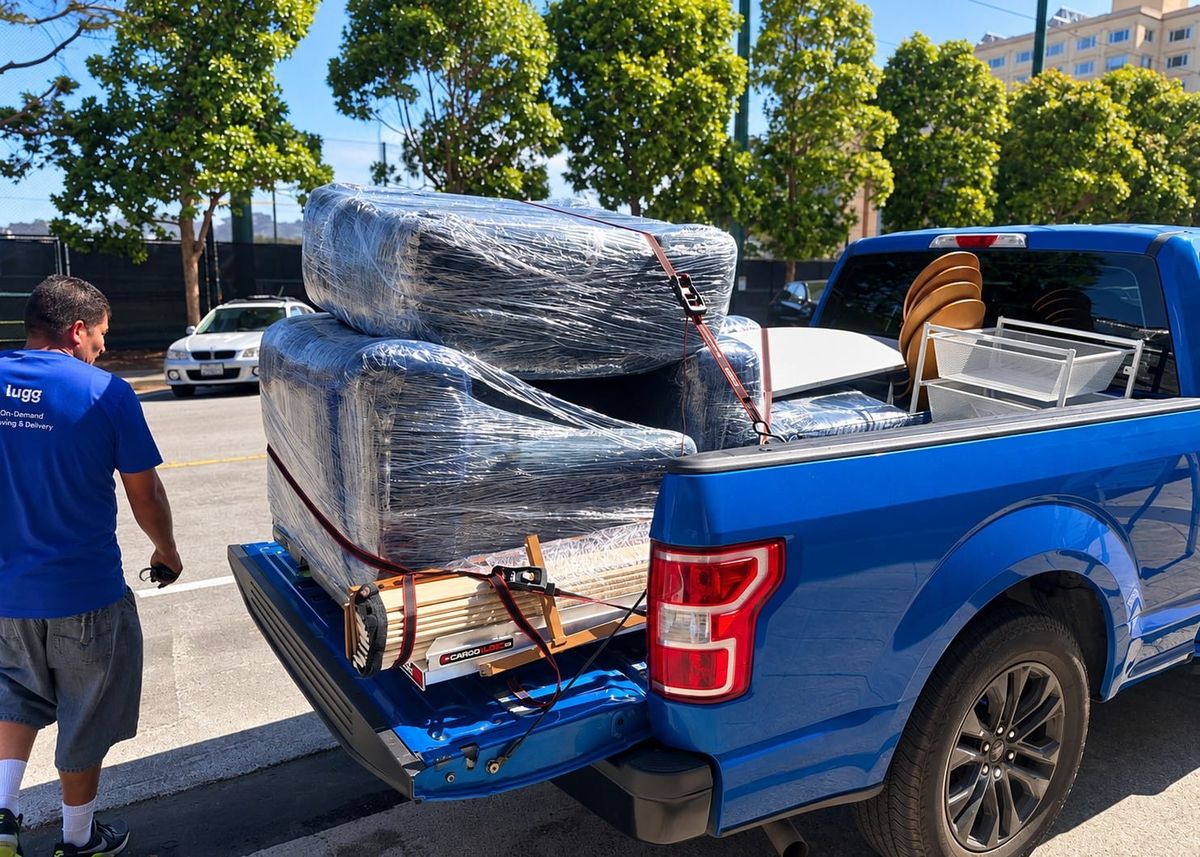
What shoppers actually haul home on Black Friday


Bought furniture on Black Friday? How to get it home today

Round Top Antiques Fair: how to shop it and get it home

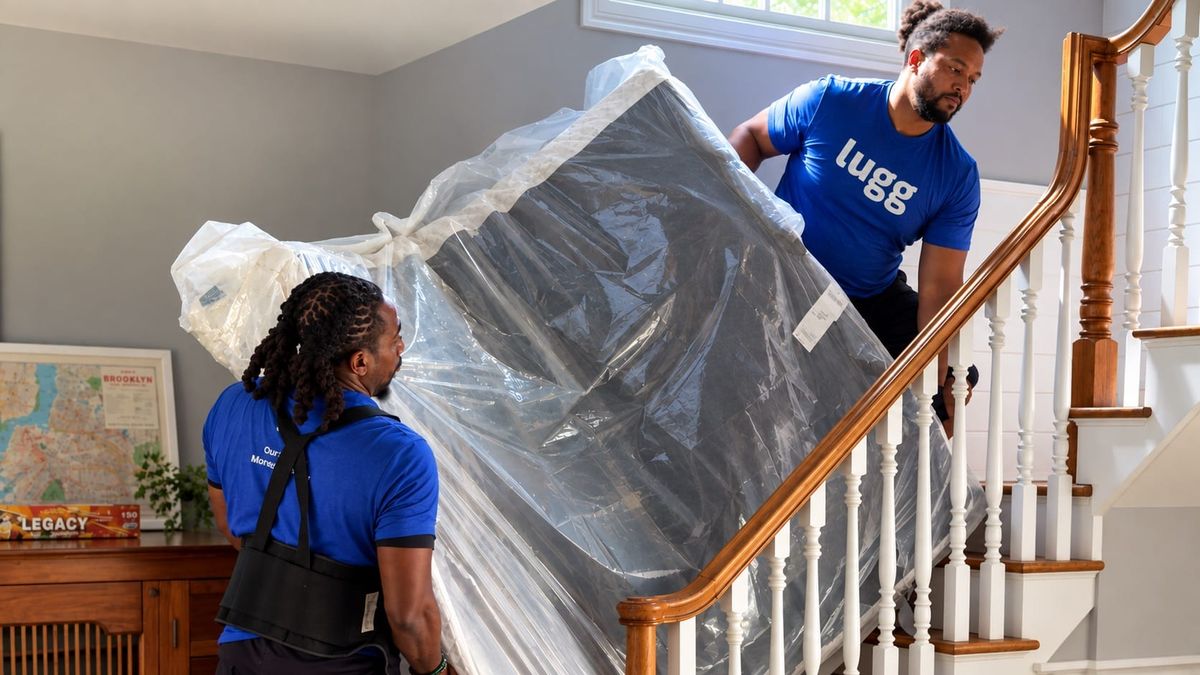
Where unwanted furniture goes: why mattresses don't get a second life